
Daniel Batten, manager of two ESG (environmental, social and governance) impact funds and researcher specializing in Bitcoin mining and energy, stated that, from the perspective of industry participants, the positive environmental impact of mining outweighs the negative by a ratio of 31 to 1.
The specialist, in his analysis shared this April 27 in X, identified 21 factors in which Bitcoin mining generates positive environmental impact and 5 in which it generates negative impact.
To construct his report, Batten consulted power grid operators, climate scientists, Bitcoin mining engineers, methane mitigation experts, and solar and wind energy installers. He applied an impact weight to each factor before calculating the final ratio, although he did not detail that methodology in his publication.
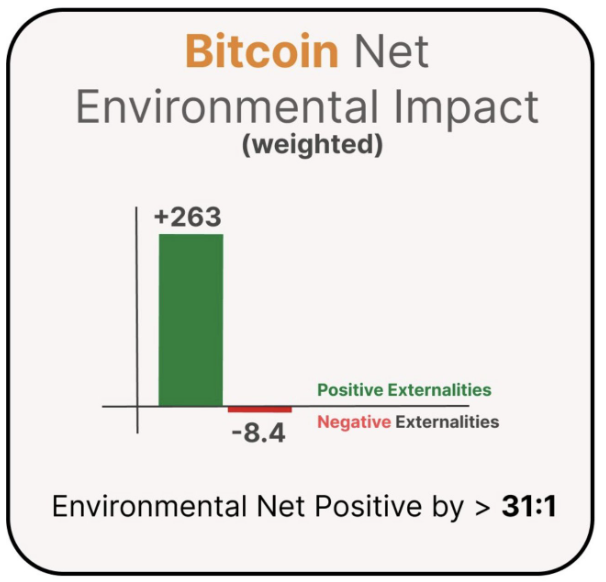
According to Batten, three mechanisms concentrate the weight of the positive impact:
- Bitcoin mining can capture and burn methane (a greenhouse gas more potent than carbon dioxide) in places where that gas is released uncontrollably, such as landfills or abandoned oil wells.
- Batten points out that miners can act as flexible electricity consumers which are activated when there is a surplus of renewable energy and are disconnected when the grid needs it, stabilizing the supply.
- Miners allow monetize renewable energy generated in remote areas where there is no infrastructure to transport it, explained the specialist.
Batten also states that 24 papers Peer-reviewed studies published since his original analysis four years ago support his findings, although he did not cite them in his publication.
As he noted, the three central projections of his original analysis are already being met: participation of mining in methane mitigation, stabilization of electrical networks and monetization of wasted renewable energy.
Batten and the economic future of mining
Batten’s environmental conclusions are connected with another analysis of his published on April 22, reported by CriptoNoticias, in which he argues that Bitcoin mining will not collapse economically eitheras argued by those who fear that successive halvings will make the business unviable given that block subsidy rewards will disappear in the future.
According to the energy specialist, That argument ignores structural changes that the industry is already implementing. Among them, Batten highlighted the diversification of income towards the sale of waste heat, electrical grid stabilization services and computing for artificial intelligence; the purchase of own power generation assets (such as the 114 megawatt wind farm that MARA Holdings acquired in Texas) that reduces the marginal cost of electricity to zero; and the existence of miners motivated by ideological conviction rather than profitability, who sustain the network regardless of price.
In this way, Batten’s two analyzes share the same logic: the dominant narrative about Bitcoin and the environment, like the narrative about its economic viability, was constructed before the mining industry changed structurally. Batten maintains that the data already refutes those perspectives.