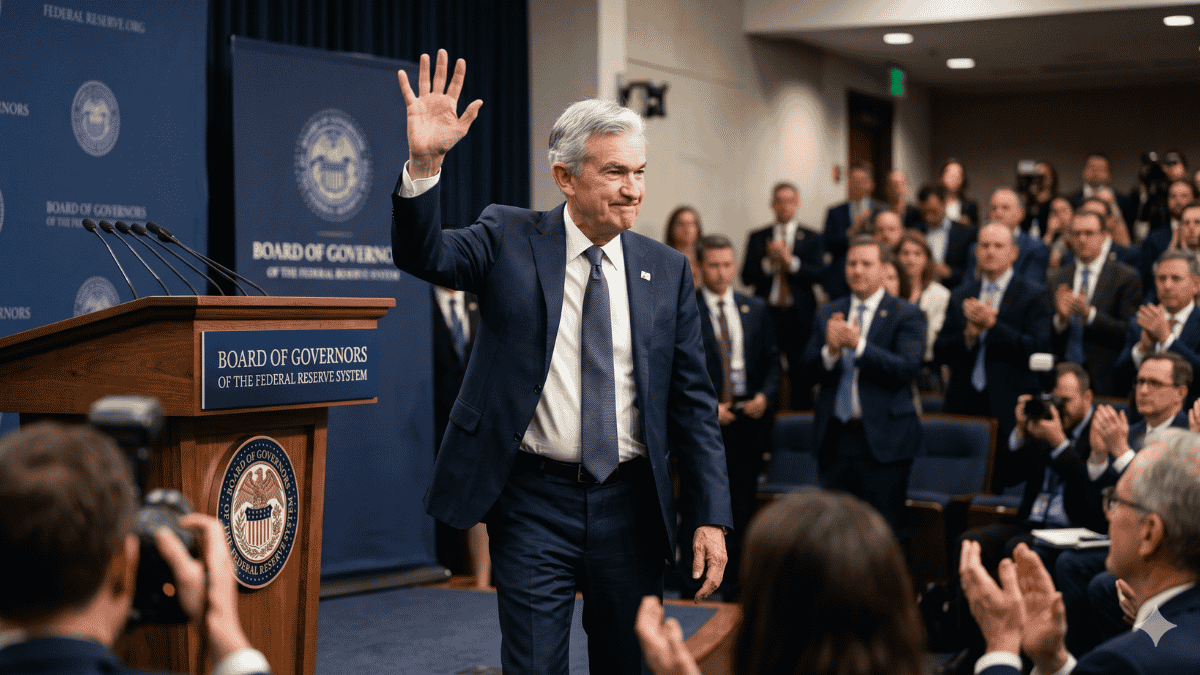
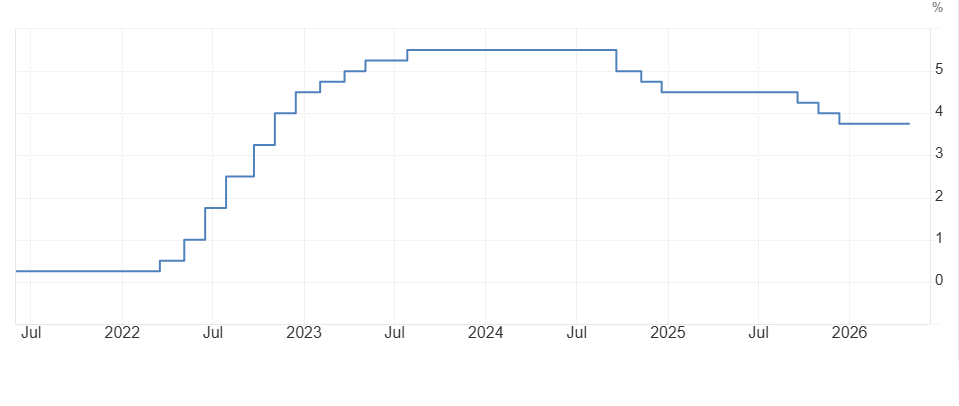
The FED decided to maintain interest rates at 3.75% year-on-year.
There is optimism about Warsh’s arrival, although the oil crisis makes it difficult to reduce rates.
In a day marked by symbolism and political transition, the United States Federal Reserve (FED) announced today, April 29, 2026, that will maintain interest rates at 3.75% year-on-year. This resolution is not just another one on the financial calendar; It represents the last monetary policy decision under the mandate of Jerome Powell.
While the markets assimilated the maintenance of rates (which was already expected, as CriptoNoticias explained this morning), attention shifted to the press room where Powell offered his last official speech on interest rates.
The FED’s horizon already has a seemingly defined successor. Next month, Kevin Warsh will assume the presidency of the organization, provided that the Legislative Branch ratifies his appointment. The market generally receives this transition with positive expectations, due to Warsh’s known affinity with Donald Trump’s economic vision. A growth-first approach and closer coordination with White House fiscal policies are anticipated.
Despite Wall Street’s enthusiasm for Warsh’s profile, the mood in financial circles is one of caution. The current economic situation presents challenges that transcend proper names. With the price of oil skyrocketing, There is a latent fear about what direction the FED will take in the coming months.
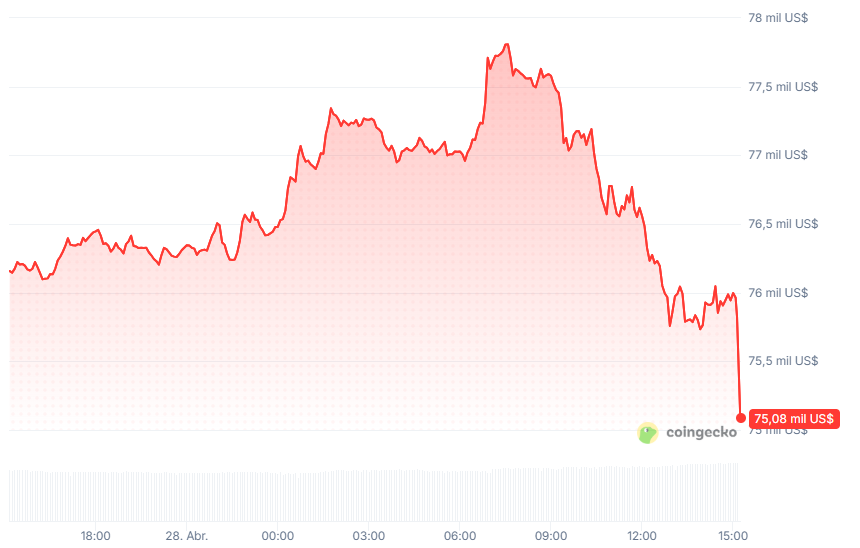
As usually happens every time new interest rate data is known, the price of bitcoin (BTC) reacts with high volatility. The thing is, as explained in the Cryptopedia (educational section of CriptoNoticias) there is a relationship between the cost of money and the financial markets.
On this occasion, although it was expected that there would be no cuts in the interest rate, bitcoin initially reacted bearishlyas seen in the image below:
Half an hour after knowing the interest rate, Jerome Powell gave his traditional speech. During his initial intervention, the official justified the FED’s decision to maintain the rate range based on the resilience of economic activity, stating that “the US economy has been expanding at a solid pace.”
However, Powell acknowledged that the pricing outlook remains challenging, noting that “inflation has risen recently and is elevated relative to our long-term goal of 2%”. Faced with this scenario, the FED president was emphatic in declaring that the Federal Open Market Committee (FOMC) is in no hurry to make downward adjustments: “We view the current monetary policy stance as appropriate to promote progress toward our goals of maximum employment and 2% inflation.”
Delving into the causes of disinflation stagnation, Powell took direct aim at international conflicts and trade policies. He explained that the cost of living increased “driven by the significant rise in global oil prices resulting from the conflict in the Middle East.”
Furthermore, he frankly admitted that the current situation is not ideal commenting that “inflation is behaving badly.” Powell also linked the persistence of prices in the goods sector to domestic factors, indicating that the 3.2% base rate “largely reflects the effects of tariffs.”
In relation to his departure and the arrival of Kevin Warsh, Powell took the opportunity to congratulate his successor on his progress in the Senate confirmation process, wishing him “the best as that process continues.”
However, he clarified that his role within the organization does not end on May 15: “After my term as president ends… I will continue to serve as governor for a period of time to be determined.” Despite this unusual move, the official tried to calm doubts about possible interference in Warsh’s new management, ensuring that he plans to “keep a low profile as governor” and that his intention is to be a “very constructive participant” while respecting the position of president.
Update April 29, 2026: added statements from Powell in his press conference.