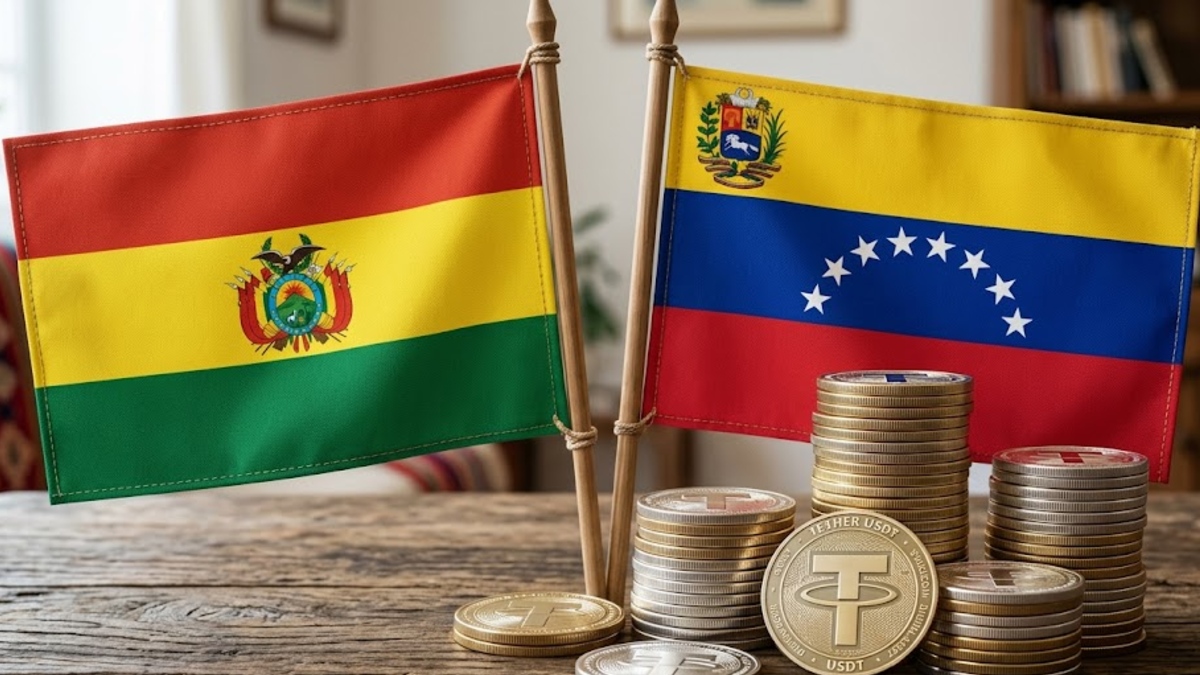
In both Bolivia and Venezuela, USDT behaves as an indicator of the parallel dollar market.
These countries have gone through economic crises that have pulverized their monetary health.
The adoption of the dollar-linked stablecoin, USDT, in Bolivia and Venezuela does not represent a technological coincidence. It is, instead, an almost identical economic survival response to the deterioration of their traditional financial systems.
Although Venezuela has a longer history in the cryptocurrency ecosystem, with established regulations and a more formed collective consciousness, Bolivia has accelerated – out of necessity – its integration. Thus, your society has been following a pattern of behavior that reflects the search for functional alternatives to fiat money.
In both contexts, the digital asset issued by the private company Tether Limited has become an essential tool to preserve value in the face of a devaluation that pulverizes the purchasing power of Venezuelans and Bolivians. And, furthermore, it has served as a respite for businesses and citizens who, through this asset, They have known how to survive in the midst of a complex economic environment.
Together with the Venezuelan economist Daniel Andrés Peláez, we carried out an analysis of the internal markets of Bolivia and Venezuela, countries connected, more than by economic difficulties, by links that transcend more than 200 years of history.
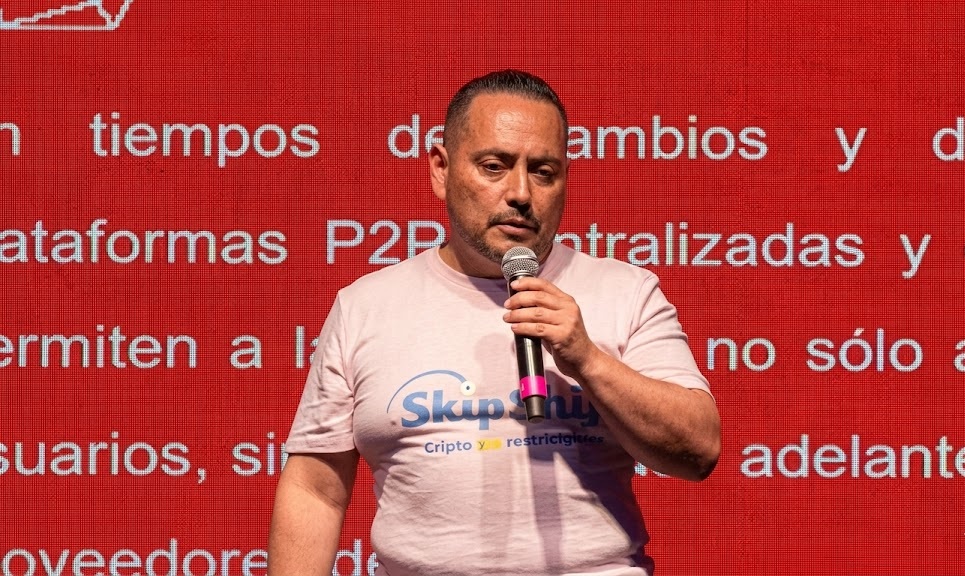
This allowed us to identify five key similarities in the process of mass USDT adoption in those two countries. Let’s see what they are:
1. USDT as an emergency dollar
The first similarity identified is the function of the USDT as a kind of “emergency dollar”because it replaces, in practice, the North American currency.
Indeed, while in Venezuela the USDT has begun to be used as a substitute for the cash for everyday transactions in the face of the devaluation of the bolivar, in Bolivia the shortage of greenbacks in banks since 2023 has made this asset the main way for companies and individuals to pay for imports or protect their savings.
In this regard, Peláez recalls that in both countries there is an absence of physical dollars, and that in both countries there have been restrictions on the flow of greenbacks—both in cash and electronically—both due to prohibitions and the implementation of exchange schemes that prevent, today, the free market.
2. Real exchange rate marker
As a second fundamental point, USDT currently serves as the marker of the real exchange rate in both Bolivia and Venezuela.
By not considering the official dollar rates issued by central banks, the listing of USDT as a cryptocurrency on exchange platforms, specifically in peer-to-peer (P2P) markets, often defines the price in dollars of goods and services in the real economy of both countries.
Although USDT is not a dollar, but a stable cryptocurrency whose value is anchored to that fiat money, it is precisely the stability it has that leads citizens and companies in Venezuela and Bolivia to rely on it to reference the price of the greenback in national currency. It is, in essence, an adaptation arising from the economic need of both nations.
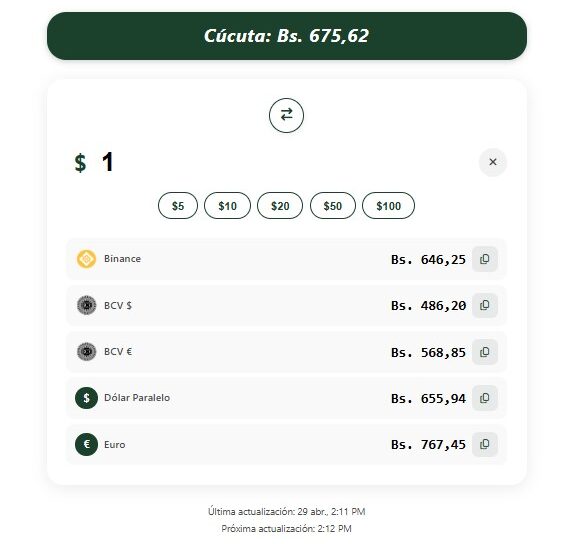
In Bolivia, this digital asset has reached a price of up to 35% more than the official rate of 6.96 bolivianos per dollar. An exchange distortion that Venezuelan citizens have already experienced with the gap between the price of the US currency set by the Central Bank of Venezuela (BCV) and the price of USDT, which is at 30% — although it exceeded 50% at the beginning of this year.
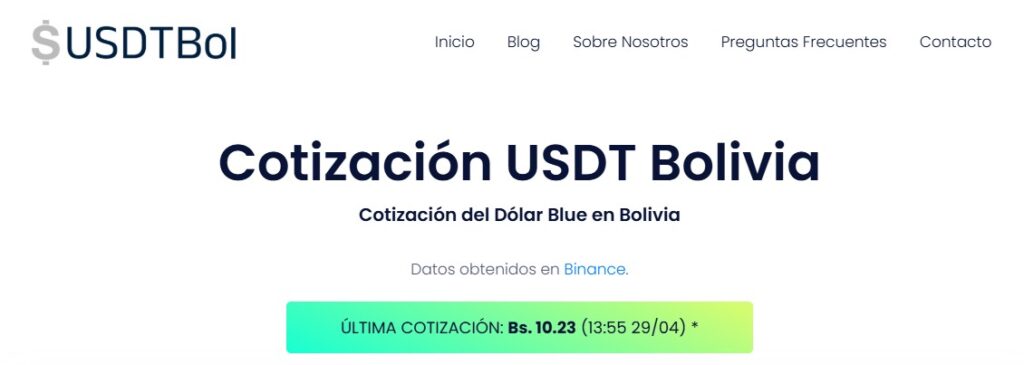
For the economist and university professor, although the vision of USDT as a marker of the real rate is prevalent in the economies of these countries, in the Bolivian case this has varied considerably, based on the fact that there is a growing banking adoption on the side of the services that has led to the creation of multiple reference rates.
3. Change in the government’s position
The third similarity between Bolivia and Venezuela in their adoption of USDT is observed in the change in the government’s position, which, in the Bolivian case, has gone from initial rejection to tactical acceptance. to relieve pressure on international reserves.
CriptoNoticias reported that the Central Bank of Bolivia lifted the ban on operating with digital assets in June 2024 in order to allow the private sector manages its own international payments. Since then, the Andean country undertook the structuring of a regulatory framework for the sector that remains in force.
Pélaez argues that the Central Bank of Bolivia understood that, somehow, “maintaining these restrictions in the long term would end up affecting the country’s international reserves.”
“So by lifting these restrictions, obviously, first it is a respite for reserves. And, secondly, there is definitely an opening that is quite interesting for the market,” he points out.
For its part, in Venezuela, although the digital asset ecosystem was regulated in 2018, there was a paralysis of the sector product of the PDVSA-Cripto corruption scandal in 2023. This paralysis only began to dissipate last year. This, with the participation of local companies and the use of USDT at levels beyond the retailer.
This reached the point where the use of this digital currency was integrated into currency settlement schemes for companies, recognizing it in Venezuela as a functional cog in its economic structure based—mostly—on the oil business.
However, Peláez sees more marked growth in Bolivia, where “not only are exchanges wanting a piece of that pie, but banks are also quickly trying to participate in that market with the creation of those USDT accounts.”
4. Massive use of P2P platforms
The fourth pillar of this similarity in the cases of USDT adoption in Bolivia and Venezuela is the massive use of peer-to-peer or P2P platformswhere services like Binance have displaced functions of the traditional banking system.
In general, these channels are used in both countries primarily for sending remittances, as they are cheaper and faster than traditional agencies. Also, for the payment of salaries to independent professionals who seek to protect their purchasing power against local inflation.
While it is true that in Bolivia there are banks that already offer the USDT purchase service, such as Banco Unión and Banco FIE, and that in Venezuela there are platforms such as Crixto and Kontigo that, through integrations with local banking, streamline the use of the stablecoin in everyday commerce; P2P platforms remain main routes for the acquisition and sale of this asset in both nations.
This is evident, for example, in the changes recorded in the order books of the P2P markets of Venezuela and Bolivia. In the global ranking, the Caribbean country holds fifth place, with a record of 268,387 updates in the last 24 hours. While the more modest Andean nation reaches the 16th level, with 69,652 changes reported in the same period, according to data by P2P.Army.
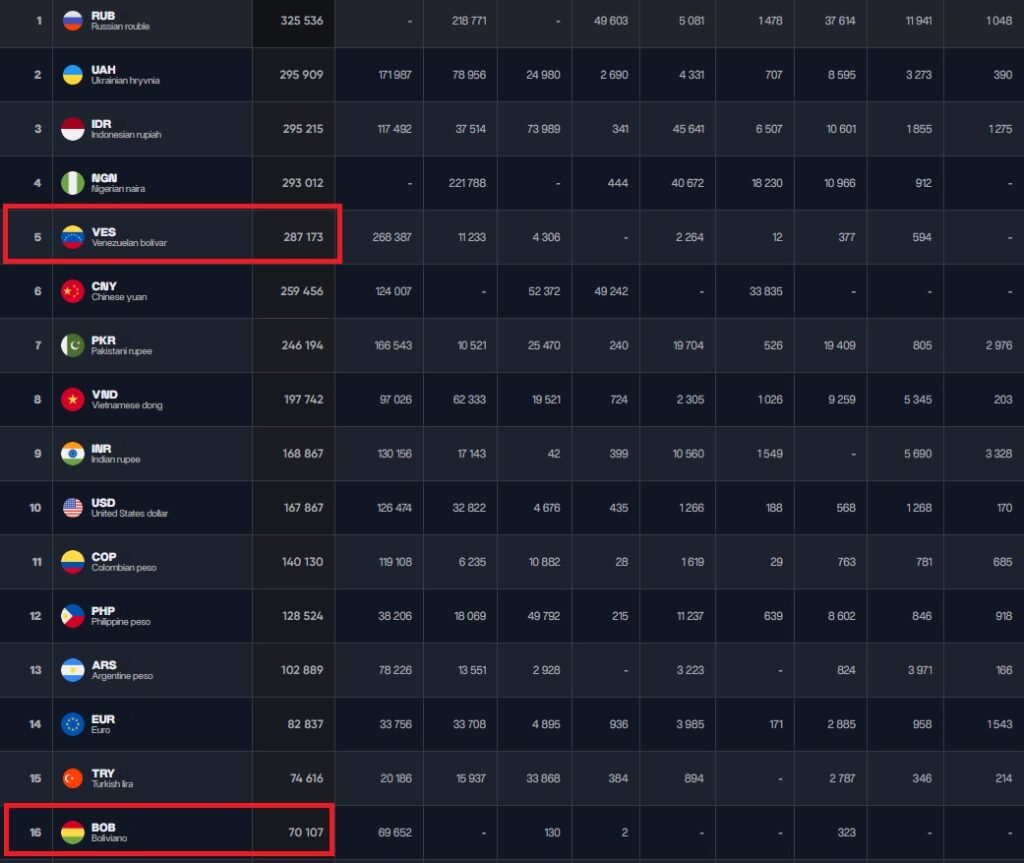
Regarding Venezuela, the analyst explains that The trend continues regarding the use of P2P platforms to operate with USDT. In his opinion, although local platforms once had exposure, current volumes – for which he does not have precise data due to changing market dynamics – suggest a preference for trading digital assets in peer-to-peer markets.
In Bolivia, meanwhile, a unique phenomenon occurs in the region. This means that digital platforms that offer exchange services are setting up physical offices. Peláez mentioned the specific cases of Meru, El Dorado and Takenos, who announced their arrival on Bolivian soil in person.
“There is a very big commitment to centralized and decentralized P2P platforms in the Bolivian market,” he says.
In Peláez’s opinion, “P2P commerce became a lifeline, not only for the common Bolivian and Venezuelan, even for businessmen, for exporters.”
5. Protection against inflation and devaluation
Finally, the safeguard against devaluation constitutes the main engine of the common user in Bolivia and Venezuela. In both countries, the USDT has allowed income to be dollarized immediately on the same day of collection, evading the consequences of inefficient exchange policies that generally lead to economic crises.
In Venezuela, adoption is now ubiquitous in retail. At CriptoNoticias we have documented how informal and formal businesses have made use of this digital currency, even as a financial strategy.
And in Bolivia, there has been a predominance of the use of USDT at the business level, as well as as a savings mechanism among individuals, who choose to leave their Bolivians. and shelter under the creation of Tether Limited.
Furthermore, the trend in Bolivia is growing rapidly due to the limitations imposed by local banks to send remittances from abroad with traditional payment instruments.
As specialist Peláez sees it, this “seems like a mirror between Venezuela and Bolivia.” “There is a nature of the common person, of the businessman, to be able to protect themselves against inflation, against devaluation, precisely by using crypto, using USDT,” he assures.
So, really, that was the motivating factor. The inflationary issue, the devaluation issue, was definitely something that made Bolivians and Venezuelans begin to investigate and dare to move forward. And the results have not been long in coming. They can be seen easily.
Daniel Andrés Peláez, Venezuelan economist.
The reality of Venezuela and Bolivia around the adoption of USDT generates an intense debate about the intrusion of the digital and disruptive economy in struggling economies. It is shown that, at least in these two South American countries, this currency has managed to maintain itself as a fundamental pillar of relative stability and, more than a digital value, It is seen as a shield of protection against devaluation and economic precariousness.