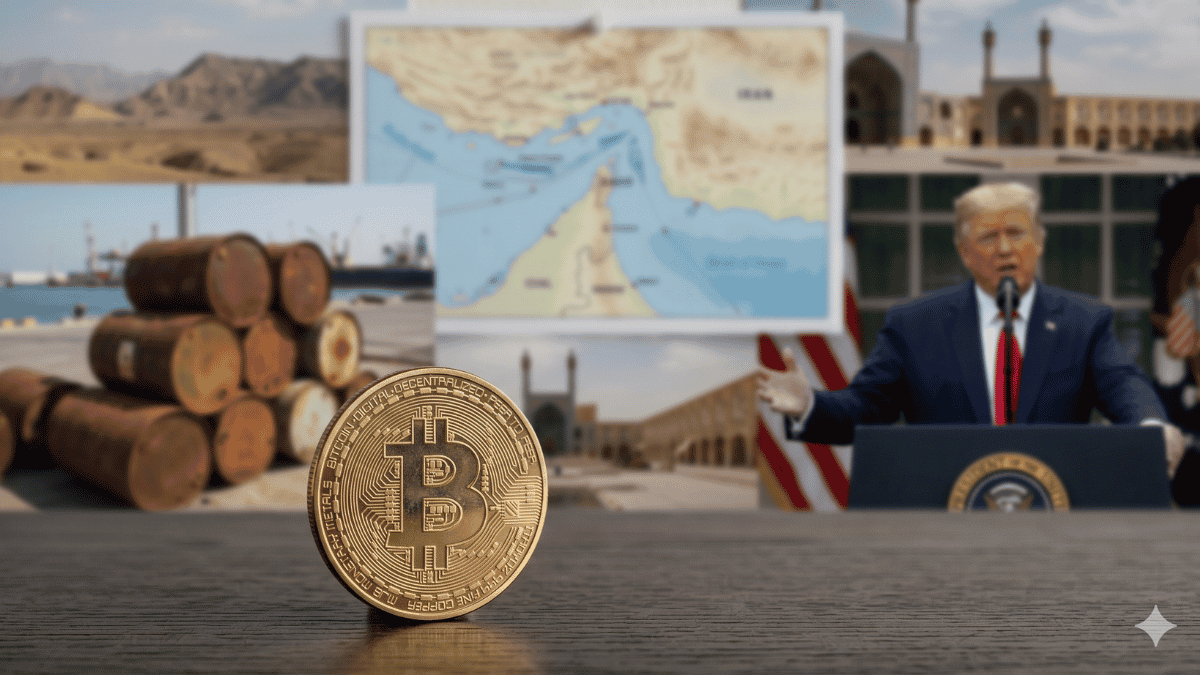
The price of oil is at levels not seen since 2015.
Despite the inflation risk and the fact that the FED does not cut interest rates, bitcoin resists.
Bitcoin is trading on April 30, 2026 around $76,000 and maintains that level while the world faces an acute energy crisis: the Strait of Hormuz has been closed for two months, oil is at prices not seen since 2015, and the United States is putting pressure on its allies to form a coalition to restore navigation in the most strategic sea lane on the planet.
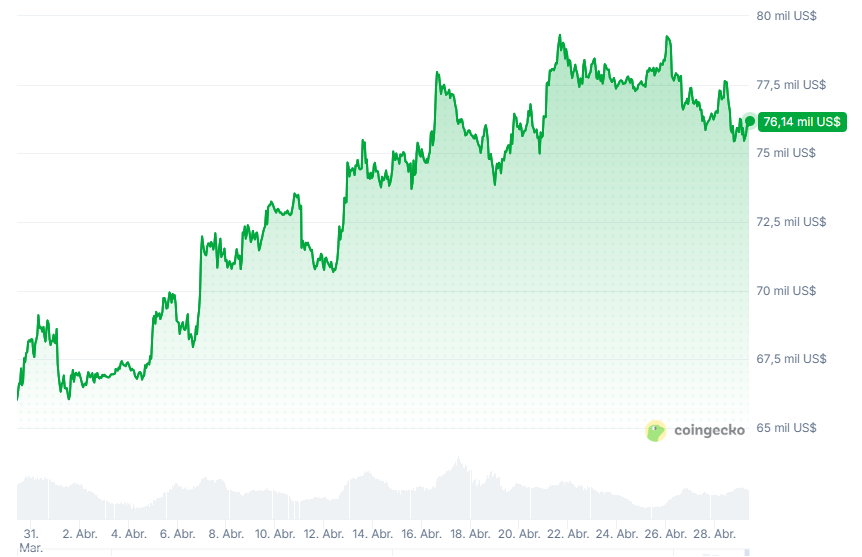
Tuesday’s day was one of high volatility for bitcoin. Behind him Federal Reserve announcement to keep rates at 3.75% annually and Jerome Powell’s closing speech, bitcoin reacted downward immediately. It then regained ground and stabilized where it operates today.
The following graph shows how bitcoin has moved over the last 30 days. There it is evident that, despite the short-term volatility, the digital currency is giving a display of strength and resistance in the midst of a hostile macroeconomic environment:
Since February 28when the United States and Israel began attacks against Iran, Strait of Hormuz remains blocked. About 20% of the global oil and gas supply passes through there. Crude oil prices have doubled since the beginning of the year.
A State Department cable accessed by Reuters reveals that Washington is pressuring other countries to form an international coalition —called “Maritime Freedom Structure”— to restore free navigation. France and Great Britain showed interest, but made it conditional on the cessation of hostilities. The negotiations, mediated by Pakistan, are stalled.
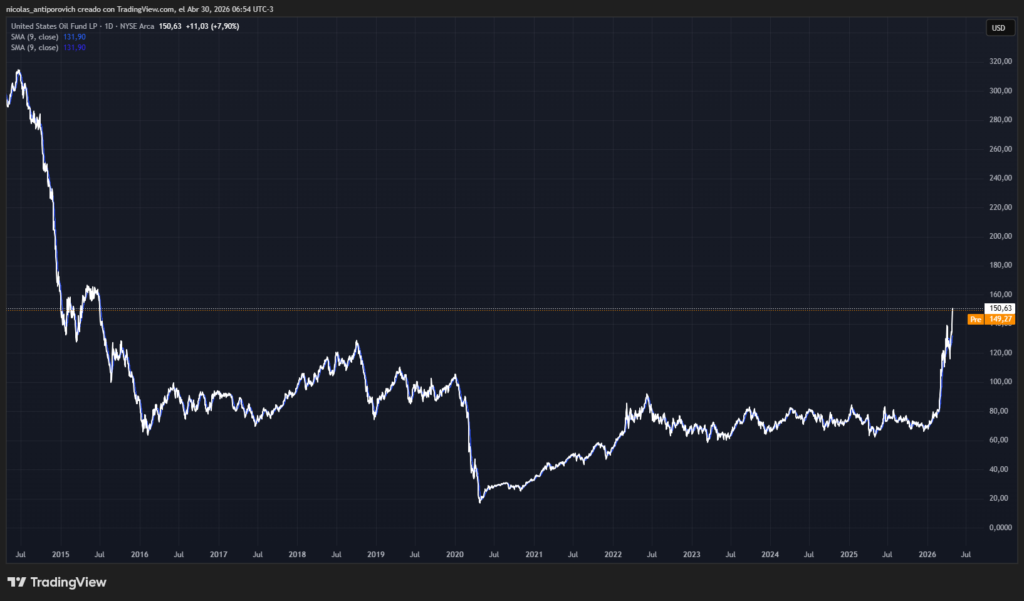
Meanwhile, the United States Oil Fund —index that tracks US oil prices— It’s at $150 per share.a price that was not seen 11 years ago, as seen in the following image:
Added to the war context is that yesterday, as CriptoNoticias reported, was also the Powell’s latest official speech on interest rates as president of the US FED.
His diagnosis was direct: “inflation is high in relation to our long-term goal of 2%” and “he’s behaving badly.” He identified two specific causes: the conflict in the Middle East, which skyrocketed the global price of energy, and tariffs on imports, which brought the basic inflation rate to 3.2%.
The FED, Powell said, is in no hurry to cut rates. “We see the current stance of monetary policy as appropriate,” said the official. That extended pause signal was what triggered bitcoin’s initial drop after the announcement.
Next month, Kevin Warsh will assume the presidency of the FED, subject to final confirmation by the Senate. The market receives it with relative optimism: it is close to Trump’s economic vision and is expected to prioritize growth, although the FED’s mandate to reduce inflation conditions it.
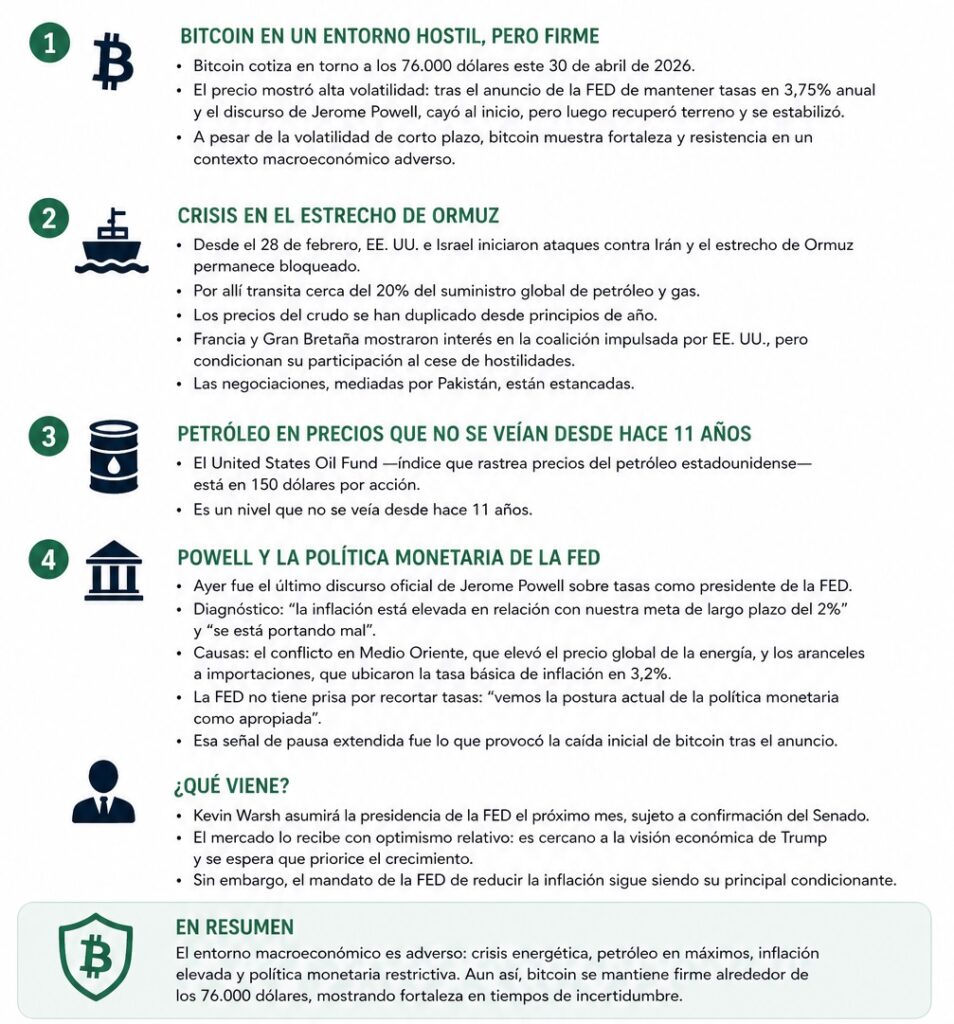
As is evident, the macroeconomic environment is not the most friendly for financial markets. But still, at $76,000, bitcoin shows that it can hold its own in one of the most complex macroeconomic scenarios in years.