
Tether reported that USDT reached 570 million users during the first quarter of 2026, according to data included in its reserves report with a cut-off date of March 31, in a context of increased demand for digital dollars in emerging economies.
The document, prepared by the BDO firmincludes figures provided by the USDT issuing company itself and details the composition of its assets and liabilities. The report is used as a reference to analyze the evolution of the system, although it is based on information provided by the company itself.
According to the reportliabilities linked to USDT amount to approximately $183 billionwhile total assets reach about 191.7 billion, which leaves a surplus of reserves close to 8.23 billion dollars.
Regarding the composition of the reserves, the exposure to US Treasury bonds is around $141 billion, which positions Tether among the largest global holders of US debt. The report also includes around 20 billion in physical gold and around 7 billion in bitcoin (BTC), within a portfolio of highly liquid assets.
Additionally, the company reported a net profit of approximately $1.04 billion in the quarterdespite an environment of high volatility in the financial markets.
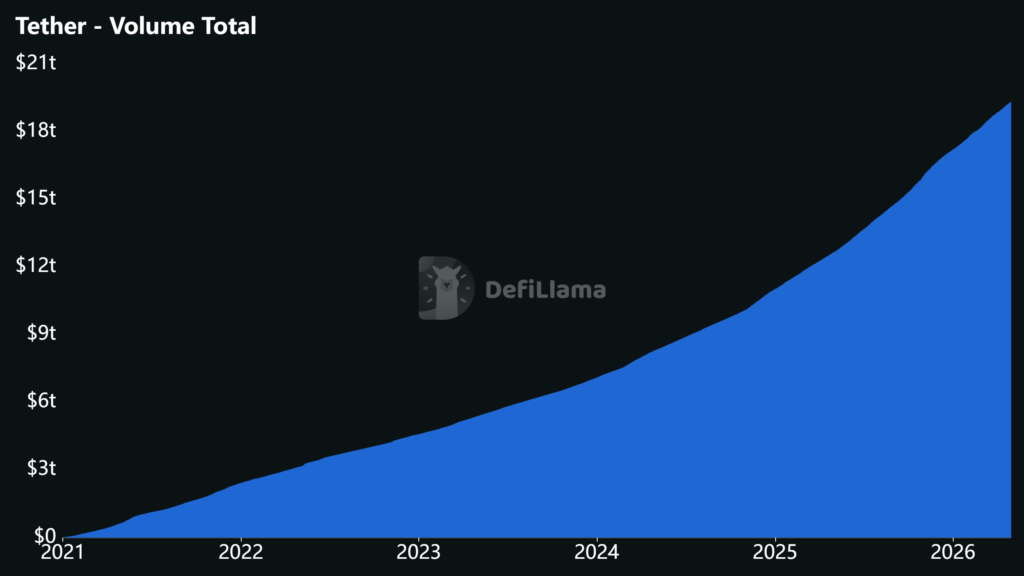
In parallel, DeFiLlama data show that USDT currently maintains a capitalization close to $190 billion and a dominance of 59.13% within the stablecoin market, in addition to concentrating most of the sector’s transaction volume. These metrics place it as the main asset of this type in the ecosystem, according to independent market data.
It is important to remember that USDT operates under a centralized modelwhich implies that Tether maintains the technical capacity to freeze or restrict addresses in certain cases linked to regulatory compliance or legal requests. This aspect has been a source of debate in the sector, especially due to previous episodes of funds being blocked, as reported by CriptoNoticias.
Added to this is the strong exposure of its reserves to US debtwhich introduces a direct dependence on the macroeconomic and financial conditions of the United States, given the weight of Treasury bonds within its support structure.
It is worth noting that the growth of the user base occurs in a context of greater demand for digital dollars in markets such as Latin America, for example, where assets such as USDT function as a partial alternative to traditional banking systems, while discussions continue on transparency, reserves and degree of centralization of the model.