US President Donald Trump did not like Chancellor Friedrich Merz’s latest statements on the Iran war, this was evident from Trump’s recent statement on Truth Social, where he claimed that the German leader “doesn’t know what he’s talking about!”
So what? On Monday, Meraz said the US “clearly has no strategy” to deal with Tehran, adding that “the entire country is being humiliated by the Iranian leadership.”
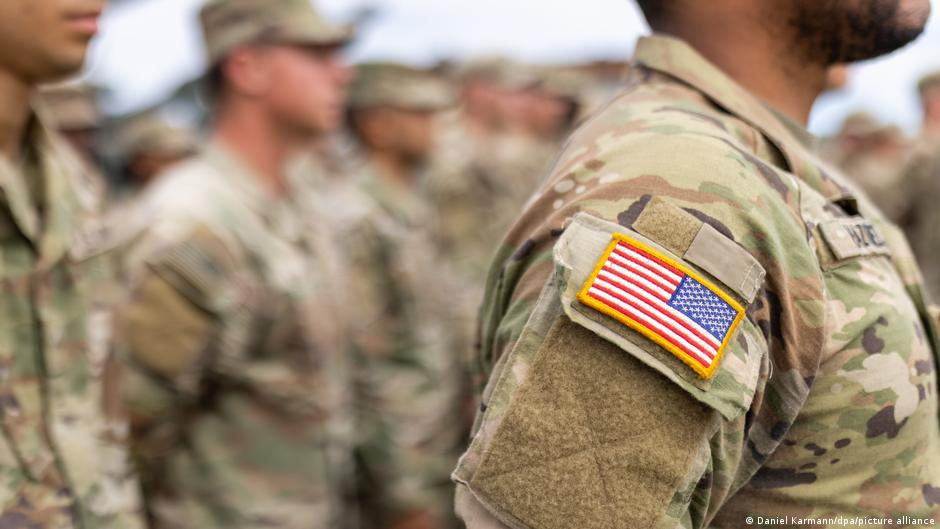
The German leader’s words did not go down well with Trump, who immediately threatened to reduce the US military presence in Germany. As of Friday, US Defense Secretary Pete Hegseth had ordered the withdrawal of about 5,000 US troops over the next six to 12 months.
However, this is not the first time that a US President has threatened to reduce the number of troops deployed in Germany. But US military facilities in Germany are of vital strategic importance to the US, along with being an important part of the economy in some parts of the country.
About 35,000 to 39,000 U.S. troops are currently deployed in Germany, as well as about 13,000 Air Force personnel. They are spread across 20 different major sites, mainly located in the south and south-west of the country. Including smaller installations, there are a total of about 40 US-operated military facilities in Germany.
Rammstein and Spangdahlem
Ramstein Air Base in the western state of Rhineland-Palatinate is the largest US military base outside the US. It serves as a logistics hub for troops, equipment and freight en route to the Middle East, Africa and Eastern Europe.
Ramstein is the headquarters for US Air Forces in Europe and serves as NATO’s command center for monitoring military airspace for all European partners. The air base is also home to a satellite relay station, which is vital for the deployment of US combat drones to the Middle East, for example. Since the curvature of the Earth does not allow direct drone operations from the US, signals are relayed by satellite via Ramstein.
The base also serves as a medical center, as wounded soldiers from Europe, Africa or the Middle East are transported to Ramstein and treated at the adjacent Landstuhl Regional Medical Center, the largest US military hospital outside the US.
Both facilities are part of the Kaiserslautern military community, which includes more than 50,000 U.S. servicemembers, civilian employees and their families.
Spangdahlem, the second largest US Air Force base on German soil, is located about 120 kilometers (75 mi) to the northwest. Unlike Ramstein, Spangdahlem serves primarily for operational combat missions. A fighter squadron comprising about 20 F-16 jets is deployed here which acts as a quick reaction force in times of crisis. The squadron helps secure NATO’s eastern flank and specializes in eliminating enemy air defenses.
Stuttgart and Wiesbaden
While Ramstein and Spangdahlem are largely operational US bases, Stuttgart and Wiesbaden play a more strategic role. This is because Stuttgart is home to US European Command (EUCOM) and US Africa Command (AFRICOM). All US military activities in Europe and Africa are coordinated from here. Wiesbaden also hosts the headquarters of US Forces Europe and Africa. In addition, deliveries of Western weapons and training programs for the Ukrainian Armed Forces are coordinated here.
Grafenwoehr and Hohenfels
These two Bavarian communities east of Nuremberg are home to the Joint Multinational Readiness Center, the U.S. military’s most important training facility in Europe.
Grafenwöhr is one of the largest and most modern military training grounds in the world, where soldiers learn to operate weapon systems using live ammunition. Meanwhile, Hohenfels conducts realistic war exercises in mock villages, sometimes using civilian actors. Thousands of NATO soldiers train at both locations each year to improve cross-border cooperation.
Buchel
Büchel Airport in Rhineland-Palatinate is widely believed to be Germany’s only remaining nuclear weapons site, although neither the US nor Germany have ever officially confirmed this. Like other European countries, Germany also participates in NATO’s “nuclear sharing”. This means that while the US stores nuclear weapons in Europe, it is their NATO host countries that deliver the weapons by warplane in the event of a crisis.
Stockholm-based peace research institute SIPRI It is estimated that America has a total of 15 to 20 strategic nuclear bombs stored at this place.
The airbase is home to a specially trained German Tactical Air Force squadron and an American ammunition support squadron that maintains and repairs weapons stored here.
Why are there so many US bases in Germany?
Following the Allies’ victory over Nazi Germany, the western part of the country – which later became West Germany – was divided into three occupation zones: administered by the British, French and US respectively. The latter consisted mainly of the south and south-west of Germany, which is why US forces are still concentrated here today.
With the beginning of the Cold War, West Germany became a leading state bordering communist East Germany and Czechoslovakia, two Warsaw Pact countries. Both West Germany and the United States were keen to increase the American military presence as a deterrent against the Soviet Union. At its peak, more than 250,000 US troops were stationed in West Germany in the mid-1980s.
After the collapse of the Soviet Union in 1989/1990, Germany’s geographical location in the center of Europe remained strategically advantageous for the US.
That is why its bases continue to be used to support US military operations in the Middle East and Africa, but also to secure NATO’s eastern flank against Russia, even as the number of US troops stationed in Germany has steadily declined.
How important are US bases to Germany’s economy?
Bases are an important economic factor for Germany. Many sites are located in rural areas of the country, where the US military serves as the largest investor and employer.
More than 10,000 Germans work directly for the US military, while an estimated 70,000 German jobs are indirectly linked to companies working for the US military, for example in the construction sector or service industry.
Every year, the US invests billions in operating, expanding and modernizing its German bases.
In addition, American soldiers and their families based in Germany spend a large portion of their pay at German stores and businesses. The military community alone contributes up to €3.5 billion ($4.1 billion) annually to the regional economy.
This article was translated from German.