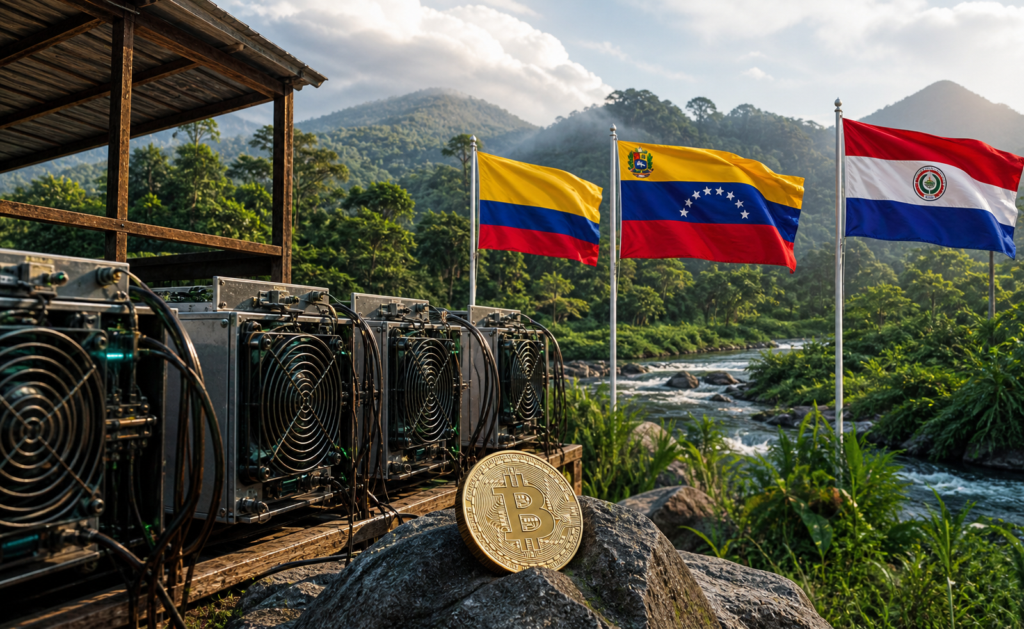
The president highlighted the regional energy potential to expand sustainable mining
Paraguay is positioned as a leader in the sector due to its abundant surplus of hydroelectric energy
Bitcoin mining returned to the center of the discussion in Latin America after the recent statements by the president of Colombia, Gustavo Petro, who focused on the energy potential of countries such as Paraguay and Venezuela to attract investments in this industry.
The president linked the availability of electrical surpluses – especially of hydroelectric origin – with opportunities for economic development, considering that these resources can be used in energy-intensive digital activities such as cryptocurrency mining.
Bitcoin mining has an environmental impact that depends directly on the energy source used: while the use of fossil fuels increases emissions, The use of renewable energies allows electricity to be monetized surplus without putting pressure on domestic demand.
Through your account on X, Peter warned about the climate risks of this industry when it is based on polluting energies, although it highlighted its potential in contexts where there are “underutilized” clean resources.
If virtual currencies are based on fossil energy, global warming and climate collapse explode (…) Today, countries with abundant clean energy locked up, such as Venezuela and Paraguay, manage to attract investments in bitcoin mining.
-Gustavo Petro, president of Colombia.
In this context, he returned to an analysis by Luxor Business Manager, Alessadro Cecere, also known as Sultan Bitcoin, who described how Paraguay has positioned itself as one of the main mining centers globally thanks to its hydroelectric surplus. The report also suggests that Venezuela could develop a similar modeldue to its extensive hydroelectric system and the possibility of reusing wasted energy resources, such as the associated gas in the oil industry, as CriptoNoticias explained.
Given this, Petro connected this scenario with Colombia and proposed that Caribbean cities such as Santa Marta, Barranquilla and Riohacha could explore this type of projects, including schemes in which communities such as the Wayú participate as partners in energy and technological initiatives.
However, specialists warn that the growth of this industry in the region depends on key factors such as regulatory stability, legal certainty and the ability to attract private investment.