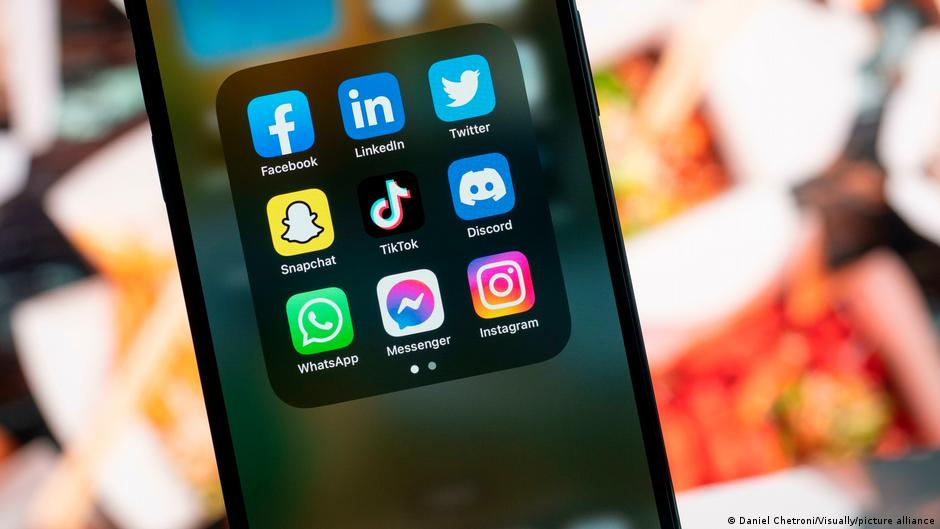
As Internet users, do we still control the content we see on Facebook or Instagram? Or are we being deliberately driven toward personalized feeds or algorithms that collect more data about us and keep us on the platform longer?
These are the key questions at the center of Ireland’s media regulator’s latest investigation into Facebook and Instagram’s parent company Meta.
The authority is investigating whether Facebook and Instagram’s recommendation systems violate Article 27 of the European Digital Services Act (DSA). Under this law, EU citizens have the right to understand and modify the algorithms of their social media platforms at any time. The investigation is now looking into whether Meta uses manipulative user interfaces – so-called dark patterns – to make these choices unnecessarily complex for its users.
Violations of the DSA can result in fines of up to 6% of global annual revenue. In the case of Meta, this amount would be up to €20 billion ($23.5 billion).
What are dark patterns?
Dark patterns are specific web design tactics designed to influence users to do something they don’t really want to do or that isn’t in their best interests. They often take advantage of users’ desire for convenience, lack of time, or fear of missing out. The goal is to motivate users to make a purchase, sign up for a subscription, or share personal information.
In the current case, the Irish media regulator is investigating whether Meta deliberately hides the option to switch between personalized and fully chronological feeds in separate menu options, and whether the company resets the selected setting after the app is closed – so that users who ultimately agreed to the personalized feed could be left alone.
Confirmation shaming, hidden “no” buttons, and more
Meta is by no means the only tech company suspected of using dark patterns. Similar user interfaces can be found on many social media platforms and online stores, as well as in mobile games and other apps. The most common deep patterns include:
– Confirmation shaming: When users are asked a question, for example about data tracking for personalized ads, they are given two options: the agree button is large and colorful, while the decline button is small and gray. It is also often labeled in a manipulative way, such as “No, I want to continue seeing irrelevant ads,” as if choosing this option is a shame because it is considered worse than others.
– Hidden “No” button: Often, there is a “Yes” button, but another button says “More Options,” so users have to click their way through additional submenus to select “No.” Sometimes the answer options are also pre-selected with checkmarks (“pre-checked boxes”), so the user must actively uncheck them first.
– Artificial time pressure: Online retailers often use this strategy. For example, they may display a flashing countdown timer or “Only one item left in stock!” Can display messages like. or “x [number of] People are currently viewing this item.” This strategy is designed to pressure users and lead them to make a hasty, thoughtless purchase.
– Annoying: Users are repeatedly prompted to perform a specific action to finally agree to get rid of the annoying notification. This may happen, for example, when booking a trip that involves several steps: a suggestion to purchase trip cancellation insurance or reserve a seat for an additional fee appears on every page.
– “Pay or OK” model: This forces users to either pay for ad-free use of a website or consent to the processing of their data for personalized advertising. Consumer advocates criticize this model because it does not give users the same options and effectively pressures them to share their data, as the only other option involves a fee.
– “Cockroach Motel”: This model makes it easy for users to sign up for a specific service or subscribe with the click of a button. But it is very difficult to cancel it. Often, the options to do so are buried deep in submenus or require written cancellation notice or a phone call. The term for this practice is derived from the American cockroach trap where insects can get in but can never go out.
– Another common practice involves initially offering a free trial subscription that automatically renews if not canceled beforehand. The cost of these subscriptions is displayed very minutely upon renewal.
What can consumers do to protect themselves from dark patterns?
Under the Digital Services Act, the EU has effectively banned online platform operators from using such practices. Users should not be deceived, manipulated or prevented from choosing free options by the design of a website.
Such dark patterns often operate in a legal gray area. There is no clear, uniform legal definition of when a design is “manipulative”. Many websites use psychological mechanisms that are questionable but not completely illegal.
Making users aware of these tricks is still the best way to prevent people from falling into their trap. Given the large number of dark pattern models online, various websites ranging from consumer protection organizations to academic research projects have compiled lists of them to make public the underlying mechanisms.
In general, the German consumer protection organization advises Internet users to always proceed with caution when surfing the web, avoid clicking preset buttons too quickly, and always review checkboxes and shopping carts carefully. Additionally, users should not pressure themselves into making hasty purchasing decisions and should not allow websites to make them feel guilty.
This article was originally published in German.