India has long taken pride in doing what few major powers can do. It bought oil from Iran, built defense ties with Israel, strengthened ties with the US and expanded economic ties with the Gulf monarchies, while insisting that it would not be drawn into regional camps or formal alliances.
However, the Iran war is pushing that formula to its limits. It seems Indian Prime Minister Narendra Modi is feeling the pressure – he is set to embark on a diplomatic tour on Friday, which will see him visit the United Arab Emirates and four European countries over seven days.
For New Delhi, the Iran conflict is more than an energy crisis looming in a distant region. This is a direct challenge to the basic assumption behind India’s foreign policy in the Middle East, namely that it can maintain its autonomy while developing relations with every major strategic power in the region.
New Delhi’s balance faces a ‘much more unforgiving’ environment
Amitabh Mattoo, dean of the School of International Studies at Delhi’s Jawaharlal Nehru University, says India spent decades perfecting a balancing act that was rooted in “harsh realism”.
“But the Iran conflict has made the geometry more inexact. Strategic autonomy works best in a fluid multipolar system,” Mattoo told DW.
“This becomes more difficult when rival camps simultaneously demand political loyalty, sanctions compliance and security alignment,” he said.
However, Mattu is clear about what breaks first when the pressure is extreme.
“If pressure increases, India’s first instinct will always be to protect economic stability and energy security. No government in New Delhi can afford prolonged oil shocks, shipping disruptions in Hormuz or a domestic inflation spiral,” he said.
But he stops short of terming such steps as a break in relations with Washington or Tel Aviv.
Mattoo said, “The US is indispensable to India’s larger strategic future: technology, defence, Indo-Pacific balance and access to global capital. Israel remains an important defense and intelligence partner. The Gulf is central to energy, remittances and diaspora stability. Iran matters for geography and continental access.”
In his assessment, what the crisis has exposed is much bigger than a policy dilemma.
He said, “India is no longer a bystander in West Asia. Its dependence on the region means that every tension there now directly tests India’s great-power ambitions. Strategic autonomy is no longer a slogan. It is a stress test.”
As he says, this paradox is inherent in India’s own success.
“New Delhi seeks strategic autonomy, but the deeper its global integration becomes, the more difficult it will become to remain geopolitically non-aligned in moments of major conflict. In a polarized West Asia, neutrality is becoming less a status and more a luxury,” Mattoo said.
Sticking to Multi-Alignment to Get Through Difficult Times
Not everyone accepts that the theory is under extreme strain. TS Tirumurti, a retired diplomat and India’s first representative to the Palestinian Authority, argues that the Iran war is, in fact, an argument for New Delhi to maintain the current course.
“So far, our policy of multi-alignment, including in West Asia, has stood us in good stead and expanded the scope for independent decision-making and navigating regional fault lines. It is only when we deviate from multi-alignment and try to lean towards one side or the other that our strategic space gets limited,” Tirumurti told DW.
He also rejected the idea that India faces a binary choice between energy security and strategic partnership.
“Indeed we have navigated through such issues in recent times and have managed to secure our energy supplies as well as maintain our good relations with Israel and the US. Recent history shows the foresight of India’s decisions on energy security,” he said.
As India’s oil reserves are depleting, the pressure is increasing
India’s ability to maintain that balancing strategy depends on more than diplomatic skills. It is also a matter of economic resilience, and it is becoming increasingly difficult for New Delhi to bear the costs of prolonged regional conflict.
Gulf countries supply a major part of crude oil and natural gas to India. More than nine million Indians live and work in the Gulf countries, and their remittances are deeply linked to India’s domestic economy.
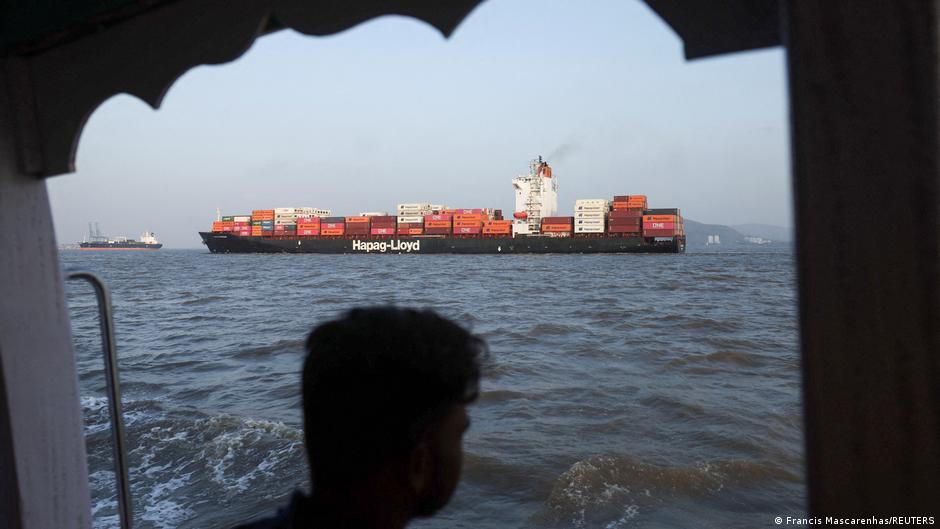
The Strait of Hormuz remains the most obvious pressure point. Even the possibility of disruption poses a blow to India’s import calculations, insurance costs, inflation and financial stability.
New Delhi has responded by diversifying suppliers and deploying the Indian Navy to protect commercial shipping, but no response is cheap. Although India’s strategic petroleum reserves can withstand temporary shocks, they are ill-prepared for a protracted Gulf conflict.
Former ambassador to Iran: India should remain neutral
Former ambassador to Iran Gaddam Dharmendra says India is expanding its “historically close ties” with members of the Gulf Cooperation Council, which includes Saudi Arabia, the United Arab Emirates, Qatar, Kuwait, Oman and Bahrain.
“Therefore, New Delhi will avoid taking sides in the newly emerging fissures,” Dharmendra told DW.
He said, “As a net energy importer, India’s strategic priority will be to strengthen its hydrocarbon supply chains. The disruption in Hormuz and damage to the Gulf energy infrastructure has put India’s traditional dependence on the region under severe stress.”
But Dharmendra also sees India adjusting rather than abandoning its balancing strategy.
“In this scenario, the US, now a major oil and LNG exporter, has a role in India’s energy import mix. Therefore, we need to look at this not as a zero-sum game but as a net-win win,” he said.
He also argues that due to changes in the Gulf “it is not always easy to maintain a posture of neutrality, but it is now a necessity”.
Is India moving towards US-Israel axis in Iran war?
The most uncomfortable question is not whether India will formally choose a side, but whether the cumulative weight of its decisions is already weighing on it.
Shanti Marriott D’Souza, founder of Mantraya, an independent research platform, says India has historically used strategic autonomy as a flexible concept capable of accommodating conflictual relationships.
“The concept itself has not come under strain, but India’s ability to balance its relations with a group of countries with conflicting interests has certainly come under great pressure, which will become impossible if the war drags on any longer,” D’Souza told DW.
While New Delhi is resisting formal alignment, its deepest strategic, technological and economic partnerships are growing with the US, Israel and key Gulf states, even as it seeks to preserve working relations with Iran.
D’Souza said, “New Delhi will still bet on an early end to the war through mediation, which would be the best-case scenario. Prime Minister Modi’s current multi-nation visit starting from the UAE is likely to reflect these diplomatic efforts.”
Edited by: Darko Janjevic