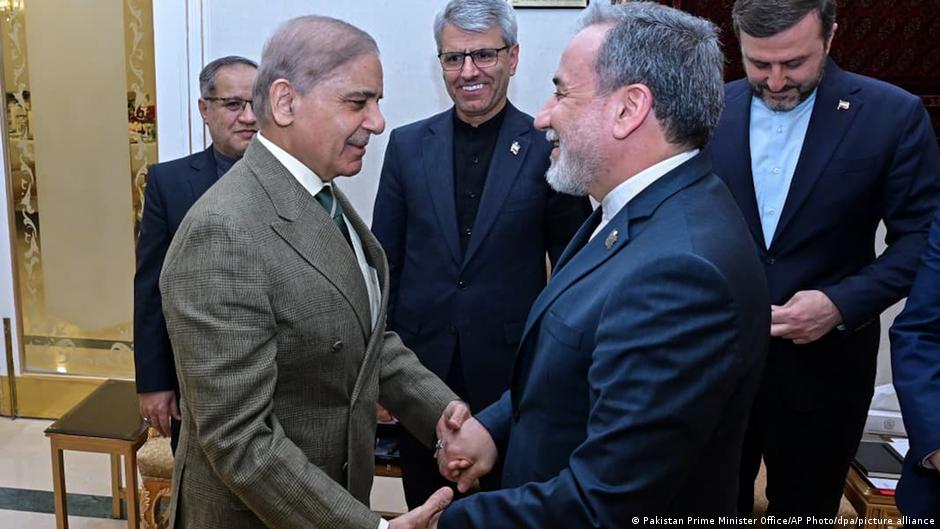
Pakistan has played a leading role in peace efforts between the US and Iran, hosting talks and acting as a mediator for backchannel diplomacy between the warring parties.
For Islamabad, the stakes are high. Officials view stability in the Gulf as closely linked to the country’s own economic and security interests. A broader confrontation between the US and Iran could disrupt trade routes, increase energy pressure, increase sectarian tensions and further destabilize Pakistan’s sensitive border areas with Iran.
International reputation also matters to the Pakistani government as they work to end the conflict that has affected the entire world. But it also means the risk of reputational damage.
“Pakistan risks increasing criticism if its efforts to revive US-Iran talks fail, especially after publicly playing a leading mediation role,” Michael Kugelman, senior fellow for South Asia at the Washington-based Atlantic Council, told DW.
“The stalling of talks has limited Pakistan’s options as a mediator cannot force two deeply distrustful parties to talk,” he said.
Islamabad criticizes ‘misleading’ CBS report
“Pakistan is doing its best to engage both sides and is watching the rising tensions between Washington and Tehran with grave concern,” a senior government official involved in the talks process told DW.
“We are committed to playing a constructive diplomatic role in urgently de-escalating tensions and supporting a peaceful resolution in the interest of regional and global security,” the official said.
Earlier this week, a US media report raised doubts over Pakistan’s neutrality in the Iran conflict. Citing unnamed US officials, CBS News reported that Pakistan has given Iran permission to park its aircraft at Pakistani airbases.Effectively protecting them from American attacks.
Pakistan’s Foreign Office immediately responded, calling the report “misleading” and “speculative”. In an official statement, Islamabad said the aircraft activity was related to diplomatic and logistical arrangements related to ongoing peacekeeping efforts and involved personnel from multiple parties.
The Foreign Office also warned that “unverified and sensationalist reporting” risked undermining sensitive diplomatic initiatives.
China wants Pakistan to ‘step forward’ as mediator
US Senator Lindsey Graham, a vocal supporter of America in Iran, publicly criticized Pakistan after the CBS report. His comments reflect broader concerns among some US policymakers, who fear that Pakistan is appearing too accommodating towards Tehran while still trying to maintain strategic ties with Washington.
At the same time, America’s rival China has openly encouraged Pakistan to expand its diplomatic role. Chinese Foreign Minister Wang Yi urged Islamabad to “step up” mediation efforts between Iran and the United States and help stabilize the region, especially around the Strait of Hormuz, according to news agency AFP.
The question, however, is how much Pakistan can do to bridge the divide between Washington and Tehran. The US and Iran held a high-level summit in Islamabad last month, but subsequent efforts by Pakistan to establish direct talks have failed.
“The outcome of the talks was never guaranteed, nor was it in Pakistan’s hands,” Imtiaz Gul, an independent security analyst, told DW. He said, “It all depended on Trump’s willingness to engage in negotiations based on Iran’s ten-point proposal. The agreement also depended on Iran’s willingness to stick to all demands or adopt a middle path.”
Gul commented, “I think the US and others misunderstood the Iranian character and underestimated their solution. That’s why there was a setback. I’m not sure the level of confidence (of the parties concerned) in Pakistan is as high as it was when the mediation started.”
‘Distrust everywhere’
Although Islamabad maintains working relations with both the US and Iran, every diplomatic move risks arousing suspicion from one side or the other. Critics in Washington question whether Pakistan is too soft on Tehran, while Iranian officials remain cautious because of Pakistan’s long-standing military and strategic ties with the United States and Saudi Arabia.
A wrong move by Pakistan could also strain its relations with its Middle East rivals China or Iran.
Fatemeh Aman, an independent expert on Iran-Pakistan relations, told DW, “Pakistan will likely continue efforts, but expectations should remain limited. Islamabad is in no position to shape US-Iran tensions in any way. Its main role is to keep communications open when direct engagement becomes difficult.”
Aman underlined, “The main disputes between Tehran and Washington – sanctions, regional security and nuclear issues – are beyond Pakistan’s influence. At the same time, Pakistan struggles to balance relations with Iran, the US and Gulf Arab states, leading to mistrust on all sides. As tensions rise, it becomes increasingly difficult to maintain that balance.”
Donald Trump’s praise of Pakistan may isolate Iran
Analysts say Pakistan’s realistic role is likely to be limited to facilitating communications and supporting efforts to reduce tensions rather than any major diplomatic breakthrough between the two rivals.
Kugelman warns that there is a growing risk of Iran viewing Pakistan as too close to the US, especially given President Donald Trump’s repeated praise of Pakistan.
The US-based expert said, “The most practical step that Pakistan can take is to encourage both sides to maintain and extend the ceasefire. At the same time, Pakistan should carefully maintain its credibility with Iran. Reports suggest that Pakistan is not properly communicating the situation between Tehran and Washington, which could harm its role as a neutral mediator.”
Edited by: Darko Janjevic