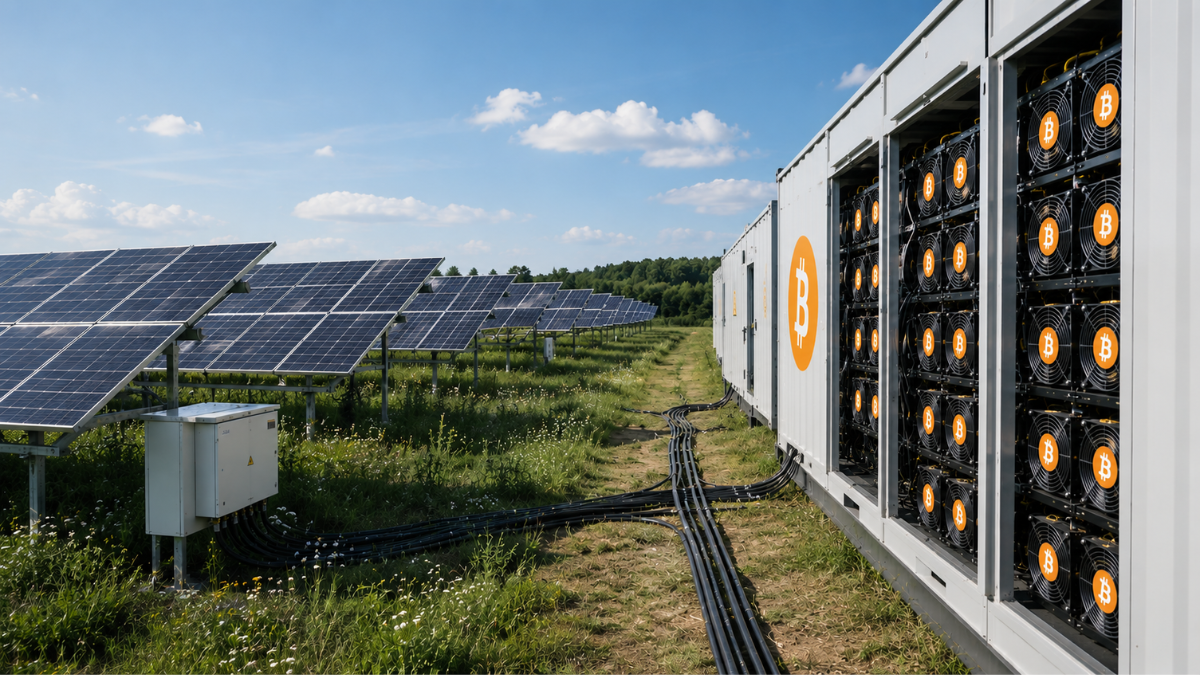
In Spain, 16% of solar generation was disconnected in the first quarter of 2026.
BTC mining absorbs electrical surpluses and turns off when the electrical grid needs it.
Europe will waste around 40 terawatt-hours (TWh) of solar energy in the coming months, equivalent to the annual electricity consumption of the entire London metropolitan area. This is because their networks cannot absorb excess production, according to a Bloomberg report. That figure represents 25% more than what was wasted in 2025.
While countries on that continent throw away their solar energy, Bitcoin mining emerges as one of the most effective tools to absorb that surplus, given its capacity to consume energy when there is excess and disconnect quickly when it is scarce.
The phenomenon behind waste is called curtailmenta practice of forced disconnection of solar plants during peak generation hours, when production exceeds what the grid can transport or store.
In Spain, 16% of solar generation was cut in the first quarter of 2026double that of a year before; in Germany, the percentage rose from 7% to 13%, according to estimates by the London Stock Exchange Group cited by Bloomberg in its May 13 article.
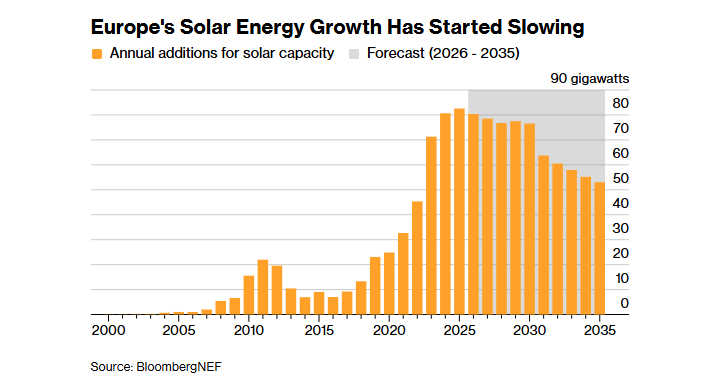
As a consequence, the surplus drives electricity prices into negative territory: when there is more energy than the system can consume or store, producers must pay others to receive it, since they can’t just turn it off immediately. At peak times, the megawatt-hour reached less than EUR 500 (USD 580) in Germany and France during the spring, according to the same report.
Additionally, the European Commission estimates that 1.2 trillion euros ($1.39 trillion) in network investment will be needed by 2040, a figure that underlines how far infrastructure is from catching up with generation, according to the Bloomberg report.
How can Bitcoin mining take advantage of this surplus?
Daniel Batten, specialist in energy and Bitcoin mining, explained to CriptoNoticias in exclusive statements that no other industry has the capacity to respond that mining offers to network operators.
Bitcoin mining is the only industry that can be shut down instantly, in a modular fashion, and stay shut down for days.
Daniel Batten, Bitcoin and energy specialist.
Unlike a factory or data center, which cannot reduce its electrical consumption below an operating minimum without stopping production, a mining facility can shut down individual equipment with surgical precisionreturning to the system exactly the amount of energy the grid operator needs at that moment.
In the European context, where solar surplus appears and disappears depending on weather conditions and hourly demand, this flexibility solves the problem that neither batteries nor transmission lines have been able to solve in time.
When prices drop during peak solar generation hours, miners turn on and absorb what the grid can’t place elsewhere, converting waste energy into bitcoin. When other users demand that electricity and the price rises, mining ceases to be profitable and is withdrawn without regulatory intervention.
Bitcoin mining does not compete with other energy users. Much of the energy it uses is hydroelectric, solar and wind – harnessed at times of day when it would otherwise simply be wasted.
Daniel Batten, Bitcoin and energy specialist.
That reading was shared by several ecosystem leaders in response to the Bloomberg report. Wicked, bitcoiner developer, summarized the situation in one line: “Bitcoin mining thrives on excess stranded energy.”
Charles Guillemet, chief technology officer at Ledger, he answered with ironyalluding to Bitcoin: “What a shame there isn’t a flexible, interruptible industry that can absorb excess electricity when prices are negative… some kind of machine that will happily convert stranded energy into money and shut down the second the grid needs it back.”

Rachel Geyer, president of the European Bitcoin Energy Association (EBEA), had anticipated that argument in a 2024 interviewespecially relevant now: “Bitcoin miners can turn off when electricity prices rise and turn on when they fall, making them an ideal partner for stabilizing networks. “We shouldn’t be cutting off energy production: we should be using it.”
An argument with academic support and documented limits
He paper by Ibanez and Freier (2023)cited by Batten to CriptoNoticias, proposes Bitcoin mining as leading industry to decarbonize electrical networksprecisely because of that flexible absorption capacity.
Batten further notes that the model expands to other uses: Heat generated by mining equipment can be redirected to heat homes and buildingsand miners using vent gas or landfill methane can generate carbon credits by reducing emissions that would otherwise be released into the atmosphere.
However, as Batten himself acknowledges, there are no documented European cases of Bitcoin mining stabilizing solar networks on a scale. The model exists and is growing in other regions, such as Pakistan, but its application in Europe remains a technical proposal, not an established practice.
The central paradox that Bloomberg describes is that Europe invested for years in clean solar energy that it cannot now use: the panels are there, the electricity is generated, but the network cannot transport or store it in timeand ends up being discarded.
Leonhard Birnbaum, CEO of the German utility E.ON., summarized it by saying that “solar panels that cannot feed electricity to the grid do not offset a single ton of CO2.”
In that context, Bitcoin mining is one of the few industries that could change that equation today, without waiting for European infrastructure to catch up.