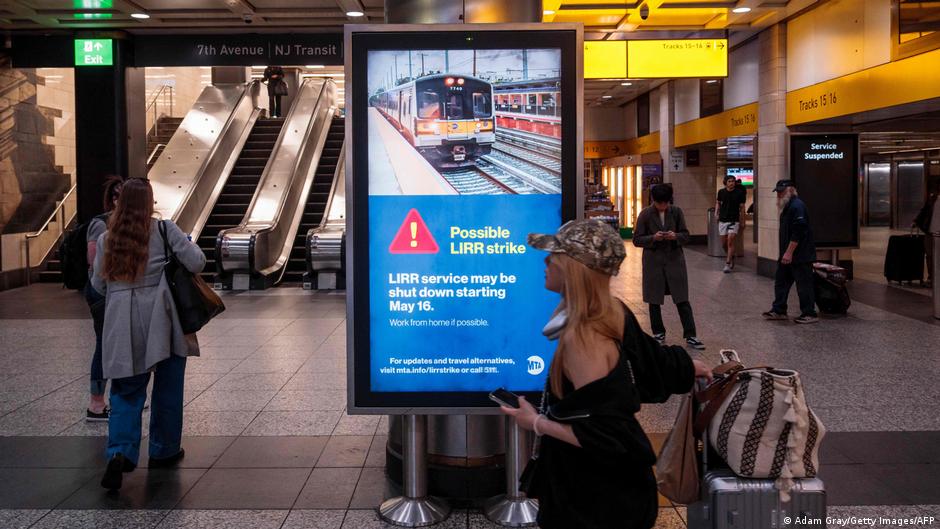
New York’s Long Island Rail Road (LIRR) workers went on strike on Saturday, bringing the United States’ busiest commuter rail system to a halt.
Around 3,500 workers, including locomotive engineers, machinists and signalmen, are participating in the strike.
This is the first time LIRR rail workers have struck in 32 years.
A group of five unions called on their employees to participate in a walkout after negotiations with the Metropolitan Transportation Authority (MTA) ended without an agreement.
The LIRR system serves approximately 300,000 passengers daily, connecting New York City and its boroughs with suburban Long Island.
What is the dispute about?
Both sides of the labor dispute said the fight focuses on wage increases and health care premiums.
The International Brotherhood of Teamsters union said railroad workers have not received pay for three years during the bargaining process.
Kevin Sexton, national vice president of the Brotherhood of Locomotive Engineers and Trainmen, said no new negotiations are planned between the two sides.
“We’re pretty far along at this point,” Sexton said. “We’re really sorry we’re in this situation,” he said.
For his part, MTA President Janno Lieber told the agency, “The union gave everything they asked for in terms of pay” and that it was clear to him that the unions always intended to walk out.
The MTA said the union’s initial demands would result in fare increases.
Fear of passenger chaos
This weekend, the strike could make it challenging for suburban sports fans to watch the New York Knicks’ National Basketball Association (NBA) playoffs in Manhattan or the Major League Baseball intra-city rivalry between the New York Yankees and Mets.
But it would be the most troublesome thing for workers if the strike continues throughout the work week, as additional traffic could be seen on New York’s already overloaded highways.
The MTA announced plans to provide a limited number of free shuttle buses during rush hours for essential workers.
New York Governor Kathy Hochul urged LIRR riders to work from home if they are able.
Hochul blamed the strike on union leadership for “unnecessary dysfunction and thousands of unionized LIRR employees being forced to go without pay.”
“I stand with LIRR riders and will fight to preserve the long-term stability of the MTA,” she said.
Edited by: Carl Sexton