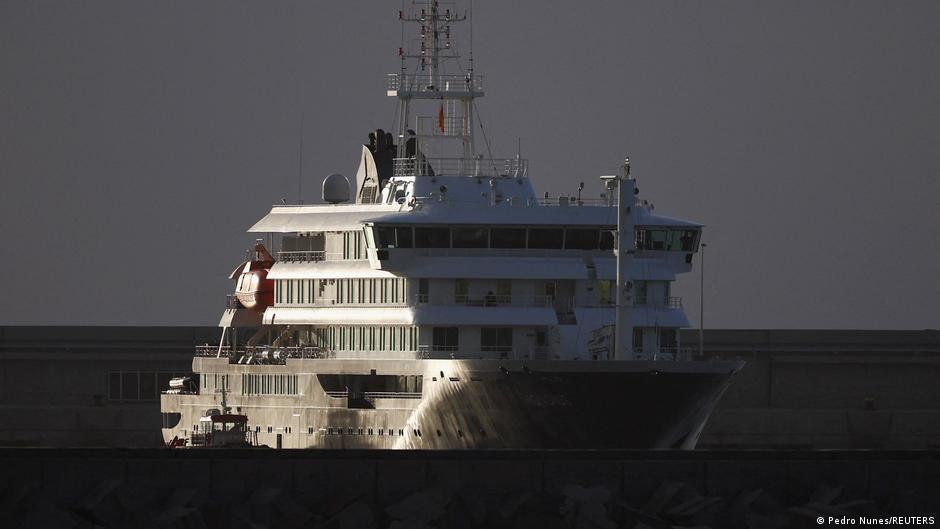
The cruise ship MV Hondius, which sparked global concern following the deadly Hantavirus outbreak, ended its voyage on Monday, with Rotterdam in the Netherlands being its final destination.
The ship arrived at the Dutch port shortly after 10 a.m. local time (0800 UTC).
Authorities have made quarantine arrangements for the ship’s skeleton crew of 27 people – 25 crew and two medical staff – who remain on board.
The Dutch-flagged luxury cruise ship was carrying about 150 passengers and crew from 23 countries when three deaths from hantavirus were reported earlier this month.
Hantaviruses come from rodents. People become infected by contact with infected rodents or their urine, feces or saliva, primarily by breathing in contaminated particles.
According to the US Centers for Disease Control and Prevention, the virus can cause a serious and sometimes fatal lung infection called hantavirus pulmonary syndrome.
What will happen after MV Hondius reaches Rotterdam?
A total of 17 people from the Philippines, four from the Netherlands, four from Ukraine, one from Russia and one from Poland will disembark from Hondius after more than two weeks of negotiations.
The ship’s operator, Oceanwide Expeditions, said those who were still on board had no symptoms and were being closely monitored by the two accompanying physicians.
Some will remain in quarantine facilities at the port, while others will self-isolate at home.
Local authorities said quarantine facilities had been set up for some non-Dutch crew. It was not immediately clear whether they would remain there for the full recommended 42-day quarantine period.
Also on board is the body of a German woman who died during the voyage.
Oceanwide Expeditions said the Hondius will be cleaned and disinfected.
nightmare campaign
Hondius began her South Atlantic voyage from Argentina on 1 April.
The Hondius was left stranded at its intended final destination – Cape Verde – after the African archipelago country refused to accept the ship due to the outbreak, first reported on May 2.
The ship then proceeded to Tenerife in the Canary Islands, where Spanish authorities mounted a complex repatriation operation and evacuated more than 120 passengers and crew.
Those evacuated were sent either to their home countries or to the Netherlands, which has a special responsibility because the cruise is Dutch-flagged.
fear of epidemic
The people who came off the ship and those who came in contact with them were quarantined in many countries around the world.
World Health Organization (WHO) chief Tedros Adhanom Ghebreyesus said on May 12, “There is no indication that we are seeing the beginning of a major outbreak.”
However, the virus has an incubation period of up to six weeks. This means that more cases involving people on cruise ships may emerge in the future.
As of 15 May, 10 cases were reported by WHO, including three deaths. Two of these cases are possible.
On Saturday, Canada said one of its citizens traveling aboard the Hondius had tested positive. WHO said on Sunday that it was waiting for an official update.
Among those infected on the ship is the Andes virus, which is believed to be capable of human-to-human transmission.
Since the outbreak was reported, WHO has tried to allay fears that this was not a repeat of the COVID-19 pandemic, assuring that the contagion was very rare.
Edited by: Wesley Dockery