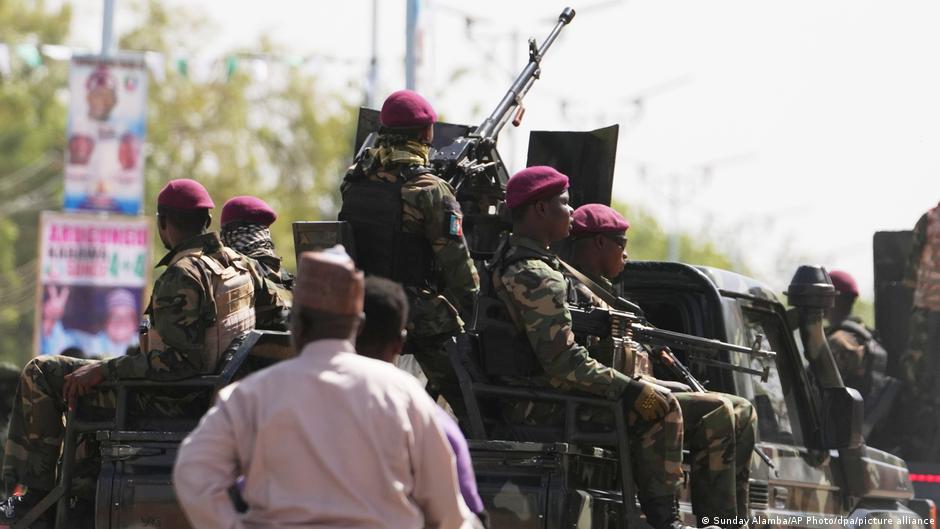
The United States and Nigeria launched fresh strikes Sunday against so-called Islamic State jihadists in Borno state in northeastern Nigeria, the U.S. military said Monday.
At least 20 jihadists were killed in weekend attacks, according to the Nigerian military.
These attacks came shortly after another joint operation between the two armies, which killed Abu Bakr al-Manuki, the deputy leader of the group’s local West African “province”.
The Nigerian military described Manyuki as the world’s “most active terrorist”.
His killing was the first successful targeting of a senior militant leader by Nigerian security forces after more than a decade of insurgency by multiple armed groups in the north, including Boko Haram.
What do we know about the weekend attacks on jihadists?
US Africa Command (AFRICOM) said in a statement “No American or Nigerian forces were harmed” in the weekend attacks, adding that intelligence confirmed the targets were Islamic State militants.
“Removing these terrorists reduces the group’s ability to plan attacks that threaten the security of the United States and our allies,” AFRICOM said.
Nigeria’s military, using another name for the jihadist group, said the raid was “a continuation of coordinated operations against ISIS terrorists” in Nigeria’s restive northeast region.
What is the security situation in the north of Nigeria?
Nigeria’s Muslim and Christian communities are more or less evenly divided in size among its population.
The country’s Muslim-majority north faces dual threats from Islamic jihadists as well as criminal gangs, who have become increasingly active in the past decade. According to analysts, victims are often targeted regardless of their faith.
Last year, US President Donald Trump accused Nigerian authorities of not doing enough to protect the country’s Christian community.
These comments led to a dispute with officials of the West African country, who denied Trump’s allegations.
Shortly after, the armies of both countries coordinated an attack on jihadists on Christmas Day and have worked more closely together since then.
In February the US sent troops to Nigeria, which at the time were considered mostly in an advisory and training role. But the weekend attacks and Manuki’s killing have led to speculation about whether cooperation extended to active US involvement in the West African country.
Gunmen kill at least 10 people in northwestern Nigeria
In a separate incident in northwestern Katsina state, residents said at least 10 people, including women and children, were killed in an attack by gunmen.
Gunmen attacked the rural Guga farming community in Bakori local government area on Sunday, burning houses and looting livestock, Reuters news agency reports.
“Yesterday evening, heavily armed bandits armed with sophisticated weapons attacked farming settlements,” Reuters quoted a resident, Saale Musa, as saying. “After opening fire, they captured 10 people, including a pregnant woman, and killed all of them.”
Musa said the attack occurred when many residents had gone to the nearby Guga market ahead of Eid al-Adha celebrations, leaving the community unsafe.
The Muslim feast involves the slaughter of sheep to commemorate God’s saving the life of Prophet Ibrahim’s son. Communities usually prepare large numbers of sheep and other livestock before the four-day festival.
Edited by: Louis Olofse