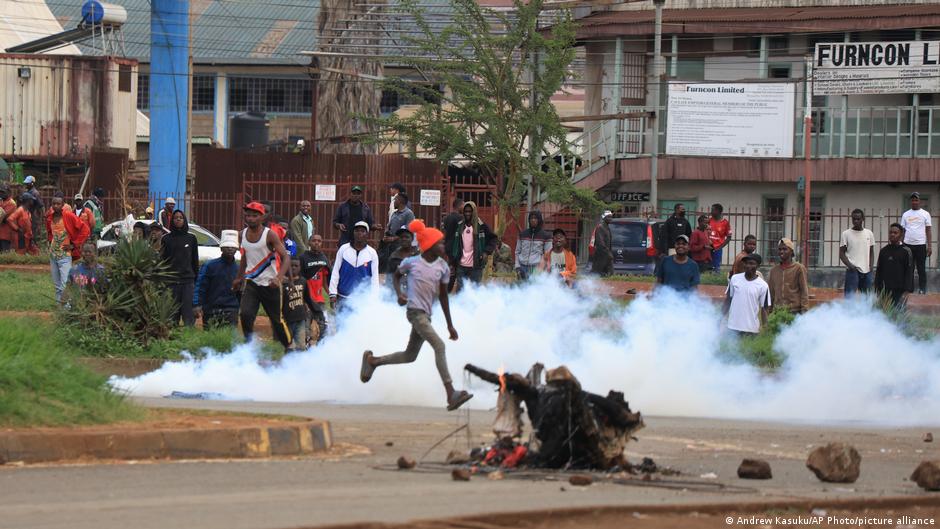
At least four people were killed and more than 30 injured during protests across Kenya on Monday, as a public transport strike sparked anger over a sharp rise in fuel prices linked to the Iran war and disruption through the Strait of Hormuz.
Home Minister Kipchumba Murkomen said in a televised briefing that several people were also injured.
“We lost four Kenyans in today’s violence, with more than 30 injured,” he said.
Last week, Kenya’s Energy and Petroleum Regulatory Authority increased retail fuel prices by 23.5%, double the 24.2% increase the previous month.
Kenya is one of several African countries dependent on fuel imports from the Gulf, which are suspended due to the continued closure of the Strait of Hormuz.
Iran has mostly closed the vital waterway, through which a fifth of the world’s oil flows in peacetime, since the war broke out following US-Israeli attacks on it on February 28.
What do we know about Kenya’s protests, public transport strike?
On Sunday, the Transport Sector Alliance announced that vehicles belonging to its member associations would stop operating from midnight in protest against the latest price hike.
Commuters were stranded in the capital, Nairobi, as striking transport operators and protesters blocked roads, forcing people to work from home. Police fired tear gas in some areas as protesters burned tires to block major roads. Schools were closed and some events were canceled following calls for strikes and protests.
“They don’t want to listen to citizens when we say the prices are too high,” Alex Koum Mwenda, 22, told French news agency AFP.
The protests spread to other major towns and cities, including Kenya’s main port city of Mombasa, where the strike raised fears of supply-chain delays. Protests were also seen in other towns including Nakuru, Eldoret and Nyeri.
How did Kenyan authorities respond to the protests?
Treasury and Economic Planning Minister John Mbadi acknowledged the price increase but said the strike was “completely unnecessary.”
“This is a war we did not create,” he told the NTV broadcaster.
Critics argue that officials could reduce existing high fuel taxes, but Nairobi is dependent on those taxes to finance high levels of debt and a strained budget.
Mabadi told Citizen TV that the Finance Ministry and the Energy Ministry are expected to meet with public transport operators on Monday to discuss solutions. He said that subsidy was already given at the existing prices.
Almost all of Kenya’s fuel products are imported from the Middle East through government-to-government deals with Gulf suppliers.
The rise in fuel prices has led to a sharp rise in transport fares and the cost of basic goods, deepening the pressure on already struggling families. Nearly a third of Kenya’s 50 million citizens still live in poverty.
The government has spent $38.5 million (about €33 million) to provide relief to consumers from rising diesel and kerosene prices in its latest review, the energy regulator said.
Edited by: Louis Olofse