
The Asoblockchain of Costa Rica began a public consultation process to develop a Digital Asset Framework Law. Lawyer Stephanie Sánchez, representing the organization, pointed out that it is “a project of and for the community, but it goes far beyond crypto.”
According to Sánchez, Costa Rica currently lacks a comprehensive standard that regulates the industry. “A previous project to regulate VASPs (Virtual Asset Service Providersin Spanish Virtual Asset Service Providers) was archived last year. There are only specific initiatives from the Financial Intelligence Unit to comply with the FATF, but they do not provide legal certainty,” he explained to CriptoNoticias.
The proposal is presented as a “framework law”, described by Sánchez as “practically the Civil Code of the decentralized industry.” The goal is to create a complete regulatory framework that provides legal certainty to the digital ecosystempromote innovation and protect fundamental rights in decentralized environments.
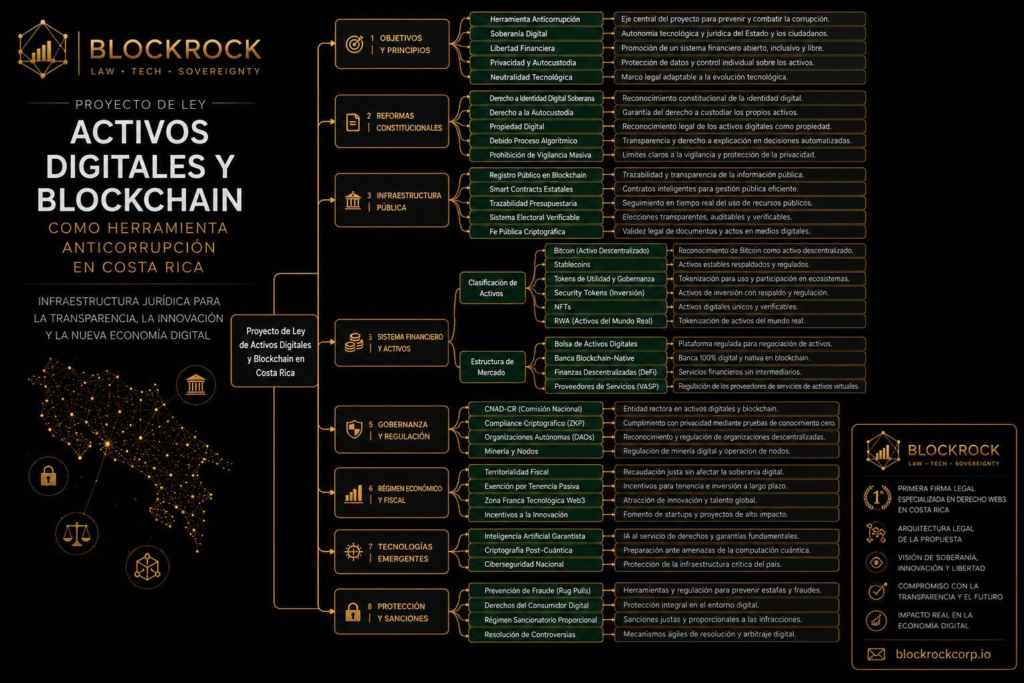
The public consultation, open from May 15 and will last until June 15, 2026, seeks to enrich the draft with citizen contributions.
“The draft is not closed; we have forwarded it to the community,” Sánchez said. The project addresses topics such as free self-custody of assets, the exhaustive classification of digital assets, the recognition of Decentralized Autonomous Organizations (DAO), decentralized finance (DeFi), smart contracts and traceability in supply chains. In tax matters, the proposal covers the principle of territorial income.
“Bitcoin would not have capital gains taxes if it is not acquired on a centralized exchange,” said the lawyer. In addition, it proposes applying the free zone regime to technology and cryptocurrency companies to strengthen the country’s competitiveness, and includes “bridges” that facilitate interoperability between the decentralized ecosystem and traditional banking.

Regarding Bitcoin mining, Sánchez stressed that market freedom will be respected as long as environmental standards are met, in line with the national goal of achieving 100% renewable energy by 2030.
The initiative also contemplates the creation of a specialized regulatorwhich would be the Decentralized Industry Administration, which would interoperate with the traditional financial system.
This approach seeks to differentiate itself from regulations of other countries in the region through a humanistic model that puts technology at the service of the citizen, according to the lawyer.
Contributions are channeled mainly through the Costa Rica Blockchain Association and the future Chamber of Blockchain, Digital Assets and Artificial Intelligence, integrated into a Latin American federation.
Once the consultation is concluded on June 15, the refined text will be presented to the Legislative Assembly, with the expectation that the ruling party will promote it during the current legislature.
This consultation represents an opportunity for civil society to directly influence the configuration of the legal framework that will govern the future of the digital ecosystem in Costa Rica.