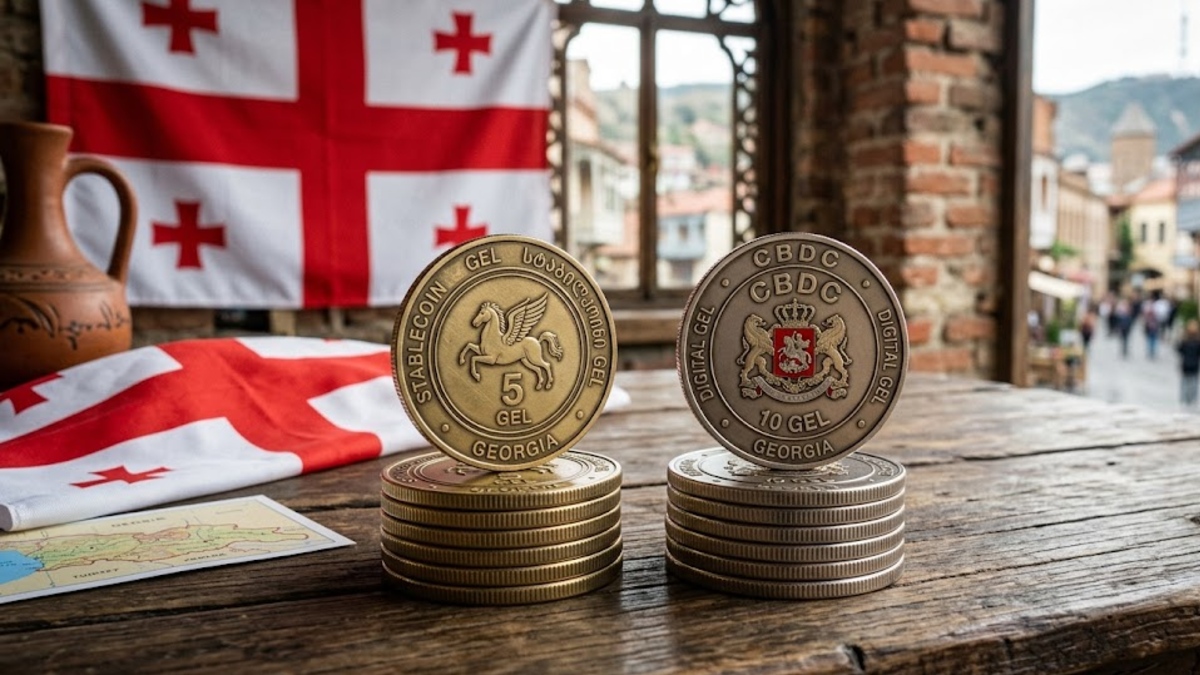
A CBDC is issued by a central bank, while the stablecoin will be issued by Tether.
Both assets are centralized instruments that put financial privacy at risk.
The Republic of Georgia took a significant step in the digitalization of its economy with the announcement of GEL₮ (or GELT), the new digital currency issued by the company Tether Limited. This digital asset, which is explicitly supported by the Georgian government and the National Bank of Georgia (NBG), has shared objectives with those of central bank digital currencies (CBDC), but also notable differences.
Indeed, it is a private instrument structured under the format of a regulated stablecoin that functions as the official tokenized digital representation of the Georgian lari (GEL) issued by Tether, the company behind the USDT stablecoin, the most valued on the market.
In practice, this is a growing global trend in which States choose to use private firms specialized in digital assets to modernize your financial systems in an agile way.
In addition to Georgia, other nations stand out that have also taken similar steps, including the United Arab Emirates with AE CoinKazakhstan with KZTE and Türkiye with BiLira.
Thus, Governments seek to capture the benefits of instant transactionsefficient remittances and affordable cross-border payments without having to assume the technical infrastructure and operational risks involved in directly issuing digital sovereign money.
Structural differences between GEL₮ and a CBDC
Even though the Georgian government promotes this new digital asset, There are fundamental distinctions regarding a true CBDC.
The main difference lies in the issuer. While a CBDC is a direct liability of a central bank, the GEL₮ digital currency is issued and managed by Tether Limited, a private entity registered in El Salvador that is responsible for the issuance, redemptions and administration of reserves corresponding.
On the other hand, the legal framework under which this asset will operate is aligned with the stablecoin regulation of the National Bank of Georgia, directed by Natia Turnava, seeking compatibility with international standards such as the MiCA law in Europe or the GENIUS law in the United States.
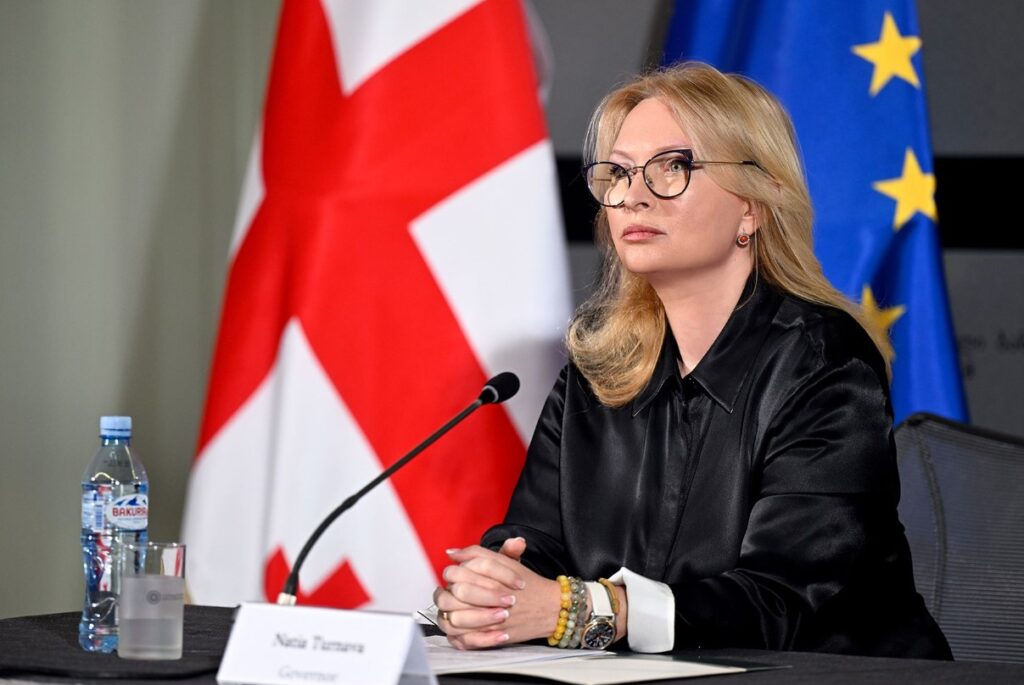
This difference is key with respect to a CBDC, since the latter you do not need to follow any of these laws because, in theory, it is sovereign money, but digitized and its regulation is in the hands of the Georgian monetary entity.
Another difference is that GEL₮ will work on public or decentralized networks. permissionlessa feature it shares with other global stablecoins such as USDT.
The CBDC, meanwhile, lives on the technology of central banks. In fact, in Georgia this is done since November 2023. Since then There have been tests for the issuance of the Digital GELGeorgia’s central bank digital currency, supported by Ripple Labs.
Now, with everything and differences, it must be noted that the hybrid model implemented in Georgia will work as a tokenization bridge for the national currency under a supervisory framework
However, the initiative is not exempt from debate within the sector. As it is a highly centralized instrument, concerns persist regarding the financial privacy of users, as well as people’s monetary control. This is based on the fact that both a CBDC and the GEL₮ stablecoin They can lock and freeze at the mercy of the emitters.
Likewise, the use of an asset issued by a third party introduces a corporate counterparty risk that does not exist in money issued by the central bankalthough the authorities assure that regulatory supervision and reserve support mitigate these factors.
Walking towards the digitization of fiat currencies
The strategy adopted by the Georgian government exposes how current regulatory frameworks allow different forms of digital money to coexist and how local governments They direct their efforts towards the digitization of their own fiat currencies.
The above validates an international trend where the public sector outsources rapid financial innovation, serving as a precedent for other nations that They are evaluating digitizing their economies in an accelerated manner.
However, taking into account the financial control that the emergence of national stablecoins entails, bitcoin (BTC) comes to light. This is the example of a sovereign money that, beyond central banks and government authorizations, focuses on the common citizen, granting it real monetary autonomy.
In practice, BTC is the only monetary mechanism free of prohibitions, restrictions and controls capable of meeting exactly the same objectives as a CBDC or a stablecoin. Whether as a means of exchange or remittances, or as an investment vehicle, bitcoin is capable of offering citizens—of Georgia and the world— financial freedom without asking for anything in return.