The Abraham Accords – named after the Biblical character Abraham, considered the founding father of Judaism, Christianity and Islam – were The mediation was carried out by the US during President Donald Trump’s first term (2017–2021). Their goal is to normalize relations between Israel and various Arab and Muslim countries.
The Abraham Accords state that the goal of the signatory parties is to promote peace and engage in dialogue and cooperation in science, the arts, medicine and trade. However, the agreement is small and remains vague, lacking any comprehensive measures.
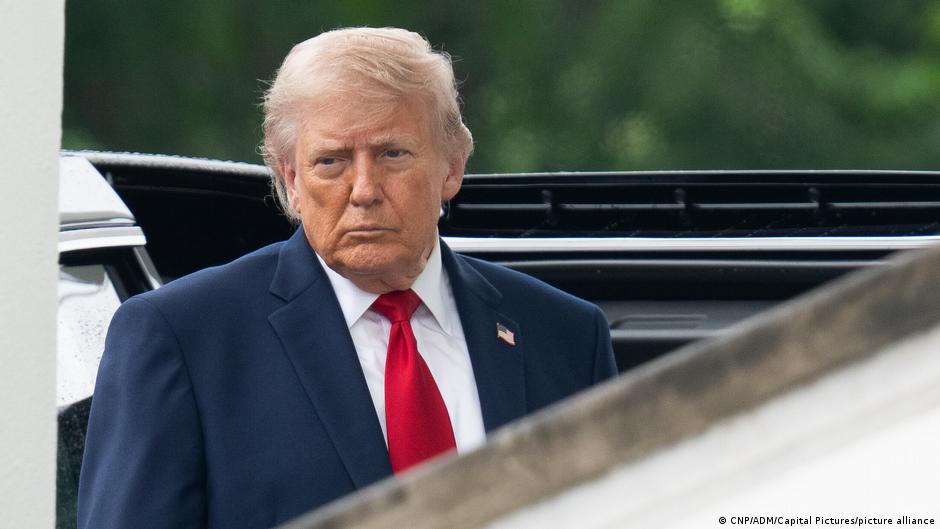
Trump has now called on other countries to sign it Announcement of Abraham Accords. His appeal has come when talks are going on about ending the Iran war.
In a post on his Truth social platform, Trump named Saudi Arabia, Qatar, Pakistan, Turkey, Egypt and Jordan as potential new signatories, though he acknowledged that some countries may be hesitant to join. As stated, Trump expects “the most” [states] “One must be ready, one must be willing.”
He continued to say that Saudi Arabia and Qatar should sign immediately and claimed that states refusing to join reflected “bad intentions”.
Trump painted a rosy picture of the region, sidestepping existing rivalries and outright hostilities.
According to Trump, signing the Abraham Accords will create a “Middle East” [that] United, we will be powerful and economically strong, as perhaps no other region will be anywhere in the world!” He added that if Iran were to sign up, “it would be an honor that they too would be part of this unique world alliance.”
What does the Abraham Accords include?
In 2020, the Trump government brokered the Abraham Accords to normalize relations between Israel and the United Arab Emirates, Bahrain, Morocco as well as Sudan, facilitating a historic rapprochement.
Last year, the former Soviet republic of Kazakhstan also joined the framework, although it has already maintained diplomatic relations with Israel since 1992.
The Abraham Accords are considered the first steps toward regional normalization since the peace treaties between Israel and Egypt in 1979 and the agreement with Jordan in 1994. Supporters of the Abraham Accords point to increased regional initiatives and trade with partner countries. Indeed, Israel and the United Arab Emirates have reached several agreements, including a five-year agreement to share agricultural information.
The Abraham Framework has been seen as a diplomatic success, dispelling the preconceived notion that regional normalization is only possible after the Israeli–Palestinian conflict is resolved and a two-state solution is implemented.
However, some observers criticize this fact. abraham accords “Removed one of the few sources of advantage Palestinians have in an already highly asymmetric conflict with Israel“Khaled Elgindi writes foreign Affairs.
Elgindy argues that excluding the resolution of the Israeli–Palestinian conflict from the framework “eliminates the few incentives left for Israel to end its occupation of Palestinian territory or otherwise accept Palestinian rights.”
How realistic is it that other countries will join this framework?
It is unlikely that any new countries will join the Abraham Accords in the near future.
Saudi Arabia, for example, is making normalization of relations with Israel contingent on concrete progress toward creating a Palestinian state.
Qatar, on the other hand, sees itself as a neutral regional mediator, refusing to sign the framework for political reasons. In addition, Qatar maintains ties with Hamas, which the US, Germany, the EU and others classify as a terrorist organization. Qatar also portrays itself as a supporter of the Palestinian cause.
Hardly anyone believes that Iran could join the Abraham Accords, since its hostility toward Israel is a central pillar of its state doctrine.
This article was translated from German