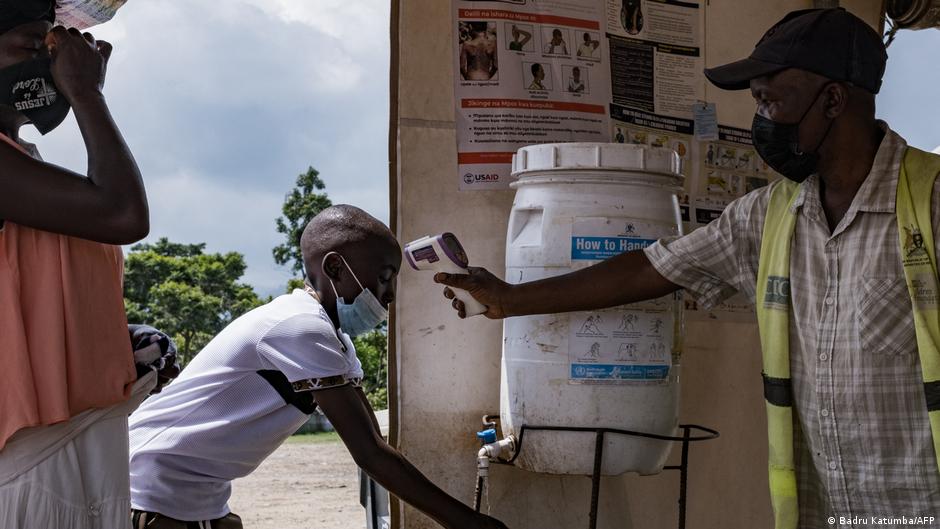
Authorities in Uganda announced on Wednesday that the country’s border with the Democratic Republic of Congo (DRC) has been closed due to the Ebola outbreak.
The decision to close the border “with immediate effect” was made by the country’s Ebola task force led by Vice President Jessica Alupo, following a surge in virus cases among Ugandan health workers treating Congolese patients.
Infected Congolese crossed the border before the outbreak was declared on May 15.
Dr. Diana Atwin, permanent secretary of Uganda’s health ministry, said travel across the Congo border would only be authorized in emergency cases, including outbreak response, cargo or security reasons.
He said anyone entering Uganda from Congo under emergency circumstances would be subject to mandatory isolation for 21 days.
The health emergency is the 17th recorded outbreak of Ebola in the history of the DRC.
Medical experts say it was caused by the Bundibugyo strain of the virus. There is currently no vaccine or treatment for this particular strain of the disease.
WHO opposes border closures
Uganda and the DRC share a border several hundred kilometers long, which runs north to south from Sudan to Rwanda.
The border area has many footpath crossings in addition to formal border posts, where people cross in and out of countries every day to visit relatives or engage in business.
The World Health Organization (WHO) has acknowledged that neighboring countries are at high risk of Ebola infection. However, the UN agency discouraged border closures.
WHO said in mid-May, “No country should close its borders or impose any restrictions on travel and trade. Such measures are usually implemented out of fear and have no basis in science.”
WHO said closing border crossings would lead people to use “informal border crossings that are not monitored, increasing the likelihood of disease spread.”
Ebola and war a ‘catastrophic collision’
There are 1,000 suspected cases of Ebola in the troubled region of eastern Congo, while at least 220 people are expected to have died from the virus. The Congolese government has confirmed 101 cases so far.
The virus was first found in rural Ituri province. WHO said fighting between rebels and government forces in eastern DRC is hampering efforts to combat the current Ebola outbreak.
“Eastern DRC is now facing a catastrophic collision of disease and conflict, with the Ebola outbreak in Ituri province,” UN agency chief Tedros Adhanom Ghebreyesus said on Friday.
The region is plagued by armed groups, large numbers of displaced people, and poor infrastructure.
The UN health chief has urged a ceasefire in the region to allow health workers to safely deliver services and condemned recent attacks on health facilities in the region, saying the unrest is making contact tracing “almost impossible”.
Edited by: Darko Janjevic