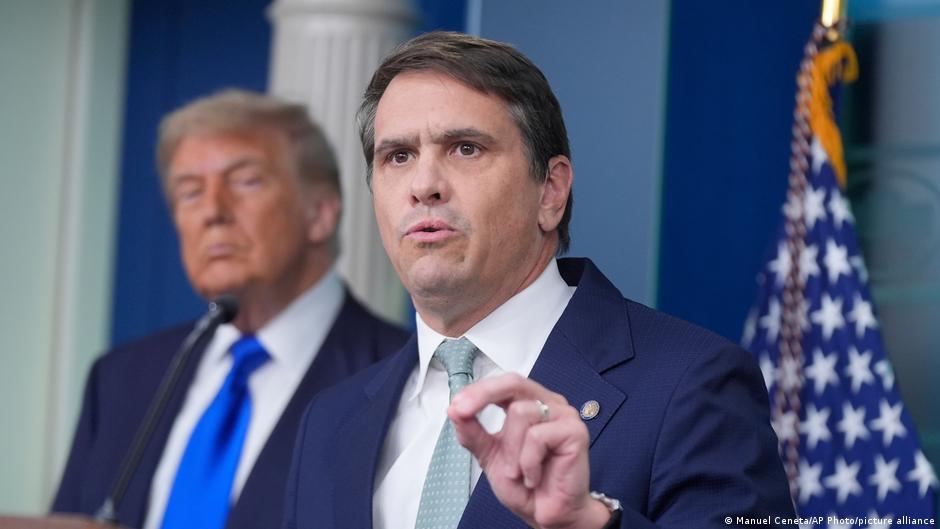
A US judge on Friday temporarily blocked the controversial “anti-weapons” fund that President Donald Trump’s administration established last week as part of the Justice Department’s settlement in Trump’s lawsuit against the Internal Revenue Service (IRS).
The $1.776 billion (€1.522 billion) fund has been criticized as a scheme to funnel taxpayer dollars to Trump loyalists.
What did the judge say?
U.S. District Judge Leonie Brinkema of the Eastern District of Virginia ruled that the U.S. government was barred from “taking any further action” to establish or operate the fund while the judge heard additional legal arguments.
The White House declined to comment on the judge’s ruling and referred all questions to the Justice Department, which did not immediately respond to a request for comment.
Sky Perryman, head of Democracy Forward, the group challenging the funds in court, said the temporary freeze is “a victory for transparency, the rule of law, and the American people.”
Perryman said, “No administration has the authority to spend public funds through a political awards program.”
A June 12 hearing is scheduled to consider whether the government’s work on the fund should be put on a longer pause.
What is Trump’s ‘anti-weapon fund’?
The Justice Department created the fund as part of the settlement of Trump’s civil lawsuit against the IRS, where Trump sought billions in compensation over the leaking of his tax returns by a former government contractor.
Along with the “anti-weaponization” fund, a panel chosen primarily by Trump’s Justice Department will compensate those charged with what Trump called “weaponization” and “lawfare” of the government by his predecessor, the Biden administration.
There was a sharp reaction when the funds were announced, with both Republicans and Democrats cornering Acting Attorney General Todd Blanch over the possibility that the violent rioters at the US Capitol on January 6, 2021, would also be entitled to compensation.
Opponents of the fund say it has no clear legal basis, little oversight and would be used to reward Trump loyalists, including defendants convicted of crimes.
Edited by: Wesley Dockery