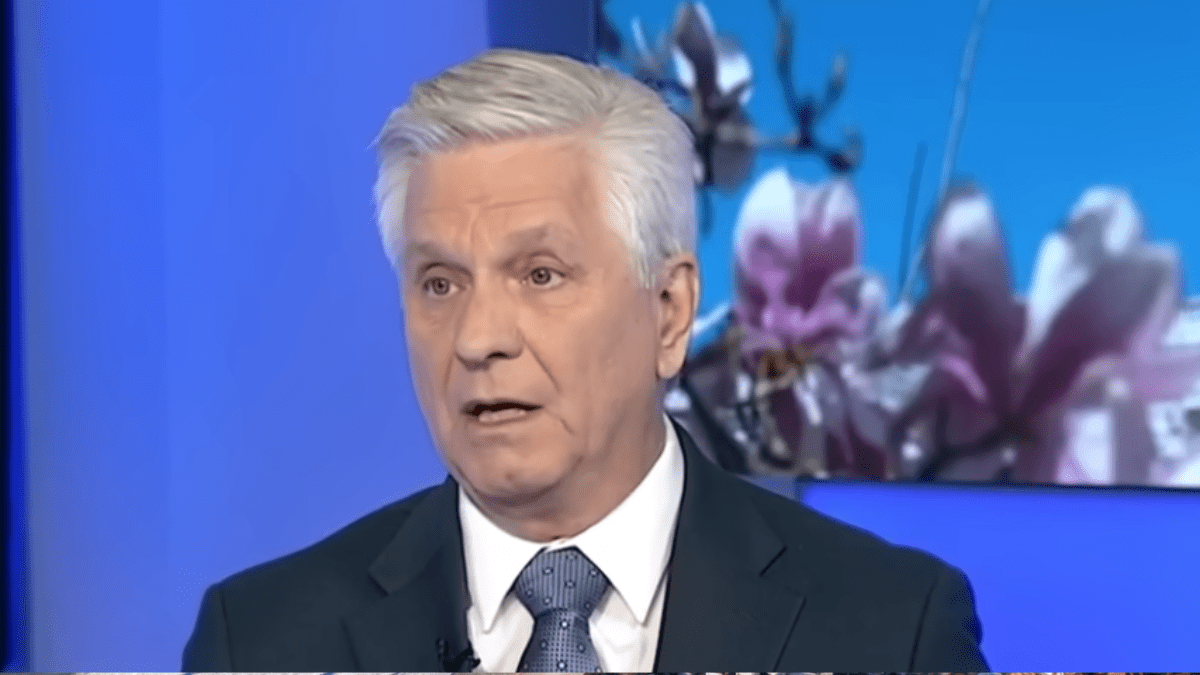
The governor of the United States Federal Reserve (FED), Christopher Waller, openly recognized this May 31, 2026, that stablecoins linked to the dollar are expanding the power of US monetary policy in emerging markets, transforming the way in which millions of citizens protect their income in the world, especially in Latin America.
During a conference in Dubrovnik, Croatia, the official validated a phenomenon that traditional banks continue to view with suspicion. Waller stated that countries that adopt stablecoins enter something like a fixed exchange rate system and US monetary costs matter.thus expanding Washington’s reach, as reported by Bloomberg.
Waller defended stablecoins. He argued that they should not be stopped by excessive regulation, since they represent an innovation that reduces costs and generates competition in payments, especially cross-border. He also noted that these assets “scare banks” precisely because they compete with them, and questioned why banks lobby so strongly against them if they do not see them as a threat.
“I have always considered stablecoins simply as a payment instrument; there is nothing wrong or dangerous about them. They are just introducing competition into the world of payments.”
Christopher Waller.
This support coincides with a moment of global expansion for stablecoins, whose capitalization is already exceeds 300 billion dollars. In economies hit by exchange rate instability, such as Argentina, Venezuela and Colombiathis mass of digital money has become the engine of daily transactions and remittances, as reported by CriptoNoticias.
By maintaining a 1:1 peg with the greenback, the system works because private issuers back their stablecoins by purchasing US Treasury bonds; a practice that already exceeds $150 billion in US sovereign debt and directly connects the cryptocurrency ecosystem with the interests of Washington.
To understand the daily impact on the region, let’s think of a thermometer. In this sense, when the FED moves its interest rates in the United States, the temperature immediately changes in the pocket of a user in Buenos Aires, Bogotá or Caracas.
Any adjustment in US financing costs is de facto passed on to the digital savings of global citizens. This mechanism allows the population to access a currency that offers them greater stability than that of their countries, in an agile way from a cell phone, although it transfers macroeconomic control and influence over local financial conditions directly to the Federal Reserve.
This reality opens up a profound dilemma that divides opinions in the financial community. On the one hand, defenders highlight that stablecoins optimize cross-border payments and democratize the protection of heritage against devaluation.
On the other hand, critics and regulators warn that these assets erode national monetary sovereignty, weaken the effectiveness of central banks local to manage their economic cycles and move deposits from the banking system traditional towards private platforms.
Although Waller’s endorsement does not impose immediate regulatory changes nor has it generated official responses from Latin American central banks, the advance of these assets accelerates regulatory debates in the US Congress, where the CLARITY bill continues to have the stablecoins as a central theme dand discussion.
This reveals a very human dilemma in Latin America: while citizens adopt the digital dollar as an individual shield to protect their income from inflation, governments in the region watch with concern how they lose control of their own currencies and the ability to manage the economy of their countries.