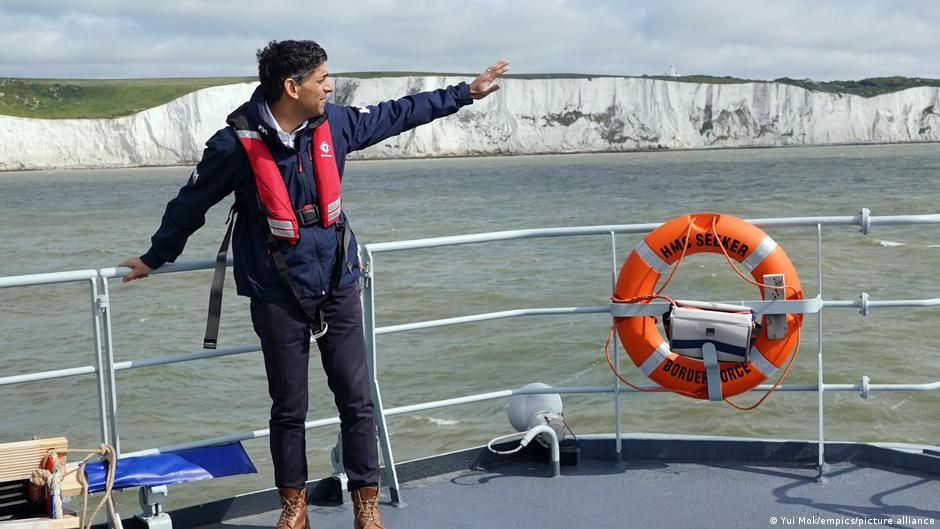
International arbitrators have rejected Rwanda’s appeal for damages over a controversial refugee resettlement deal signed with the previous British government, which was scrapped by incoming Prime Minister Keir Starmer soon after taking office in 2024.
The controversial plan, which looked to be in danger of being struck down by British courts anyway, provided for migrants arriving in Britain illegally seeking asylum to be deported to Rwanda, where they would be allowed to apply for asylum and residence.
The incoming government called it a “gimmick” and a “shocking waste of taxpayers’ money”, saying that Britain had already spent the better part of a billion pounds on a plan that was never likely to be as effective as envisioned.
What was the matter about?
Rwanda was appealing for two annual payments, each of 50 billion pounds (about €58 billion or $67 billion), originally due in April 2025 and 2026 – saying Starmer’s government, which took office in the summer of 2024, still owed these tranches.
Permanent Court of Arbitration found A written diplomatic exchange between the two countries after Starmer canceled the deal in 2024 confirmed the UK would not pay.
For the 2025 payment, the decision was a majority decision; In the case of 2026, it was unanimous. The decision was handed down on May 15, but formally announced by the Hague-based panel on Monday.
The British government responded by saying, “The UK strongly defended its position and the tribunal has now ruled in the UK’s favor on all grounds.”
Government spokesperson Yolande Makolo said Rwanda “respects the tribunal’s decision and considers the case closed” – though noting that the 2025 decision was open to different interpretations.
What was the agreement?
The deal, negotiated by Starmer’s predecessor Rishi Sunak in 2022 and introduced by Boris Johnson before him, was aimed at sending migrants who arrived in Britain illegally to the East African country in search of asylum.
This included arranging for payments to the government of Rwanda to help cover the costs.
The agreement came amid public discontent over irregular migration to Britain and pressure on the then Conservative government from more right-wing political forces, not least Nigel Farage, now leader of Reform UK.
It also coincided with a sharp increase in legal migration, which came despite – or indeed because of – Britain leaving the European Union, a move that advocates such as Farage and former Prime Minister Boris Johnson had said would reduce migration.
Why was it controversial?
The deal had already run into domestic legal difficulties with Labor saying it would scrap the plan while it campaigned, win the 2024 election and scrap it.
In November 2023, the UK Supreme Court ruled that the policy was unlawful. The court said the agreement left people deported to Rwanda open to human rights violations and could not be enforced in its current form.
A few months ago, flights carrying migrants to Rwanda were stopped from taking off on the grounds that the deal might not comply with British law. Ultimately, before the agreement was cancelled, only four people were deported to the East African country on a voluntary basis, the only method permitted.
“The previous government’s policy wasted time and 700 million [pounds] A spokesman for the current government alleged, “Four volunteers were sent to Rwanda with taxpayers’ money.”
Rwanda and Starmer’s government had already clashed over Britain reducing aid payments to Rwanda, and accused it of supporting the M23 rebel group in the east of the Democratic Republic of the Congo, a charge Kigali rejected.
Are you tired of missing our real-time updates? Click here to add us as a preferred source on Google. Then tap “Star” or “Favorite” to keep DW News at the top of your feed.
Edited by: Roshni Majumdar