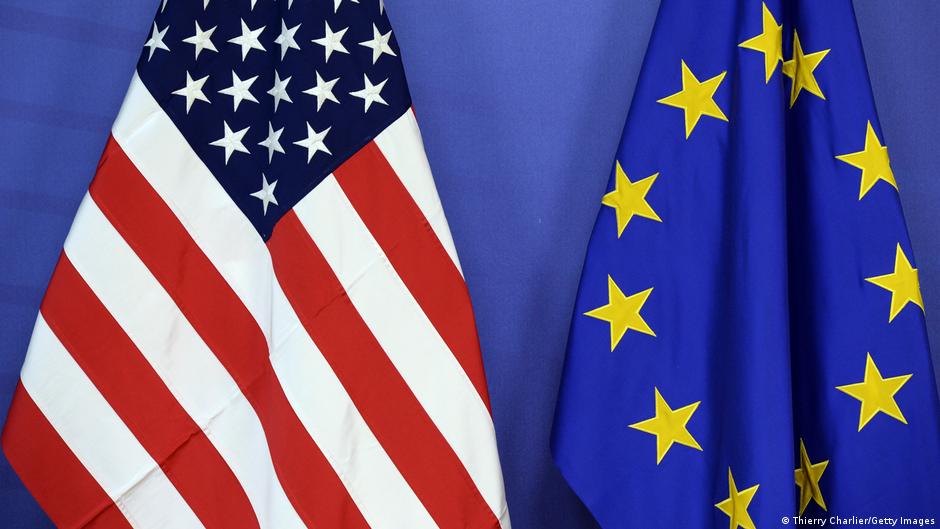
A committee of the European Parliament voted overwhelmingly on Tuesday to remove EU import tariffs on American goods.
The tariff cuts are important to comply with the US-EU trade deal that was agreed in July last year and avoid a return to the trans-Atlantic trade dispute.
US President Donald Trump gave the bloc until July 4 to approve the deal or face higher tariffs on European goods.
In a vote on Tuesday, the European Parliament’s Trade Committee endorsed legislation implementing the tariff cuts, with 31 in favour, six against and three abstentions. It also voted to continue zero tariffs for American lobsters.
The legislation is expected to be approved by the full EU Assembly in mid-June.
What’s in the US-EU trade deal?
The agreement limits US tariffs to 15% on most European imports into the US.
In return, the EU promised to eliminate tariffs on US industrial goods and ease market access for US agricultural products such as pork, dairy and seafood.
The US is the EU’s largest trading partner, with annual exchanges of $2 trillion (€1.7 trillion) in goods and services.
Why did it take so long for the deal to be approved?
Implementation of the agreement by the EU was delayed due to a number of factors affecting bilateral relations between the US and the EU.
Frustration over Trump’s other tariff threats, controversy over his bid to annex Greenland, and legal uncertainty arising from a U.S. Supreme Court decision that struck down many of his existing tariffs all played a role in slowing progress on the deal’s ratification.
EU lawmakers ultimately gave it the green light in March, but they also demanded additional safeguards be put in place if the US backtracks on its commitments. Some of those measures were later withdrawn to avoid rekindling trade tensions with Washington and creating uncertainty for EU businesses.
A so-called “sunset” clause allowing the deal to expire by March 2028 unless there is new legislation to renew it was pushed back to the end of 2029 after Trump’s term in office ends.
The text gave the US until the end of the year to remove additional taxes above 15% on steel components, rather than making it a precondition for ratifying the deal.
A “sunrise” clause – under which the EU’s side of the agreement would come into force only if the US met its pledges – was removed.
Edited by: Shawn Sinico
Don’t let algorithms hide news. If you rely on our team for reliable reporting, please take a moment Select us as your favorite source on Google by clicking here and pressing the “Star” or “Favorite” buttonThat’s why you’ll always see our verified news first.