
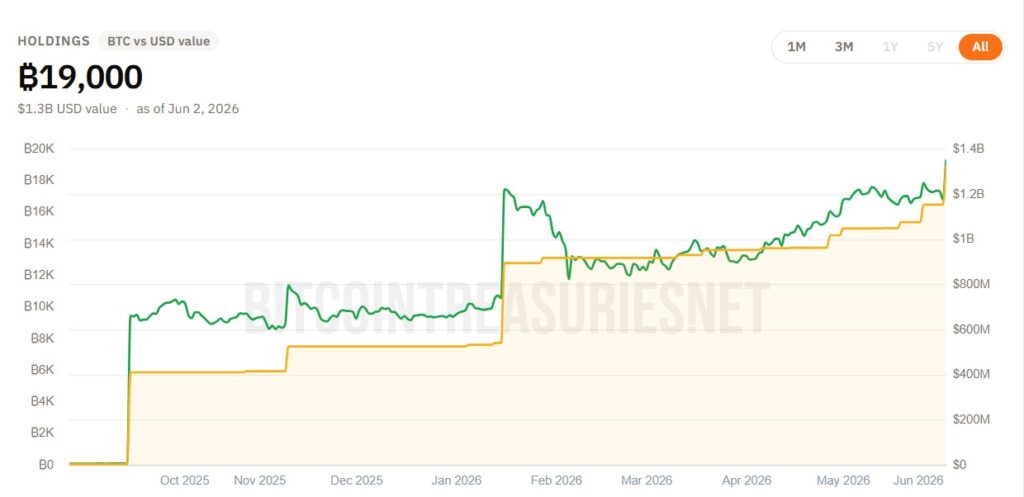
Strive went from having 16,500 to 19,000 BTC.
At the same time, Strategy made its first BTC sale in almost four years.
American asset management company Strive added 2,500 bitcoin (BTC) to its corporate treasury between May 23 and June 1, 2026. Interestingly, this massive accumulation coincided with the moment when Strategy, the company led by Michael Saylor, made its first BTC sale in almost four years.
Strive’s investment was $185 million, acquiring the assets at an average price of $74,092 per bitcoin. This accumulation of bitcoin was made known through the 8-K report filed by the signature before the United States Securities and Exchange Commission (SEC). This official document details the key financial movements of the organization.
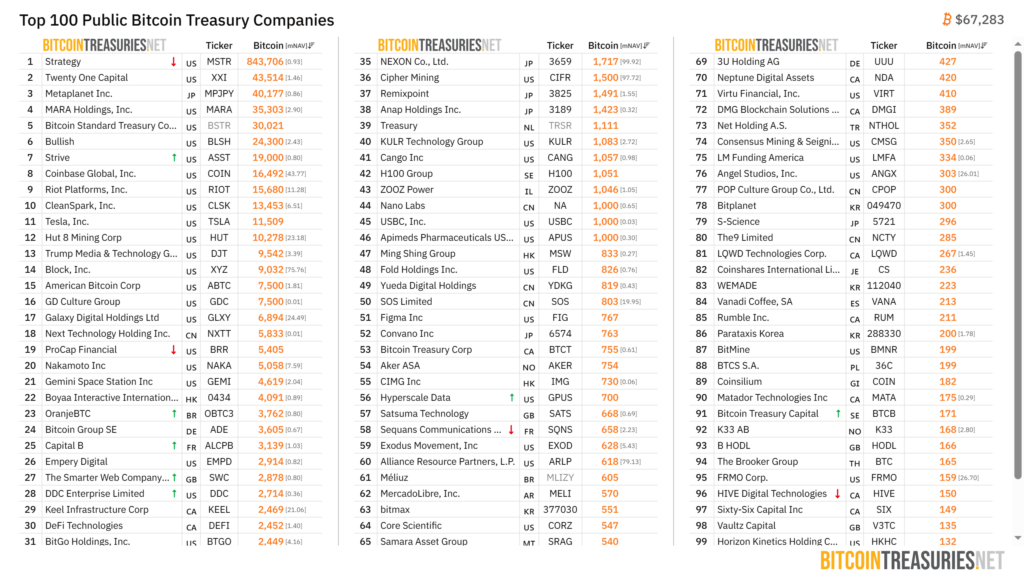
With this movement, The firm increased its total holdings from 16,500 BTC to 19,000 BTC. In this way, the company surpassed Coinbase, which has 16,492 BTC in its reserve.
This strong investment positions Strive as the seventh-largest bitcoin treasury among publicly traded companies. At the moment, The organization is 5,300 BTC away from Bullish, a firm that occupies sixth place globally with 24,300 BTC.
«The Strive team hit the BTC order book hard last week. Largest non-IPO weekly purchase in company history. It beats the record we had set just two weeks ago. We have already reached 19,000 BTC in total and we continue to gain speed,” commented Jeff Waltonchief risk officer at Strive.
The aggressive acquisition strategy was executed in a particular context. Between May 26 and 31, 2026, Strategy, the public corporation with the largest amount of BTC in the world, sold 32 BTC worth $2.5 million. Previously, This company had only made one sale in 2022. due to strict fiscal reasons, as reported by CriptoNoticias.
Strategy’s move generated doubts and uncertainty in the market. Given the nervousness of investors, Walton commented: “and for those who are worried because Strategy sold 32 BTC: we bought 78 times more than they sold last week.” The executive defended the diversity of institutional actors in the financial ecosystem. Therefore, he posed the following question: «The benefit of having multiple digital credit issuers? More liquidity in different market conditions.