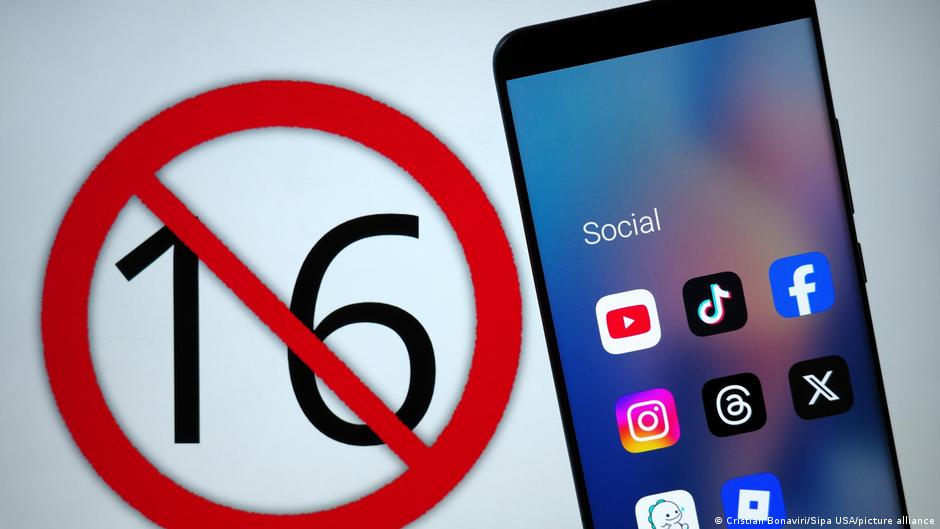
The ban on social media accounts for children under 16, effective from June 1, has made Malaysia one of the latest countries to impose age-based limits on access to digital platforms.
The rules require major social media companies to block people under 16 from registering or having accounts. Platforms are expected to verify the age of users and strengthen safeguards against harmful content, cyberbullying, grooming, scams and addictive design features.
Of the 36 million people in Malaysia, about 8 million are under the age of 16. The Malaysian government says the measure is aimed at protecting children, not removing them from technology altogether.
Authorities have argued that stronger regulation is needed as minors are at increasing risk of harm online and parents struggle to monitor what children see and do on platforms designed to hold their attention for as long as possible.
The rules apply to big platforms like Facebook, Instagram, TikTok and YouTube, leaving most of the enforcement burden on multinational technology firms.
Social media rules are being tightened around the world
Governments around the world are tightening online safety rules for children. In December, Australia became the first country to ban social media for people under 16.
In March, Indonesia became the first country in Southeast Asia to impose such a ban, implementing a ban on YouTube, TikTok, Facebook, Instagram, Threads, Xx, Bigo Live, and Roblox.
Some European countries are stepping up age-verification measures as concerns grow over the effects of social media on mental health, sleep, education and personal safety.
Many parents view such restrictions as overdone.
Smartphones have become a central part of children’s social lives, often with little supervision from adults. Proponents say minimum age rules could reduce the risk of predatory behavior, predatory content, sexually explicit content and algorithm-driven feeds that encourage excessive screen time.
After the Malaysian government agreed to the ban in December, Prime Minister Anwar Ibrahim said it was necessary following an increase in serious crimes involving youth.
At the time, he linked social media use to the murder of a 16-year-old girl who was stabbed 200 times by a 14-year-old male classmate.
not easy to implement
According to the Malaysian Communications and Multimedia Commission, age verification for existing users will be rolled out in the next six months.
Identified users under the age of 16 will have one month to download or transfer data such as photos and videos before restrictions or other action is implemented.
Companies failing to comply could face fines of up to 10 million ringgit ($2.5 million/€2.2 million). The Malaysian government has stated that parents whose children succeed in circumventing the law will not be punished.
But the policy has also been criticized by digital rights advocates and some parents, who question whether a blanket ban could work in practice.
Last Friday, UN High Commissioner for Human Rights Volker Turk argued that children could easily circumvent such restrictions and go to risky, less supervised places.
“Restricting access to platforms that remain unsafe cannot be the end goal,” he said in a statement.
Pressure on digital giants to take responsibility
Selvakumar Manickam, professor and director of the Cybersecurity Research Center at Universiti Sains Malaysia, told DW that he does not expect the ban to be infallible.
Children have long found ways to circumvent age requirements, he said, including entering false dates of birth, using family members’ accounts or visiting smaller platforms that are harder to regulate.
This means that this measure cannot keep every underage user offline. But it could still change incentives for platforms that have until now relied heavily on self-proclaimed age and weak scrutiny.
In fact, the ban’s “most meaningful impact” could be to force social media companies to implement stronger age-verification systems and design safer platforms for younger users, Manickam said.
In that sense, the rules could be about a total exclusion rather than removing responsibility from parents and children and shifting it back toward the companies that create and profit from these digital environments.
“It also sends a clear social signal that unrestricted childhood access to social media poses real risks,” Manickam said.
“A ban will not eliminate online harm,” he said. “But it could reduce risk among young users and sharpen platform accountability,” he said, “provided it is supported by digital literacy education, parental engagement, and strict regulation of platform design.”
“Without them,” he said, “it risks becoming little more than symbolic.”
Privacy and enforcement concerns
Tricia Yeoh, an associate professor at the University of Nottingham Malaysia’s School of Politics and International Relations, told DW there are concerns that the method used by the government to verify users’ ages is overly restrictive.
Users are required to provide government-registered identification documents such as an identity card or passport, “which may violate users’ right to remain anonymous, which is extremely important in a country where restrictions on freedom of speech continue to exist,” Yeoh said.
Malaysia is ranked 95th out of 180 countries in the 2026 World Press Freedom Index by Reporters Without Borders, down seven places from last year.
That context matters to critics. The system requiring millions of users to verify their identities may be introduced for child protection reasons, but it also raises questions about data retention, surveillance and whether online anonymity could be weakened more broadly.
“We would have preferred other ways to regulate social media restrictions for people under 16,” Yeoh said.
Digital rights groups have made similar arguments, warning that age checks based on official identity documents could normalize more intrusive forms of online surveillance.
There are also questions about what young people lose when they are excluded from mainstream platforms.
Analysts say enforcement will determine whether Malaysia’s ban will become a serious child-protection measure or a largely symbolic gesture.
If the ban minimizes harm while protecting privacy, it could become a model for the region. But if it pushes children into less visible online spaces or normalizes intrusive age checks, it could reveal the societal limitations of solving problems through access restrictions alone.
Edited by: Srinivas Majumdaru