
The agricultural heart of South America found an unusual way to store its surplus production by transforming it into digital code. Starting next month, sugar cane fields in central-western Brazil will stop producing only food and fuel to mine Bitcoin.
This transition will materialize at the Ivinhema plant, where the agro-industrial firm Adecoagro will launch a data center designed specifically for Bitcoin mining. Instead of relying on fossil fuels or joining public grids, The mining machines will work thanks to the burning of bagasse and vinassebyproducts that remain after the harvest and the distillation of ethanol.
The idea began to take shape in September 2024, when the company sealed an alliance with Tether, the digital asset firm that today exercises corporate control of the agroindustrial company.
According to company data, Adecoagro has an installed capacity for generate 230 megawatts of clean electricitybut local demand is variable and the company is forced to export 67% of its production to the traditional system.
When daily market (spot) prices fall, that sale is no longer efficient. It is there where Bitcoin mining enters as a consumer of last resort that absorbs the remaining energy and turns it into a long-term financial asset.
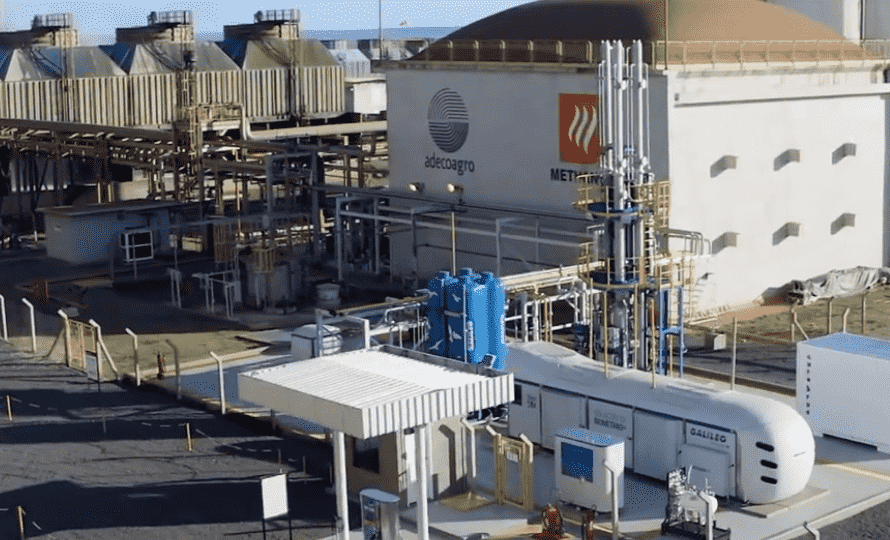
To achieve this, the 1,280 ASIC miners will work to validate global transactions. Although the initial scale is 10 megawatts, engineers plan to expand the capacity to 40 megawatts, according to local reports.
During a technological meeting supported by local authorities, Mateus Lexugo, representative of Adecoagro, clarified the company’s position: “Adecoagro’s interest does not lie in the cryptoasset itself, but in validating our bioenergy infrastructure through a process of technological innovation. “This is the first step to increasingly develop the use of this renewable energy in technological advancement projects.”
In any case, this is a persistent global debate. While various environmental groups of IT infrastructure in developing countries, Sector advocates argue that linking Bitcoin mining to biomass mitigates gas emissions greenhouse effect and opens direct income channels for rural areas.
Bitcoin miners, a shield against energy waste
As CriptoNoticias previously reported, the Brazilian territory is a magnet for Bitcoin miners seeking to take advantage of the electricity that is currently lost due to the lack of adequate transmission networks.
Currently, some wind and solar plants in the country waste up to 70% of their generating capacity, an operational burden that has cost electricity companies nearly $1 billion in the last two years.
To mitigate this impact, the former state company Eletrobras launched a pilot project in the state of Bahia which combines wind turbines, solar panels and batteries to power data processing centers, a diversification strategy that it shares with firms such as Renova Energíawhich is advancing in the construction of six facilities that will add 100 megawatts of power.
In that sense, the turning on of the machines on July 1 will mark the beginning of the operational testing phase to measure how many bitcoins the plant generates in relation to the cost of biomass.
In the coming months, the eyes of the agricultural sector in Argentina, Colombia and Mexico, large sugarcane producers, will be on this Brazilian laboratory. The outcome will determine whether the region’s agricultural powers will continue to operate as simple exporters of raw materials or whether they will begin to use their own waste to compete in the global digital infrastructure.