“This is not a bug, it is expected behavior,” says the development team.
apxUSD developers say calling the protocol insolvent is “misleading.”
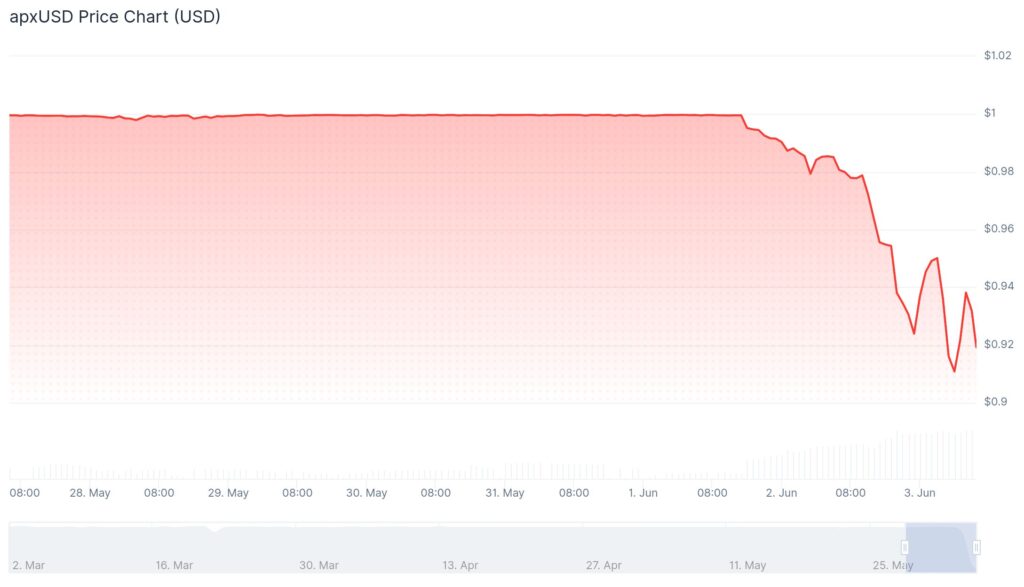
The apxUSD stablecoin, issued by the Apyx protocol, has been falling for 2 days and today, June 4, 2026, reaches a price of $0.918. Thus, it moves away from the ideal parity that it should maintain with the US dollar.
The following chart shows how the price of apxUSD has performed over the last 7 days:
To understand the reason for this loss of apxUSD’s parity with the dollar, it is necessary to go back to the announcement of the sale of 32 bitcoin (BTC) by Strategy, the company with the largest treasury of this asset in the world, as reported by CriptoNoticias on Monday, June 1. Strategy liquidated the 32 BTC for $2.5 million to finance the dividends of its STRC preferred shareswhich represents its first bitcoin sale since 2022.
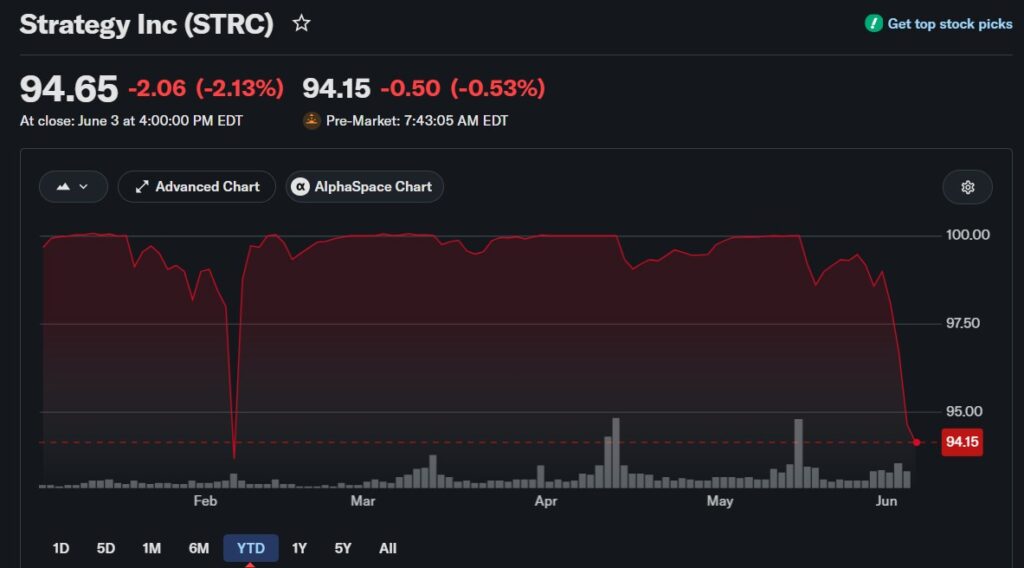
Preferred shares, called STRC, are financial securities that grant a monthly variable dividend—currently close to 11.50% annually—and have a theoretical nominal value of $100.
After the wave of sales, the value of STRC fell to $94, approaching the records of February 5, when it reached its lowest point so far in 2026: $93.67.
And what does the fall in the price of STRC have to do with the stablecoin that has lost parity with the dollar? The answer is that the Apyx protocol uses these Strategy assets as the main backing of its apxUSD stablecoin.
The protocol acquires those shares, collects cash dividends, and then distributes that return to users of the digital ecosystem.
Because this preferred capital constitutes the stablecoin’s reserves, the apxUSD token directly inherits the volatility of the underlying stocks.
When the price of STRC trades below its face value, the total value of reserves decreases and the crypto asset tends to trade at a discount. A stablecoin is a digital asset designed to maintain a stable value against a fiat currency, but in this case it is exposed to corporate fluctuations.
Faced with the price drop, the Apyx protocol clarified yesterday, June 3, that the design of its financial architecture contemplates these temporary fluctuations. “This is not a mistake, but rather the expected behavior of a stablecoin backed by preferred shares instead of cash deposits,” the organization formally stated in an official statement.
The nature of this business model poses structural risks, as tying a supposedly stable cryptocurrency to a volatile corporate asset exposes users to forced liquidations and crises of confidence. “Some posts have presented certain levels of STRC as causing a technical insolvency of the protocol, but this interpretation is misleading,” said the Apyx development team to try to deny the accusations.
To mitigate fears of insolvency, the protocol precisely clarified the composition of its collateral to demonstrate that it does not depend on a single financial asset. «The reserves are not 100% STRC; “They also include short-term Treasury bonds and cash equivalents, which are not affected by the price of STRC,” argued the issuing entity, highlighting that this diversification seeks to guarantee immediate liquidity and reduce concentration risk.
The situation shows that the value of a crypto asset that is promoted as stable can be held hostage to the operational decisions of a single corporation. The precedent of this model leaves a clear warning for participants, who now face the uncertainty of whether the collateral will be able to withstand future corporate bitcoin sell-offs or whether a permanent discount will take hold in secondary markets.