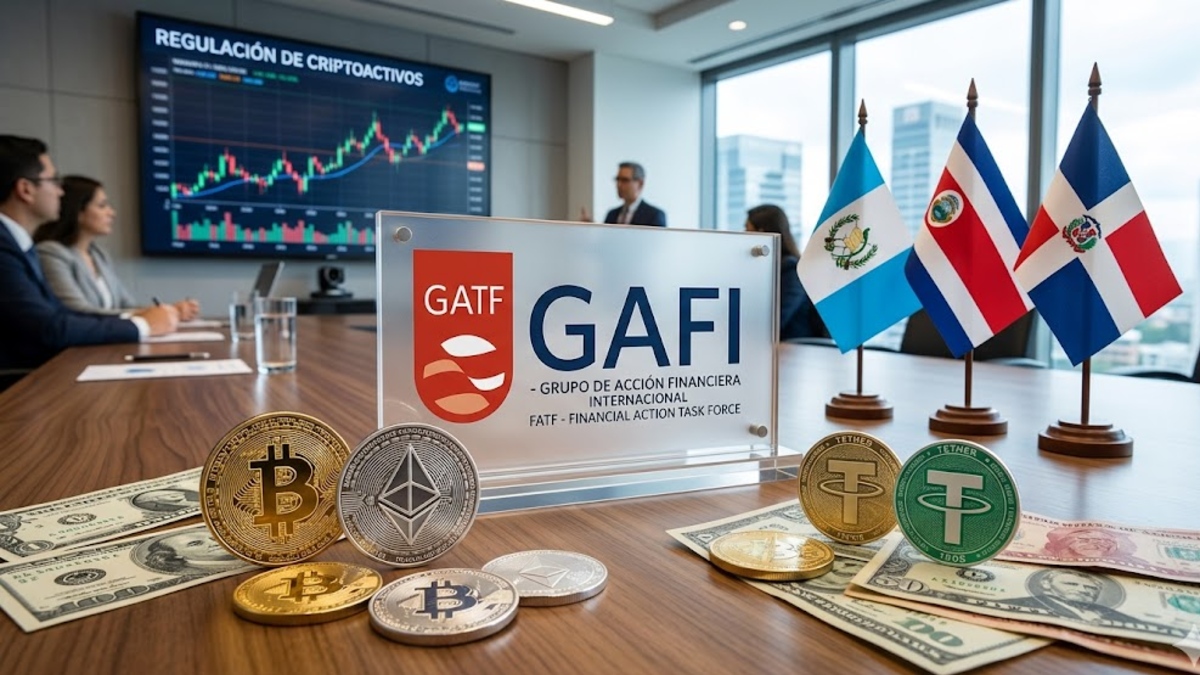
The urgency to comply with global financial standards has overtaken interest in the adoption of bitcoin (BTC) and cryptocurrencies in Central America and the Caribbean.
The governments of Guatemala, Costa Rica and the Dominican Republic are advancing in the approval of regulatory frameworks for the digital assets ecosystem. However, the primary objective of these legislations, strongly aligned with international guidelines, is financial control and the prevention of money laundering, prioritizing state surveillance over the development of the native strengths offered by Bitcoin technology.
This legislative race responds directly to pressure and imminent evaluations from the Financial Action Task Force (FATF) and its regional arm, Gafilat. The authorities of these countries seek to close the regulatory gap around companies that operate with digital currencies due to fear of receiving negative ratings by the organism.
And, in practice, an unfavorable evaluation due to regulatory deficiencies represents the risk of falling on the dreaded FATF “gray list”, which could translate into an increase in the cost of international credits. and the loss of confidence in global markets.
In general, the repercussions of a poor international rating carry a threat of economic asphyxiation for nations in the region. The tightening of external controls usually causes a drop in foreign direct investment, obstacles in the flow of family remittances and the loss of relationships with foreign correspondent banks.
For this reason, the legislators of the three countries have prioritized supervision and inspection aspects to ensure the connection of their traditional financial systems with the main economic powers of the world.
The new regulations approved or under discussion formally classify Virtual Asset Service Providers (PSAV), such as exchange platforms, custody firms and intermediaries, as obligated subjects. This subjects them to direct supervision of the State. and forces them to report all their operations before the financial intelligence units of each country.
Let’s see how the current situation is:
Decree 15-2026 and inspection in Guatemala
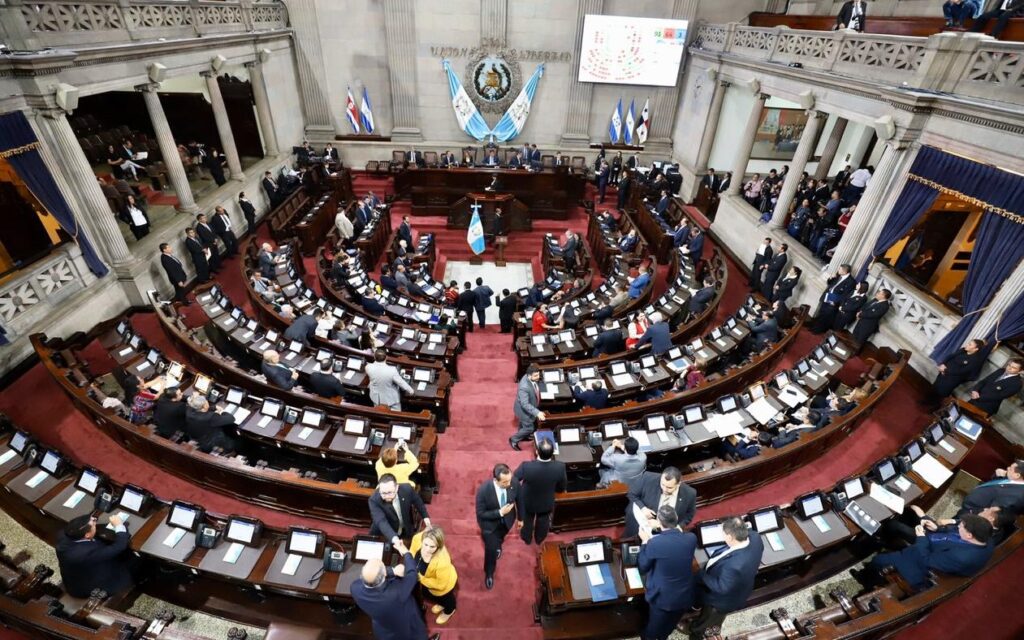
In Guatemala, the Congress of the Republic approved this week, with 147 votes in favor of a total of 160 deputies, Decree 15-2026, corresponding to Initiative 6593, as reported by CriptoNoticias.
This regulation constitutes a comprehensive law for the prevention and repression of money laundering or other assets and the financing of terrorism. The new legal text updates a legal framework that was 25 years old and, for the first time in the history of the Central American country, explicitly includes the digital currency sector under the direct supervision of State institutions.
The legislation establishes that exchange platforms, custody companies and virtual asset service providers will be considered obligated subjects before the Special Verification Intendance (IVE), regardless of whether their operations are managed locally or internationally.
The Guatemalan authorities justified the urgency of this measure by pointing out that previous regulatory deficiencies kept the country in a position of vulnerability in the face of international technical analyses, potentially affecting correspondent banking relationships and making external financing more expensive.
The Guatemalan national system is now preparing for an in-person evaluation to be carried out by Gafilat specialists in February 2027as reported by the Congress of that country.
To coordinate this process, Direct interviews with public and private institutions are contemplatedin order to measure the real effectiveness of the entire prevention system.
In that order, the recently approved legal framework also introduces strict chapters on compliance with the resolutions of the United Nations Security Council, allowing the preventive limitation of funds. and expanding international cooperation capabilities of the IVE.
The reform of Law 7786 in Costa Rica
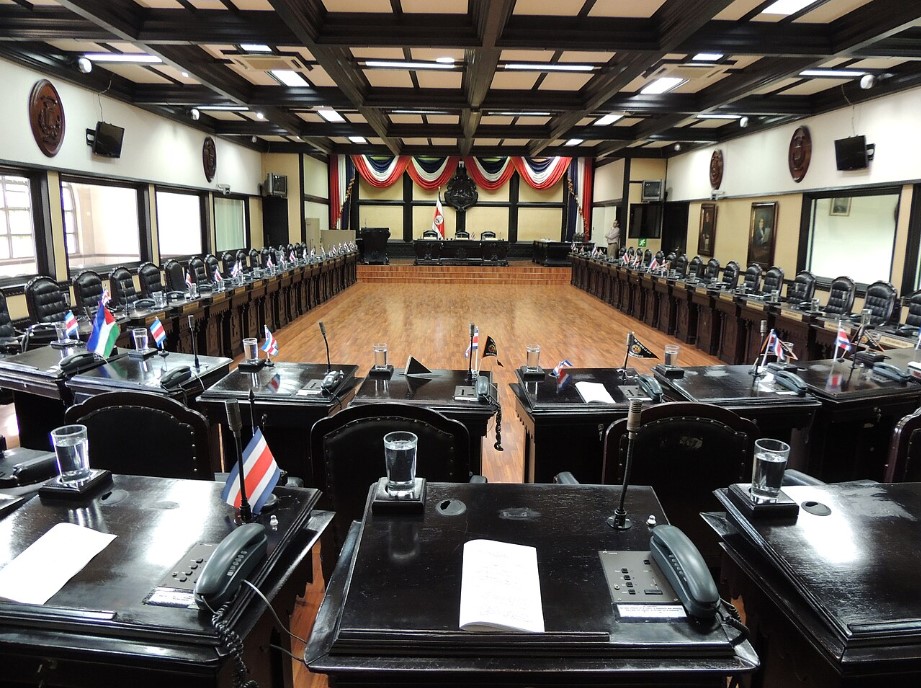
For its part, the Legislative Assembly of Costa Rica unanimously approved, in the second debate, a substantial reform to Law 7786. The bill, processed under file 25,340, establishes specific obligations for providers of virtual asset services in terms of prevention of money laundering and financing of terrorism.
This initiative, like the Guatemalan one, arises as a direct response to the observations made by the FATF in 2024, an organization that had indicated the need to correct the existing regulatory vacuum. around companies dedicated to the exchange of digital assets.
The Costa Rican authorities accelerated the legislative process due to the warning that inaction It could lead to the country being included in the gray list of the international organization. It is not minor, since a negative rating of this type would have made international loans more expensive and generated general distrust within the Costa Rican banking system.
Therefore, the reform seeks to guarantee that firms in the sector operate under the same compliance rules than traditional banking entities.
To ensure the correct implementation of the new guidelines, a high-level delegation from Gafilat made official visits to the Costa Rican territory at the beginning of March 2026. These meetings had the purpose formalize the mutual evaluation process and reinforce the commitment of the highest national authorities.
Additionally, the regional organization coordinated intensive technical training together with specialists from the Kingdom of Spainaimed at strengthening the knowledge of the competent authorities regarding the methodology for measuring the effectiveness of the international standard.
Law proposal and fiscal projection in the Dominican Republic
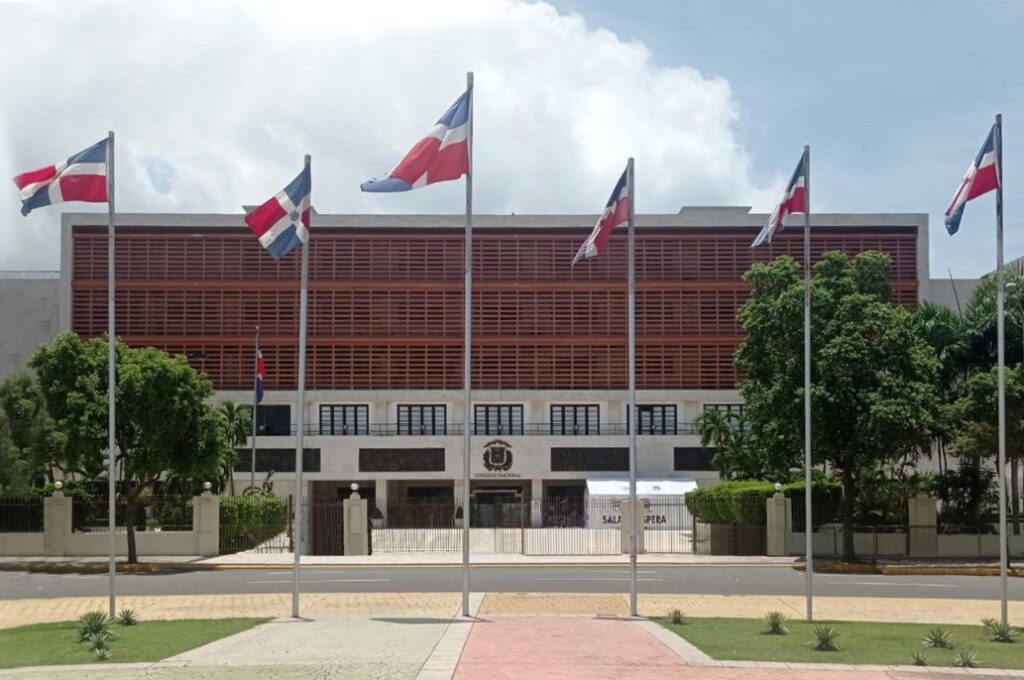
In the Dominican Republic, the regulatory debate was moved to the Chamber of Deputies after the formal deposit of the project called Law for the Prevention, Control and Regulation of Cryptocurrencies.
The legislative proposal was formally presented in March of this year at the General Legislative Secretariat at the initiative of deputy Carlos de Pérez, CriptoNoticias reported.
The proponent of the law argues that the measure is based on an estimated 52% growth in the use of cryptocurrencies in the domestic market during the last year, which requires a clear inspection structure.
Unlike purely preventive approaches, the Dominican bill explicitly defines bitcoin and other digital assets as goods subject to ordinary commercial taxation. This implies that the economic benefits generated by their exchange, intermediation or sale must pay taxes in a similar way to financial assets in the traditional system.
The proposed text, however, has technical similarities with the regulatory models implemented in other countries in the Latin American region, such as Mexico and Colombia. This last point has led to questioning by the Dominican Bitcoin community, which has been integrated into the discussions for the final formulation of the regulatory text.
Regarding institutional deadlines, the Dominican Republic has a broader time window compared to Guatemala and Costa Rica. The final calendar for their mutual evaluation is in a phase after 2027, preliminary estimates for the period 2028 or 2029.
This gap is due to the country’s transition from the Caribbean Financial Action Task Force to the Gafilat bloc as a full member. Currently, the Financial Analysis Unit and the local banking unions take advantage of this margin to execute supervision drills and internal preparation workshops under the new global effectiveness methodology.
Although the FATF mutual evaluation is not so imminent for the Quisqueyan country, it does exert pressure and has pushed, as in Guatemala and Costa Rica, the execution of a regulation for the cryptocurrency sectoras the representative of Bitcoin Dominicana, Pedro Vital, told CriptoNoticias.
The reason is not innovation, it is fear
The scenarios described denote that The regional priority is not the promotion of financial innovation based on bitcoinbut rather the fulfillment of a technical control agenda to safeguard banking reputation. Indeed, this is not arising from interest in updating and profiting from digital assets, but from the state’s fear of economic exclusion.
As a result, governments are forced to limit the flexibility of the digital environment and impose strict controls to preserve the reputation of their traditional banking systems. and guarantee its connection with international financial powers.
This, even though the cryptocurrency ecosystem has proven to be a clear—and sometimes expeditious—way to optimize financial processes and improve the lives of users and companies in Latin America and the world.