
The lawsuit claims ~3.8 million BTC in 39,069 wallets under a NY lost and found law.
Two 2011 wallets included in the lawsuit moved BTC on June 2 and June 7, 2026.
Two Bitcoin wallets active since 2011 and without movement for almost 15 years executed on-chain transactions in the first days of June 2026, in the midst of a judicial process in New York that includes them in a list of supposedly abandoned assets.
The movements were detected and reported by Alex Thorn, research director at Galaxy Research, who pointed out that several wallets from that list are “awakening” on the blockchain.
The case was filed on March 11, 2026 by a plaintiff operating under the pseudonym “Noah Doe,” along with two Wyoming limited liability companies identified as ABC Company and XYZ Company. The lawsuit, filed in the New York County Supreme Court, seeks a judicial declaration ownership of approximately 3.8 million BTC distributed in 39,069 dormant wallets, with an estimated value close to USD 293,000 million at the time of presentation.
The plaintiff’s legal theory rests on Article 7-B of the New York Personal Property Law, a rule designed for lost physical objects. According to the approach, Noah Doe identified the wallets through an algorithm, provided their public addresses on USB drives to the NYPD and sent OP_RETURN messages to each address to notify potential owners. Those that did not respond within 90 days were included in the lawsuit as abandoned property.
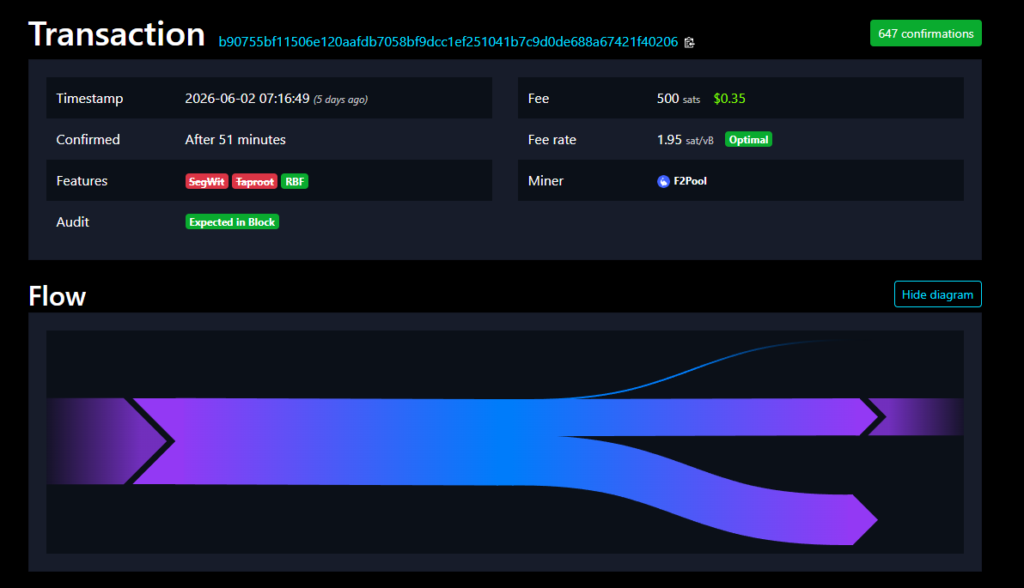
Precisely in that context the movements occurred. The 1LwWtSs7 wallet, which had received 35.55 BTC in March 2011, transferred 15 BTC to a new address on June 2, according to mempool.space records. Five days later, the 18sLgPeB wallet, with 47.25 BTC inactive since June 2011, moved all of your funds in a transaction recorded in the block 952,642.
Judicial ownership does not equate to actual control
On May 29, New York lawyer Ian R. Cohen presented an amicus curiae before Judge Kathy King —written by a third party with an interest in the case—in opposition to the complaint. Cohen maintains that dormancy does not constitute legal abandonment under New York law, that Article 7-B requires physical possession of a tangible asset and that the plaintiffs never had in his possession no private key or any BTC.
The amicus’ most substantive argument points to the technical architecture of Bitcoin: according to Cohen, a declaratory ruling of ownership has no operational effect on the network, since the network only recognizes cryptographic signatures generated by private keysregardless of what the courts decide. The writing cites the principle known in the ecosystem as “not your keys, not your coins” (not your keys, not your bitcoins) to illustrate that the requested judicial declaration would be, in its terms, “a legal statement with no real effect on property.”
Cohen also argues that, if there are genuinely abandoned assets, the applicable legal framework would not be Article 7-B but the New York Abandoned Property Law, which since 2022 expressly contemplates cryptoassets and establishes that dormant funds must revert to the State—not to an individual.
On June 5, Judge King suspended any progress toward a default sentence and set a hearing for July 14 to consider whether to admit Cohen’s amicus. The decision also kept the plaintiffs’ declaratory claim on hold while that issue is resolved.
According to Cohen, the movements registered in June reinforce the central argument of his writing: the prolonged inactivity of a wallet does not allow for the inference of abandonment, and any attempt to extend a physical lost property rule to self-managed crypto assets would require a legislative, not judicial, decision.