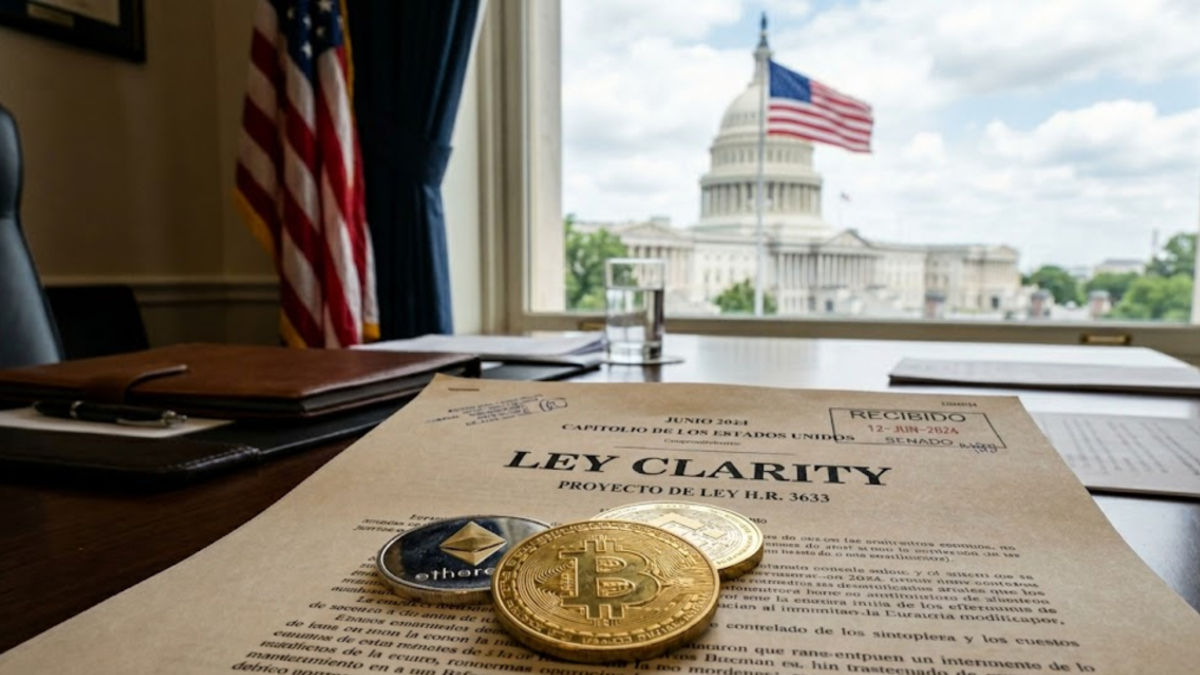
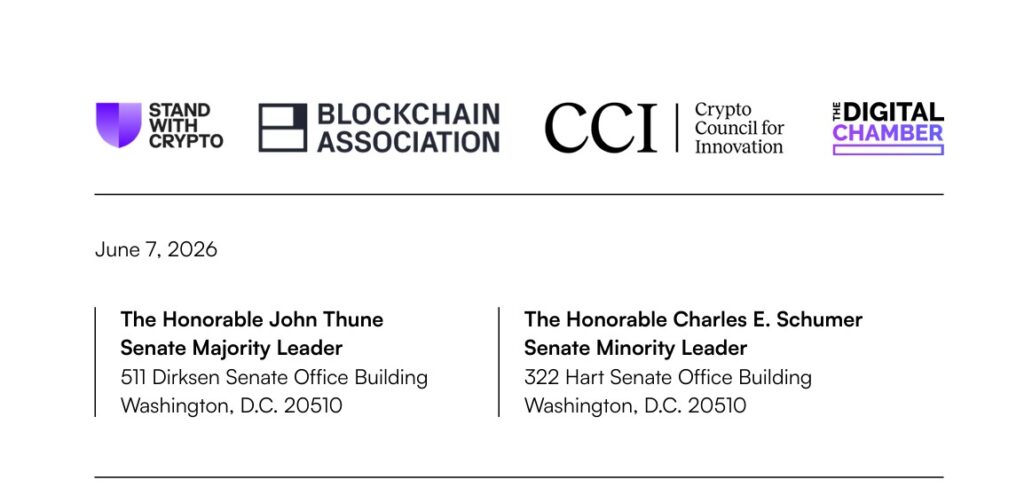
They sent a letter to Senate Majority and Minority Leaders John Thune and Charles Schumer.
The Clarity Law is already on the calendar, but its vote in the plenary session could take time.
A coalition of 200 cryptocurrency companies and organizations sent a formal letter to U.S. Senate leaders John Thune and Charles Schumer demanding that the Clarity Act be immediately scheduled for a floor vote.
The signatories, including infrastructure companies and trading platforms such as Binance US, Coinbase, Aave and Uniswap, as well as others linked to digital mining such as Canaan, urgently requested that the legislative body debate the bill without further delay.
“The Clarity Act gives Congress the opportunity to maintain innovation, jobs, investment and market activity here at home, while strengthening the United States’ role as a global leader in digital asset innovation. (…) We respectfully request that you bring the Clarity Law to the Senate floor without delay,” the letter says.
The movement seeks to consolidate the political momentum achieved after the bipartisan approval of the project in the Senate Banking Committee on May 14, amid fears that the process suffer prolonged delays in the parliamentary agenda.
The private sector’s claim is based on the need to establish a comprehensive federal framework that regulates the digital asset markets in the United States.
According to him sent document to legislators, the lack of clear and predictable rules of the game continues to drive innovation, employment and capital to foreign jurisdictions (offshore)which tend to operate with lower standards of transparency and weaker protections for users.
Companies Argue Clarity Act Offers Structural Solution by precisely delimiting the powers of regulatory bodiesenable avenues for the formal registration of entities and protect the activity of software developers who build the underlying technology.
According to the signatory companies and organizations, lasting policies “must be built across political parties, especially when they will define the future of American financial markets.”
“The Clarity Act reflects years of education, stakeholder engagement, and good faith policymaking. The result is a thoughtful and balanced framework that advances consumer protection, market integrity, responsible innovation, and US competitiveness,” the letter states.
The current debate in the United States Congress does not revolve around the content of the project, but rather around political will and procedural times. The Clarity Law has already passed the first institutional filters and is included formally on the Senate calendar under number 423.

However, for the text to finally reach the plenary session for discussion and subsequent voting, it is required that the majority leader of the Upper House exercise its exclusive power to unblock and accelerate the legislative process. It is precisely this factor that motivated the pressure from the industry, which seeks to avoid the stagnation of the proposal in the parliamentary bureaucracy.
The signatories maintain that clear national supervision will strengthen market integrity and significantly increase consumer confidence when interacting with products based on this technology. This strategic move by the industry seeks to present regulation not as a corporate benefit for the digital asset sector, but as an economic security decision.
According to them, with the Clarity Act, “the Senate has the opportunity to ensure that the next generation of financial infrastructure is built, governed and regulated in the United States.”
With this bloc movement, the sector seeks to force a political definition. The letter lays out the scenario not as a regulatory bailout for digital asset companies, but as a strategic decision of economic security to prevent the United States from losing control and falling behind in the face of the sector’s advance.