As campaign loudspeakers blare through the streets of Colombia with promises of security and social reforms, millions of citizens are quietly making alternative financial decisions. They do it away from the voting booths and through the screens of their mobile phones.
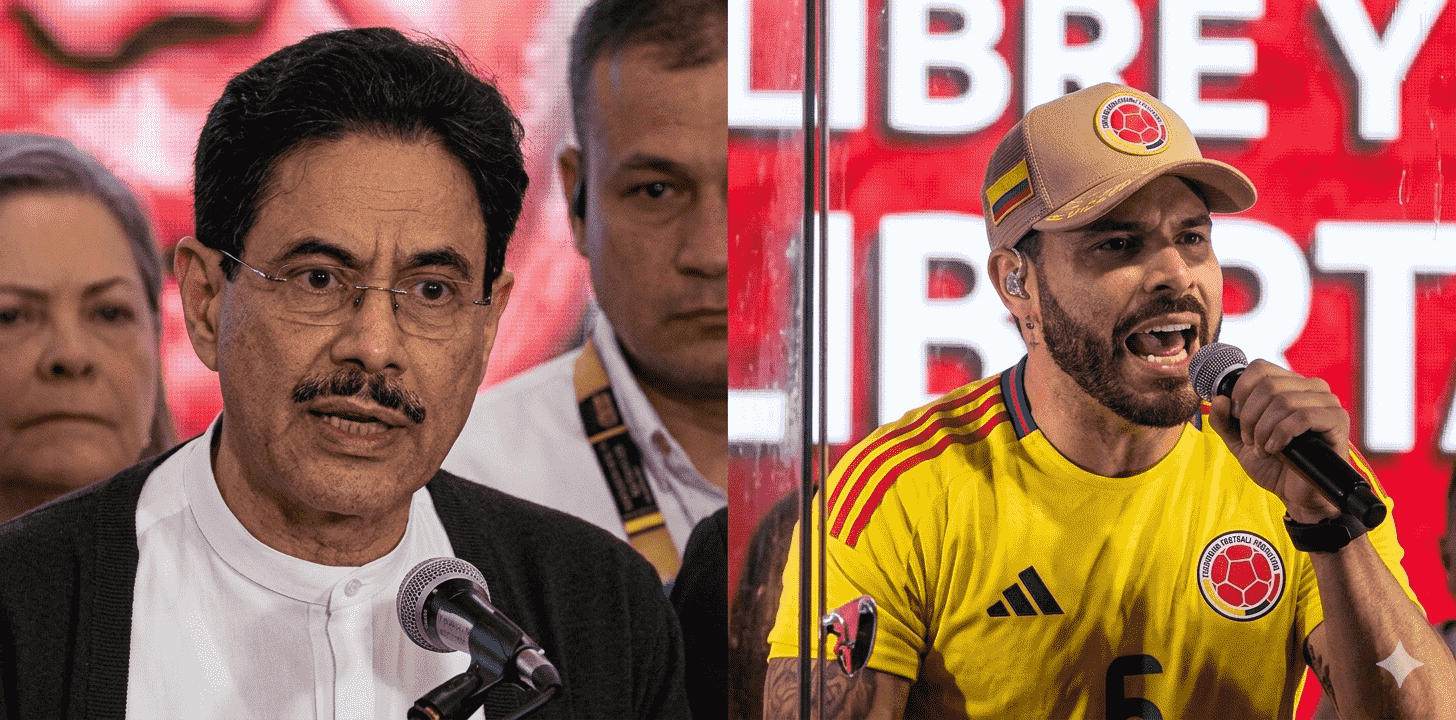
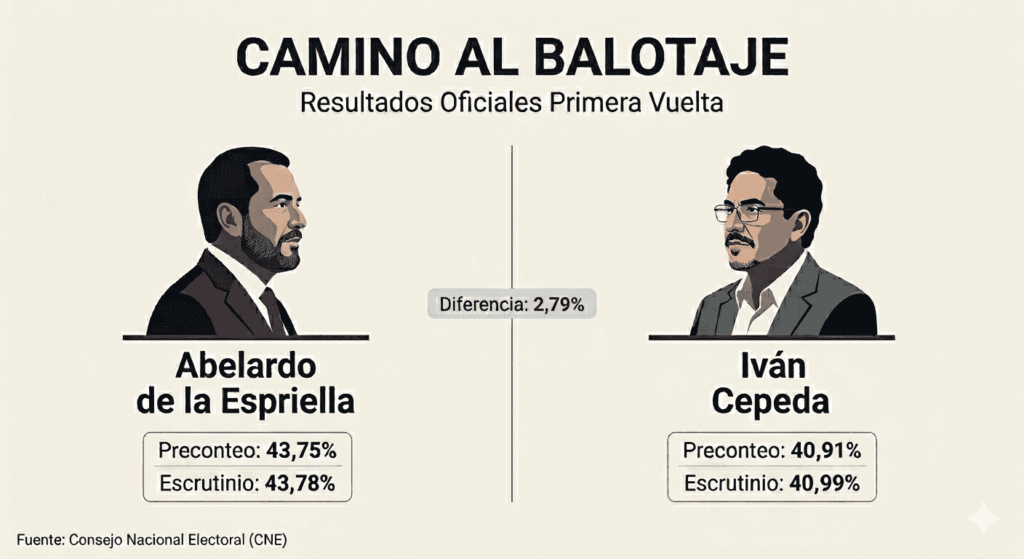
On June 21, 2026, the country will define its political course in a ballot of maximum polarization between the right-wing lawyer Abelardo de la Espriella, who led the first round with 43.74% of the votes, and the leftist senator Iván Cepeda, who obtained 40.90%.
However, behind the intense race for the presidency, an economic transformation advances that seems to march outside the electoral speeches.
This trend has made Colombia the fifth largest bitcoin (BTC) and cryptocurrency market in Latin America. Far from being an exclusive area for technological specialists, The use of decentralized networks has spread as a common financial tool.
As CriptoNoticias already reported, between July 2024 and June 2025, close to USD 44.2 billion were mobilized in the country in this type of transactions.
Currently, some six million people, almost an eighth of the population, use these channels to protect their savings against devaluation, make investments, send remittances or process paymentsaccording to the records of the Colombian Chamber of Electronic Commerce.
The massification of these platforms reveals a paradox in the priorities of the electorate. On the one hand, the citizen who goes to vote seeks stability in the face of a complex macroeconomic panorama, conditioned by a high public debt and a fiscal deficit of 6.4% of GDP.
On the other hand, while the political debate oscillates between De la Espriella’s proposal of strict security and megaprisons and the continuity of Cepeda’s state subsidies, in daily practice many users prefer to entrust their assets to the autonomy offered by bitcoin and dollarization through the use of USDT, Tether’s stablecoin. It is a way of seeking certainty outside of traditional institutional channels..
The trail of cryptocurrencies in Colombia under the fiscal microscope
This search for autonomy, however, has been intersecting with state control mechanisms for some time. Although many users assume that their movements in the digital environment are invisible, the National Tax and Customs Directorate (DIAN) has kept crypto assets under its magnifying glass since 2021.
Through so-called “exogenous information”, the tax authority systematically cross-checks data from banks, notaries and trading companies to track taxpayer activity.
The impact of this surveillance ecosystem has deepened this year with the application of Resolution 000240 of 2025, which adapts the international standards of the OECD (Organization for Economic Cooperation and Development) to force exchanges to report the identities and movements of their clients.
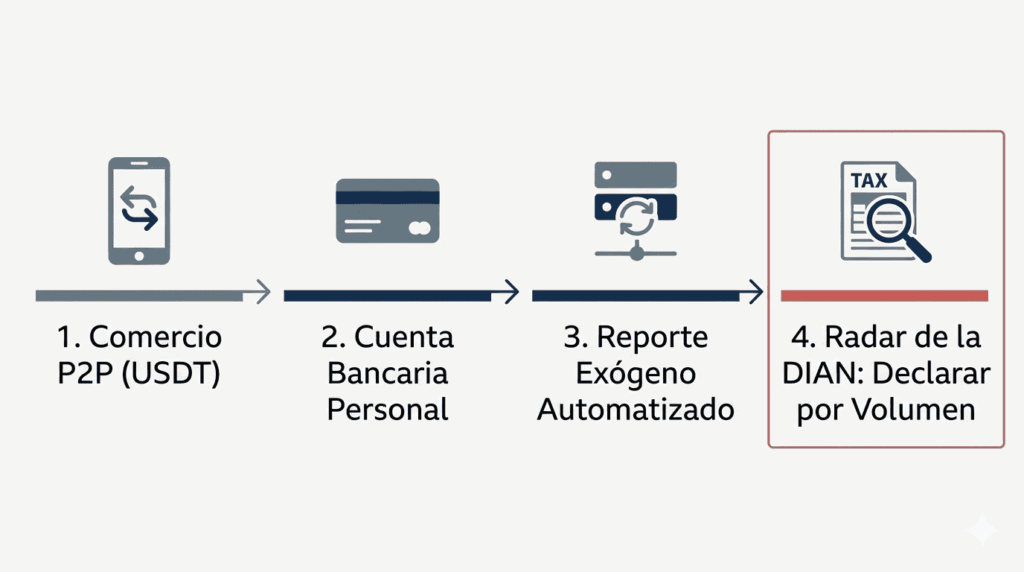
For the average user, this translates into an immediate and often surprising reality. Those who trade digital assets in peer-to-peer (P2P) markets using your personal bank accounts to receive or send Colombian pesosthey leave an indelible financial trail. For the DIAN, what matters is the total volume of money that enters and leaves these accounts.
In this way, a citizen who constantly moves capital to exchange USDT can easily exceed the legal deposit limits and be forced to declare income tax, regardless of whether their real profits were millionaires or non-existent. Omitting these reports or making errors in the declaration exposes users to burdensome penalties that can exceed the value of the tax owed.
The cryptocurrency void faced by the president of Colombia
However, a regulatory contradiction is generated here because while the State moves forward with agility in the tax supervision of centralized transactions, Congress keeps the bills frozen. The last of them, stalled in March 2026, aims to provide a framework of legal protection to users against possible fraud or operational bankruptcies.
The scenario poses a clear dilemma between institutional oversight and individual privacy. For example, for a family economy that depends on funds from abroad or for an independent merchant, The use of these digital assets represents an alternative of free choice and agility.
For financial authorities, however, it constitutes a capital flow that is difficult to record at a time of budgetary urgency. In this way, the incoming administration will assume the management of a market of enormous proportions that already pays taxes, but whose definitive legal status remains unresolved in parliament.
The arrival of the new government after June 21 will force a political definition with direct implications for citizens’ pockets. The elected president will take office on August 7, 2026 before the Congress of the Republic, receiving the presidential sash to begin the 2026-2030 constitutional period. From that same day, the next administration will not be able to ignore a transactional volume of more than USD 44 billion annually.
If the elected president chooses to toughen tax burdens with a strictly revenue-raising purpose to alleviate the 6.4% deficit, will cause an immediate incentive for users to migrate to foreign platforms or informal channelsmaking the market invisible again.
The real challenge for the next occupant of the Casa de Nariño will be to understand that digital assets have great relevance, de facto, in the financial order of millions of Colombians. And they demand clear protection rules, and not just inspection tools.