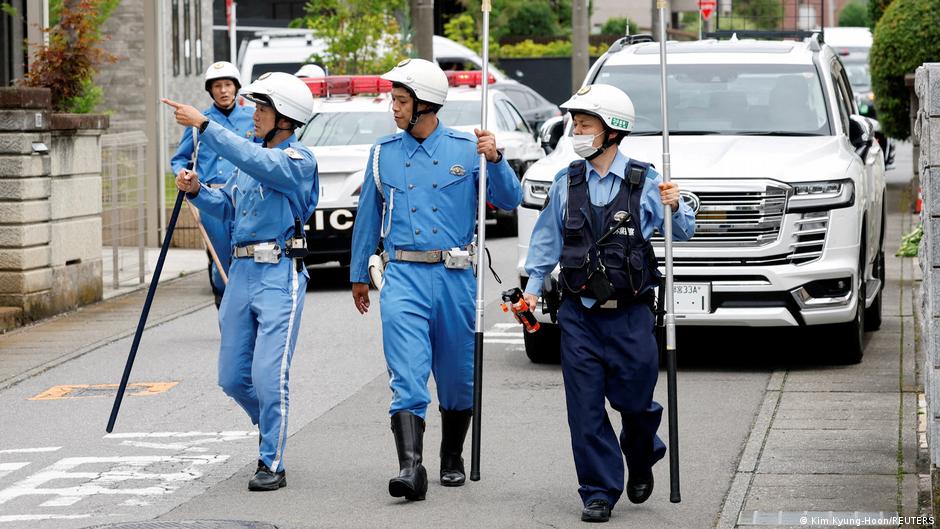
Authorities in the city of Utsunomiya, north of Tokyo, on Tuesday captured a wild black bear that had been roaming the streets for four days.
City officials closed all 94 public schools and urged residents to stay indoors after the bear was first spotted Saturday evening.
Locals in the city of half a million were kept on alert in the days after dozens of sightings were reported – one near a library, one in a shopping arcade, one on a university campus and in a market.
The case shocked the entire country and led to a massive search operation involving helicopters, police, hunters and city officials.
Is the fear of bears over?
The bear, estimated to weigh about 100 kilograms (220 pounds), reappeared near a private home on Tuesday. Police cordoned off the area, while the animal was shot with tranquilizer guns, and loaded onto a truck and taken away. An official quoted by Reuters said the city had yet to decide what to do with it.
Officials said they would again close city-run schools on Wednesday due to reports of a possible second bear roaming around.
The bear is not alone in Utsunomiya There was a stir in Japan. About 100 kilometers (60 miles) further north, in the coastal city of Iwaki, schools were forced to suspend classes Tuesday because of a black bear sighting.
Meanwhile, at least four people were injured in a black bear attack in a residential area in Fukushima last week. Security footage of one encounter shows the animal chasing a man and knocking him to the ground. That bear is still free.
Casualties from bear encounters to rise in 2025
The Japanese government formed a special task force this year in response to the increase in bear attacks. Bears killed a record 13 people in Japan last year, according to the Environment Ministry.
The government estimates that the bear population in Japan is currently about 57,800. Their numbers are believed to have tripled since 2012 due to a decline in hunting.
It is believed that other factors, such as climate change, are affecting the supply of food such as acorns and beechnuts that bears typically eat, causing them to seek sustenance in areas populated by humans.
Edited by Shawn Sinico
Don’t let algorithms hide news. If you rely on our team for reliable reporting, please take a moment Select us as your favorite source on Google by clicking here and pressing the “Star” or “Favorite” buttonThat’s why you’ll always see our verified news first.