The project proposes the creation of a new type of company: Autonomous Decentralized Companies.
Is this standard enough for Argentina to attract investment linked to new technologies?
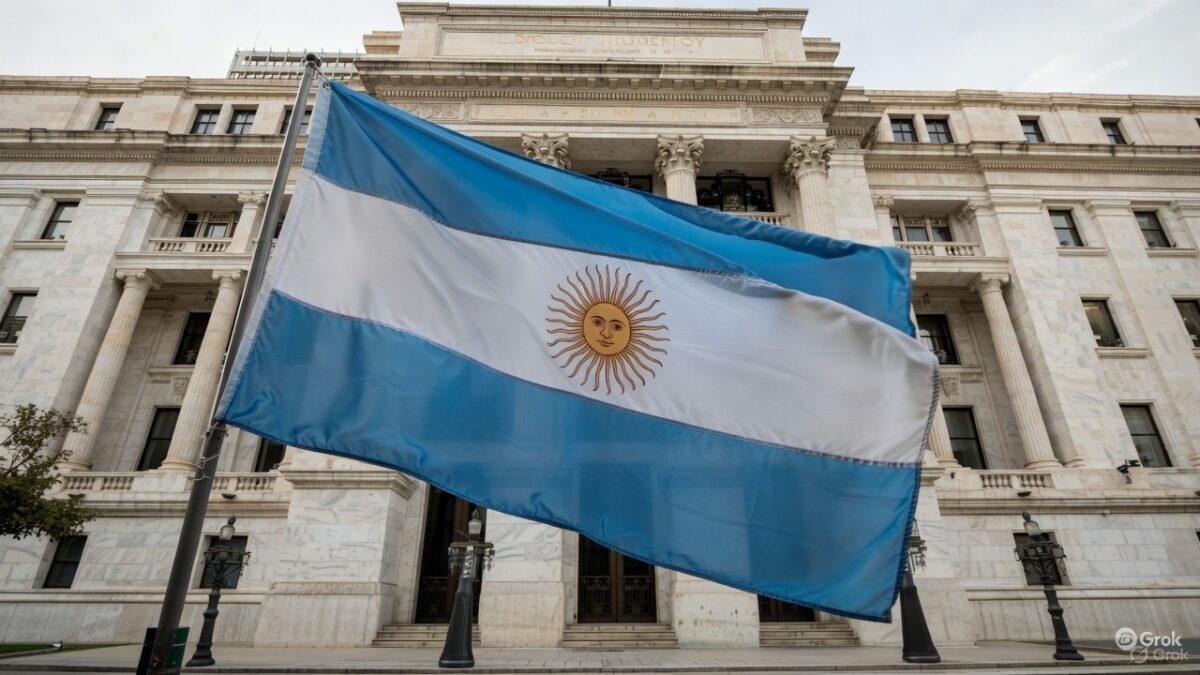
The Executive Branch of Argentina elevated the Congress a project that seeks to reform the General Companies Law, a norm that has been in force for more than five decades. Among its novelties, something disruptive for Argentine regulations appears: the Decentralized Autonomous Operative Societies (DAO)shares represented by tokens, blockchain records and companies managed by algorithms or artificial intelligence.
Since the emergence of cryptocurrencies, more than ten years ago, the changes brought about by this technology have always been dizzying, and the regulations that aim to accompany them always arrive late: Technology advances much faster than the fist of the legislator.
What is a DAO in Company Law
The project establishes the DAO as a specific type of company. Its name must include the expression “Decentralized Autonomous Operating Company” or the acronym “DAO”.
These societies are characterized by functioning autonomously and decentralized. The concept is not new. A DAO is an organization managed in a decentralized manner thanks to the use of smart contracts, where participants usually have voting rights represented by “governance tokens.” An example is MakerDAO (today, Sky), which is responsible for issuing the DAI stablecoin, among other projects.
The proposal also allows members’ shares to be represented by tokens created on a blockchain or similar technology. The transfer of these shares would occur with their registration in the network declared by the company and would be enforceable from that moment, without the need for additional notification, as long as the platform guarantees traceability.
Who is responsible when the company operates alone
Although the DAO may operate in an automated manner, the project does not leave it “orphaned” of responsible human persons: the promoter He will be the one who promotes its constitution. In addition, the company must necessarily have one or more legal representatives against third parties.
And there is a point that is of particular interest to the crypto ecosystem: the constituent instrument must provide mechanisms so that only previously identified members (under due diligence or KYC standards) can acquire or transfer shares, in addition to mechanisms to identify the final beneficiaries in response to requirements from the authorities.
And who pays the price if something goes wrong? The company will respond with its assets for its obligations and for the damages it causes, even for the acts that the protocol executes automatically. The promoter will be liable in an unlimited and joint manner during the founding stage, while the legal representative will be liable in cases of fraud, abuse of powers or violation of the law, the statute or the instructions received.
Societies managed by artificial intelligence
The project also incorporates the figure of the Automated Societywhich may operate through algorithms or artificial intelligence without the need for employees for its ordinary operation.
Like DAOs, it would have full legal personality and limited liability. But its implementation raises no small questions: How are decisions made automatically imputed?What duties will those who design or supervise the algorithms have? What audit standards will have to be required? Questions that practice, sooner or later, will force us to answer.
Is Argentina generating a pro-business environment for new technologies?
Although in recent years Argentina has given concrete signs of openness towards new technologies (creation of a PSAV Registry – Virtual Asset Service Providers -, enabling corporate contributions in cryptocurrencies and the incorporation of cryptoassets to money laundering in 2024), Argentine regulation continues to be fragmented, reactive and plagued by gray areas.
For example, the tax that today attracts the greatest criticism within the Argentine crypto industry is, without a doubt, the tax on bank credits and debits – the popular “check tax” – a tax that has been affecting every movement in a current account for more than twenty years, both when depositing funds and when withdrawing them. What is striking is that numerous actors in the financial system enjoy exemptions, but PSAVs were expressly excluded from this benefit as of Decree 796/2021.
A pro-business policy regarding new technologies cannot be exhausted in partial reforms if fiscal costs, regulatory asymmetries and operational uncertainties that directly affect the sector persist.
Final words
The proposed reform is an ambitious attempt to adapt Argentine corporate law to the digital economy. Incorporating DAOs, tokens, blockchain and artificial intelligence can provide greater legal certainty to models that already exist in practice, but that until now operated without a specific corporate framework.
The challenge will be to prevent modernization from being reduced to a simple incorporation of technological terms into the text of the law. The key will be to define clear rules on responsibility, identification of owners, prevention of money laundering, supervision and protection of third parties.
Disclaimer: The views and opinions expressed in this article belong to its author and do not necessarily reflect those of CriptoNoticias. The author’s opinion is for informational purposes and under no circumstances constitutes an investment recommendation or financial advice.