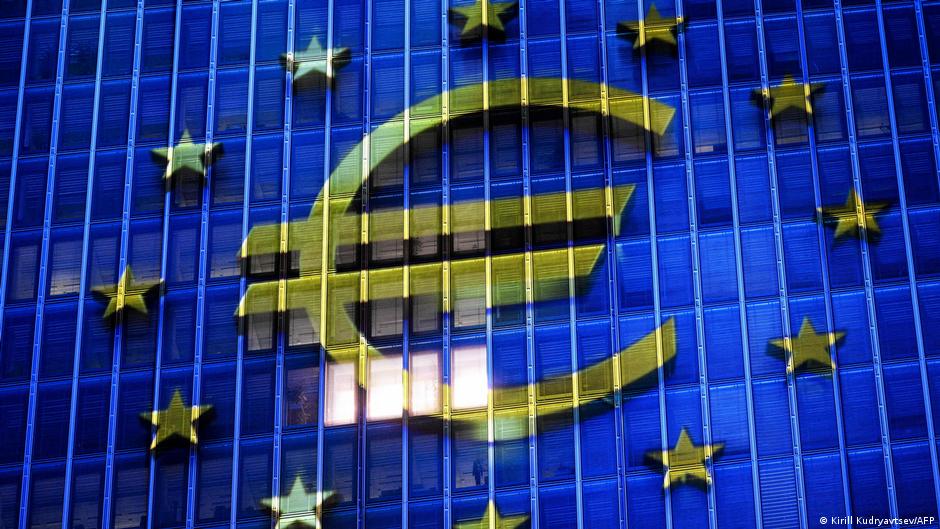
The European Central Bank has raised interest rates for the first time in nearly three years to combat inflation linked to the Iran war.
The move, which risks putting further pressure on the eurozone’s weak economy, highlights growing concern over rising prices.
What was the ECB rate increase?
Policymakers in Frankfurt raised the benchmark deposit rate by 0.25 percentage points to 2.25%, ending a long pause after seven consecutive holds at 2.0%.
The ECB faces a delicate balance between controlling inflation and avoiding a deep economic recession.
The last rate increase in the eurozone was due in September 2023. Higher rates generally make it more expensive for households and businesses to borrow, helping to curb demand and reduce price pressures, while offering better returns for savers.
What did ECB say on the rate hike?
At a press conference after the decision, ECB President Christine Lagarde said the bank was “well positioned to deal with the uncertainty caused by the war.” [in Iran]”
He said the bank “will monitor the situation closely and follow a data-dependent and meeting-by-meeting approach.”
“The war in the Middle East is creating inflationary pressures,” the ECB said in announcing the hike.
Eurozone inflation rose to 3.2% in May, well above the ECB’s 2% target, following the start of the US-Israeli war against Iran. The Strait of Hormuz, an important transit route for oil and gas, is almost completely closed.
“The outlook remains uncertain, with risks to inflation rising and downside risks to economic growth,” the bank said.
“The full impact of the battle for medium-term inflation and growth will depend on the intensity and duration of the energy price shock, as well as the scale of its indirect effects,” the bank said.
The bank also raised its inflation outlook for this year while cutting growth expectations.
Policymakers revised their inflation forecast to 3% from 2.6% in March and cut their eurozone growth forecast to 0.8% from 0.9%.
Edited by: Shawn Sinico