Despite the ongoing Ebola epidemic and persistent insecurity in eastern Democratic Republic of the Congo (DRC), political elites are increasingly focused on potential constitutional change, with the ruling majority now openly attempting amendments.
On June 9, the National Assembly passed a bill to hold a referendum – legislation that will be key to any constitutional amendments as President Félix Tshisekedi’s second and final term ends in 2028. The vote took place without opposition lawmakers, who have boycotted parliament for weeks in protest against the initiative.
Tshisekedi has indicated openness to a scenario that could lead to a third term and even a possible postponement of elections through a constitutional amendment. “I have not asked for a third term, but I tell you this: If the people want me to get a third term, I will accept,” he said during a press conference in Kinshasa in early May.
His Union for Democracy and Social Progress (UDPS) has already launched a public campaign to promote constitutional reform. Tshisekedi, 62, in power since 2019, is constitutionally limited to two terms under a charter adopted 20 years ago.
This is not his first attempt at change. In 2024, Tshisekedi described the constitution as a “foreigner’s constitution” without presenting evidence, and announced plans for a national commission of experts to review it. The comments came shortly before AFC/M23 rebels, backed by Rwanda, captured key eastern cities including Goma, Bukavu and Uvira, according to UN experts.
Some analysts see deeper motives behind promoting reform. “When the president argues for amending the Constitution, it becomes clear that the goal is not to modify the Constitution but to change it,” Professor Bob Kabamba of the University of Liège told DW.
Opposition accuses Tshisekedi of seeking third term
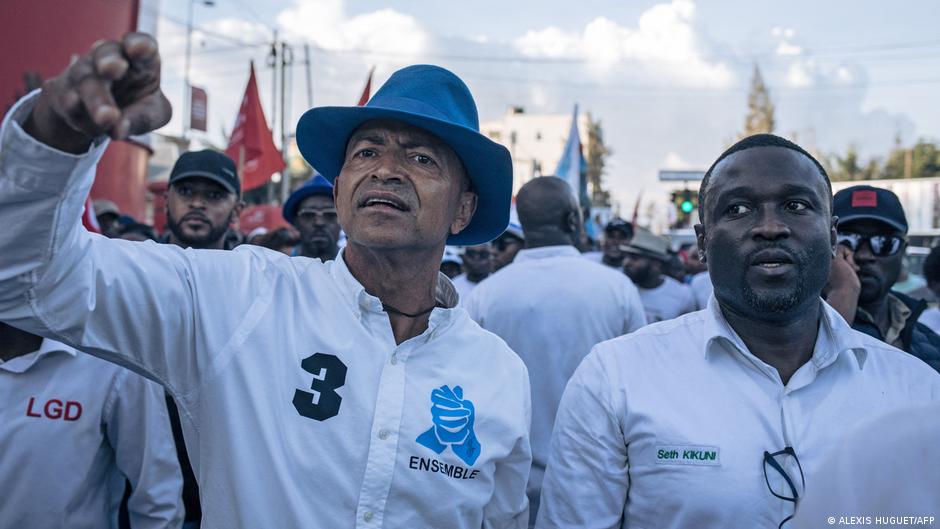
Opposition leaders argue that the referendum law is designed to circumvent established term limits. Moise Katumbi, who came second in the 2023 presidential election and now lives in exile, was blunt. “The Constitution is not a shirt that can be changed at will. President Tshisekedi himself swore an oath before this Constitution … that he would respect it. A leader must put the interests of the people first,” he told DW.
Under the Constitution, neither the number nor the term of the presidential term can be amended. However, the new bill allows for changes to these provisions in the event of “major dysfunction” crippling state institutions, subject to referendum.
Katumbi labeled this provision “a ruse designed to enable Félix Tshisekedi to stage a constitutional coup”, warning that Tshisekedi would not succeed. “We will protest. This is only the beginning of our protest and if President Tshisekedi is ready to commit murder, he will take responsibility.”
The presidential camp defends the measure as an exercise of popular sovereignty. “The sovereign people who decided in 2006 on the limits set in the current constitution can decide again today. Therefore, those limits do not bind the sovereign people,” said Paul-Gaspard Ngondankoy, a ruling coalition lawmaker and author of the bill.
Beyond politics, the bill has triggered legal debate. Critics argue that sovereignty cannot be exercised outside constitutional limits. Tshopo Bar Association lawyer Godefroy Mwanabwato believes the Constitutional Court could intervene.
“I am confident that, in its discretion, the Court will remove from this bill all provisions that go beyond the powers given to the legislature,” he said, suggesting that parts of the law – or even all – could be struck down.
Religious groups are also divided. Some evangelical and Pentecostal churches view the reform as beneficial, while influential Catholic and Protestant churches war against rolling back democratic gains.
A rare united DRC opposition
Reform efforts have united the scattered opposition. In late May, civil society groups as well as personalities including Katumbi, Martin Fayulu, Matata Ponyo and Jean-Marc Kabund launched the “Article 64 Coalition for the Defense of the Constitutional Order” (C64).
Many opposition figures are now working from exile after facing arrest, threats or alleged torture. Others have spent months in detention without trial. Former President Joseph Kabila, sentenced to death for alleged links to the AFC/M23 rebellion, also opposes what he calls a “dictatorship” in Kinshasa.
Katumbi has framed the standoff as a broader national crisis: “You don’t negotiate with your friends. You negotiate with your adversaries. What we’re seeking is to silence the guns in our country.”
Public opposition is also gaining momentum. On June 3, a nationwide “ville morte” (ghost town) strike was widely observed in Kinshasa and other cities. Further demonstrations are planned, including a sit-in outside Parliament.
“When we talk about changing the constitution, it means that today’s Congo exists through that constitution. It provides for a president, a government and a parliament. If you remove that constitution, the president is no longer the president and the parliament is no longer the parliament. We will enter a completely different system of governance,” said Bob Kabamba, one of the drafters of the current constitution.
The opposition is also seeking international support. Katumbi has appealed directly to US President Donald Trump, warning of instability as a result of Tshisekedi’s initiative. “If Tshisekedi doesn’t want to respect the Constitution, how can one expect him to respect the partnership agreement with the US on minerals?”
Some analysts suggest that Tshisekedi feels encouraged by the international support associated with strategic mineral deals. “The DRC-US agreement strengthens President Tshisekedi’s political position,” Yvonne Muya, a research associate at the University of Ottawa, told DW, noting the broader geopolitical stakes in the region.
Tshisekedi himself has linked constitutional reform to external pressures, saying in May that “the Americans have demanded certain reforms from us” and that these “cannot be implemented without amending the constitution.”
Edited by: Crispin Mavakideau