
For the second consecutive week, Strategy announces the purchase of approximately 1,500 bitcoin.
In addition, Strategy increases its dollar reserve to pay dividends to shareholders.
Strategy, the publicly traded company with the most bitcoin (BTC) in its possession, made a new purchase of the digital currency. The company acquired 1,587 BTC for a total of $100 million.
The information was known this Monday, June 15, 2026 through a presentation before the United States Securities and Exchange Commission (SEC) and was confirmed by Michael Saylor, president of the company, through his X account.
«Strategy acquired 1,587 BTC for $100 million to increase our BTC reserve to 846,842. We also increased our USD Reserve by 100 million to $1.1 billion,” Saylor wrote on the social network.
The purchases were made between June 8 and 14, at an average price of $63,024 per unit, including commissions and expenses. The funds came from the sale of shares under the at-market offering (ATM) program of class A common shares (MSTR), through which the company placed 1,732,553 shares and raised a net $209 million during that period.
This operation takes on special relevance due to the context in which it occurs. On June 1, Strategy revealed selling 32 BTC between May 26 and 31—the first bitcoin sale since 2022—sparking a strong market backlash and shaking up the “eternal buyer” narrative that Saylor had built for years. The price of bitcoin fell to the $59,000 area in the following days.
A week later, on June 8, Strategy responded with a purchase of 1,550 BTC. Now, seven days later, he buys a similar amount again: 1,587 BTC. Two weeks, two purchases, more than 3,100 BTC accumulated.
There is an optimistic reading that can be made of this fact: Strategy is sending a message to the market that the accumulation does not stop.
And the market reacts positively. Right now, after knowing about these purchases, the price of bitcoin rises close to $67,000, which represents an increase of 4% in the last 24 hours (note that, as CriptoNoticias reported this morning, the market is also reacting positively to agreements to achieve peace between the United States and Iran).
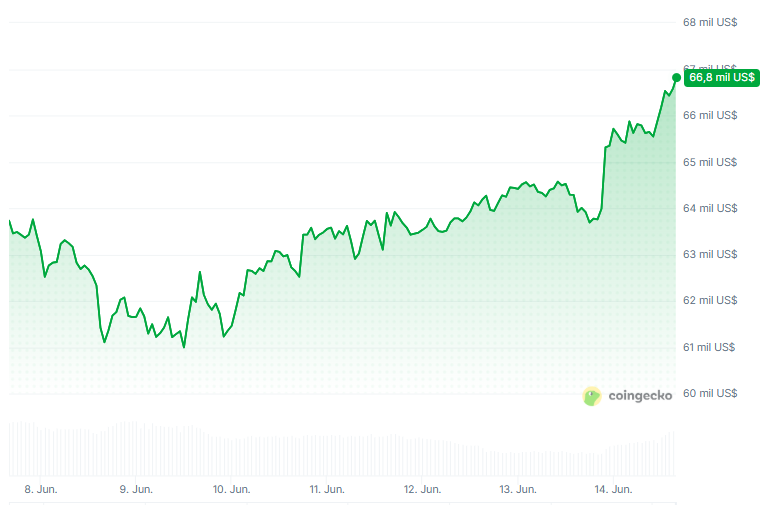
But there is another possible reading, less comfortable. These purchases They are not financed with operating cash flow or business profits: are paid with the sale of common shares of Strategy (MSTR) to investors who bet on the same thesis that the company promotes.
It is a scheme that works as long as the price of MSTR is sustained and as long as there is demand for those shares. When any of these variables fail, the mechanism becomes complicated.
The reserve in dollars: real answer or makeup?
On the other hand, the 8-K report reveals that the balance of Strategy’s fiat reserve amounts to $1.1 billion as of June 14.
This reserve — created in December 2025 — was designed to guarantee the payment of dividends on the company’s preferred shares and interest on its debt.
At first glance, it is a reassuring number. But it is worth reading it carefully: the report itself clarifies that it includes “expected income from shares already sold that had not yet been liquidated” as of that date.
That is to say, part of the balance is not cash in hand but money in transit. Additionally, $1.1 billion must cover dividends on four different classes of preferred stock—STRF, STRC, STRK and STRD—plus interest on the company’s debt. How long these funds last in a scenario of sustained pressure is a question that the statement does not answer.
It is worth remembering that the sale of 32 BTC in May was interpreted by analysts such as Leopoldo Bebchuk—former Strategy employee—as a sign that STRC preferred stock model is not sustainable if the market is bearish. The purchases of the last two weeks do not resolve this structural tension: they postpone it.
Strategy shareholders suffer from the company’s decisions
With this purchase, Strategy accumulates 846,842 BTC acquired at an average price of $75,656 per unit. At current prices, around $63,000, the position is accumulating unrealized losses of around $10.7 billion.
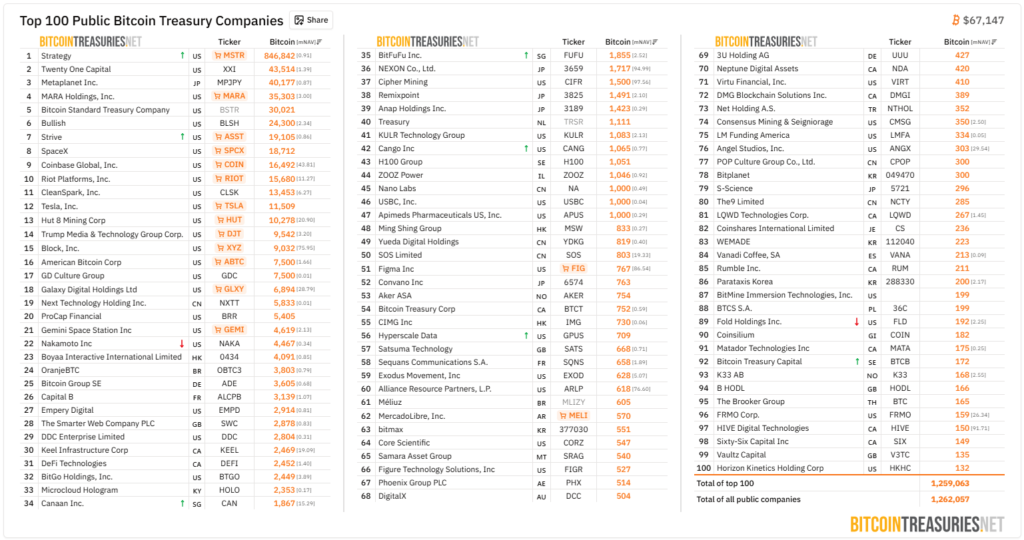
Now, the company buys more BTC at $63,000 on a position that cost an average of $75,000: if the price does not recover those levels, the accounting hole grows with each purchase.
The company maintains significant issuance capacity under its ATM programs—up to $25.746 million in available MSTR shares—which gives it room to continue buying. But that margin comes at a cost: each share issued dilutes existing shareholders.
In the long term, the strategy only works if the price of bitcoin rises enough to offset that dilution. If it does not rise, ordinary shareholders are the first to absorb the losses.
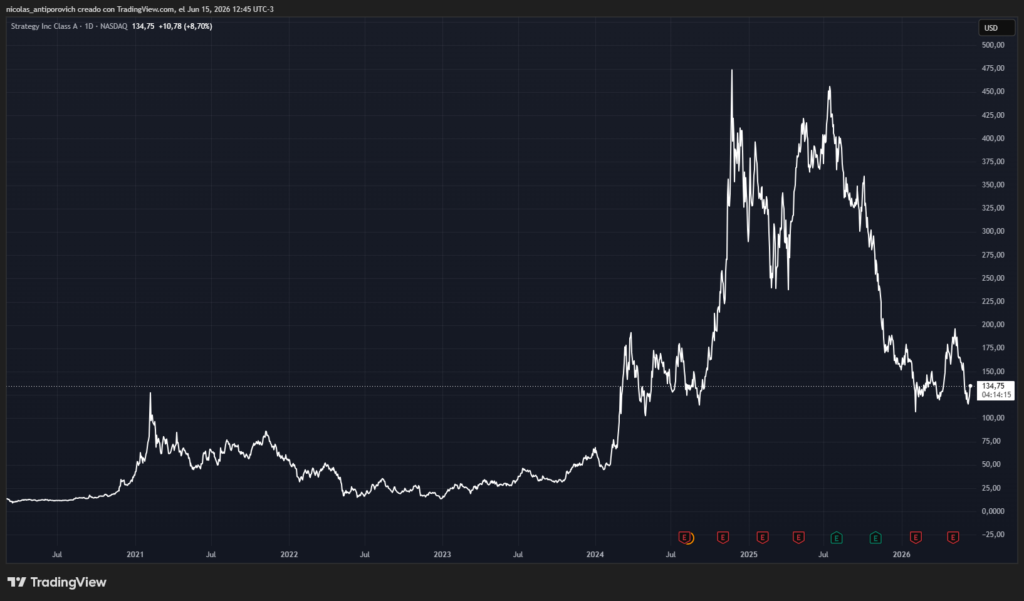
Strategy sowed doubts that will be difficult to dispel
In the markets, the narrative matters as much as the fundamentals. And Saylor knows this better than anyone: he built an entire company on the idea that accumulating bitcoin was the only rational strategy.

The purchases of the last two weeks fit perfectly into that narrative and are, in that sense, exactly what the market wanted to see after the 32 BTC sale.
But, there is a difference between a genuine signal and a managed signal. Strategy has every incentive to prove that the May sale was an isolated event, not a pattern. Consecutive purchases serve that goal.
What nWhat is clear is whether the solidity of the model accompanies the conviction that Saylor projects. or if the company is simply “buying time” to sustain a scheme that, according to some opinions, is destined to fail.
Disclaimer: The views and opinions expressed in this article belong to its author and do not necessarily reflect those of CriptoNoticias. The author’s opinion is for informational purposes and under no circumstances constitutes an investment recommendation or financial advice.