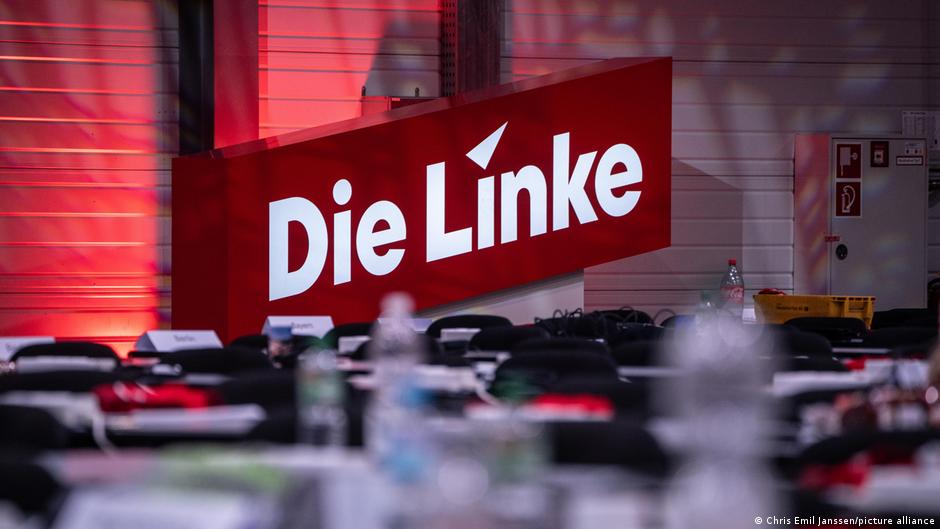
“We are fighting in Berlin to turn the city red,” read the main resolution presented to delegates at the Left Party’s federal party conference. Red is the color of the left-wing party, but also of the centre-left Social Democrats (SPD). According to the latest polls, a three-way coalition of the two along with the Greens could win a majority in the September elections for the city state parliament.
Berlin has been “red” in the past. From 2016 to 2023 it was governed by a three-way coalition – led by succeeding SPD mayors. This time the Left Party is dreaming of winning the elections and capturing the post of Mayor with its candidate Elif Eralp. The 45-year-old has a remarkable background: her parents were active in politics and trade unions in Turkey, before fleeing Germany as asylum seekers after a military coup in 1980, just weeks before Eralp was born.
Winning the election will not be easy. Berlin’s current ruling Christian Democratic Union (CDU) still leads the polls with 20%, but Erlap is hoping to win not only among his party’s traditionally left-wing base in neighborhoods like Neukölln and Friedrichshain, but also in areas further afield. The party wants to repeat the “Miracle of New York”, where socialist Democrat Zohran Mamdani was elected mayor despite significant opposition.
Unique foreign policy stance of leftist party
The Left Party is a descendant of the Socialist Unity Party of Germany (SED), which ruled East Germany as a dictatorship from 1949 to 1989, although it has long established itself as a part of Germany’s political landscape.
The party is currently part of coalition governments in two of Germany’s 16 states: the city-state of Bremen and the northeastern state of Mecklenburg-Western Pomerania. In Thuringia, the party also led the government with its leader Bodo Ramelow until 2024.
However, at the federal level, the Left Party has little chance of gaining power, partly because its foreign and security policy platform is considered too radical by many voters: the party opposes all arms exports and Germany’s decision to pursue rearmament following Russia’s 2022 invasion of Ukraine.
“When we on the left say we need a different Europe, we do not mean a military superpower or an EU army, but a force for peace that is able to protect but does not export violence – neither economically nor militarily,” the party leadership wrote in its key proposal for the June conference in Potsdam.
focus on equality
The left party accused Chancellor Friedrich Merz, whose center-right CDU leads the government, of allowing the military budget to swell while dismantling the welfare state. Socialists also oppose Merz’s planned reforms to the health care and pension systems because, they argue, they merely amount to budget cuts that will place greater financial burdens on citizens.
For several weeks the Left Party has been saying “Enough! Make life affordable!” Protests are being organized across Germany under the slogan. In doing so, she is hoping to build on her massive door-to-door campaigning during the 2025 federal election, when the party almost doubled its vote share and secured about 9% of the national vote.
The son of immigrants and a young woman
Antonios Souris, a political scientist at the Free University of Berlin, believes the Left Party can take the lead on issues such as housing and social policy and present itself as an alternative to the SPD and the Greens.
The party’s co-leader-designate, Luigi Pentisano, may support the issue. Pantisano’s parents immigrated to Germany from Italy in the 1960s and he was raised in modest, working-class circumstances. “The left party will be able to demonstrate through its leadership what it wants – namely, a multicultural society in which people with immigrant backgrounds also hold important positions,” Souris told DW.
Pantisano is set to lead the left party alongside co-chair Ines Schwertner, who is in office through 2024. Schwertner, who was born in the GDR just before the fall of the Berlin Wall in 1989, represents a new generation within the Left Party, which is predominantly young and female.
The average age of delegates at the Party Conference is only 37 years old, and 53% of delegates are women. Nationwide, the left-wing party is polling at just over 10%, and its membership has more than doubled since 2023, reaching more than 125,000.
anti-semitism allegations
But these new members also made headlines with controversial statements on the Middle East, leading some media outlets and rival political parties to accuse them of anti-Semitism. The party leadership is keen to cover up this debate. According to political analyst Souris, whether this will work or not will be one of the key issues to watch. “Do new members already have some degree of loyalty to the party as a whole that would lead them to put their own interests aside?” He was amazed.
This article was originally published in German.