As Washington and Tehran negotiate the implementation of an interim peace deal that ended the Iran war, the US has lifted sanctions on Iranian oil trade until August 21.
Sanctions relief is a central pillar of the peace framework the two sides signed last week.
Also, the US and Qatar are considering releasing about $6 billion (about €5.3 billion) of frozen Iranian oil revenues. According to US President Donald Trump, the funds will be used to purchase “food and medical supplies, especially from the United States, including corn, wheat and soybeans from our great American farmers. These are things Iran desperately needs.”
Tehran denies any obligation to buy food from American farmers.
But it is clear that Iran is in dire need of money – according to preliminary estimates from the Iranian government, the war with the US and Israel resulted in losses of approximately €229 billion.
The memorandum of understanding between Iran and the US also mentions a payment of $300 billion for reconstruction, but details on that are unclear.
Government borrowing money is expected to increase inflation
According to Seyed Ali Madanizah, Iran’s Minister of Economy and Finance, Iran’s government has already been forced to borrow large amounts of money from the central bank to cover war expenses.
This debt is expected to increase inflation in the coming months.
“The agreement with the US will not completely normalize the Iranian economy,” said Madanizah, who received his PhD from the University of Chicago.
Economy expert Ahmed Alvi does not expect any significant short-term improvement. Speaking to DW, Allawi pointed to the now-defunct JCPOA agreement of a decade ago — increasing oil revenues and reducing external pressure kept Iran’s economy on “life support,” but without deep structural reforms, the effects remained limited and short-lived.
Eggs in Iran three times more expensive than a year ago
The roots of Iran’s economic crisis extend to years of sanctions, mismanagement and corruption. On top of that, the war and the recent US blockade of Iranian ports have made the situation even worse.
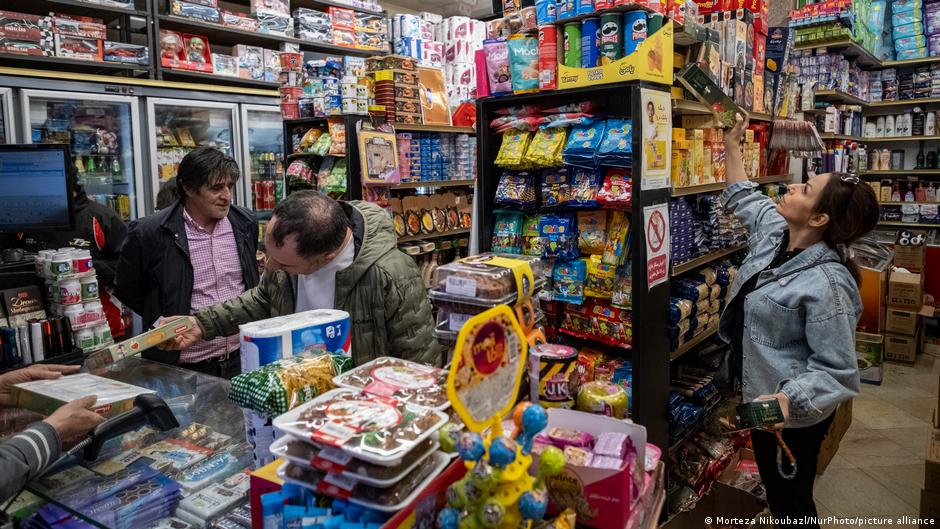
The crisis is most noticeable in grocery stores – a carton of 15 eggs that used to cost 70,000 won (€0.37, $0.40) a year ago now exceeds 200,000 won. Prices of cooking oil and imported rice have also increased sharply.
“The prices are literally rising every day,” a 28-year-old Iranian told DW. “My husband and I both work and have a young child. We still need to let go of a lot of stuff. I don’t think prices will ever be that low again.”
According to Iranian news outlets, the dollar exchange rate TabnakNow there is about 150,000 tomans to one US dollar. This represents a significant decline from the recent rate of $190,000 per tonne, but the reduction does not appear to have translated into any economic relief for customers.
The mother of a schoolboy from Tehran, speaking for many families in the city, says: As rents continue to rise, more and more people are forced to leave their apartments for more modest housing or live with relatives.
“Even a short vacation in the Caspian Sea is out of reach for many people, including us,” he told DW.
Many Iranians want change
Even government officials are expressing concern about social unrest. According to a survey conducted by an agency affiliated with Iran’s Interior Ministry, most of the country’s population is suffering due to economic stress.
The head of the agency, former education minister Mohammed Bathai, warned of widespread stress, saying that about 60% of survey participants said they could no longer deal with the economic crisis. The same share of respondents are pessimistic about the future, and nearly 80% feel they have been treated unfairly.
Bathai called on political decision makers to take these issues seriously.
Separately, President Massoud Pezeshkian also warned that economic issues could lead to protests.
“I think we will not be able to adequately meet the needs of the population and this resentment may once again be expressed on the streets,” he said.
Iranians remain flexible
Iran researcher and sociologist Mehrdad Darvishpour, professor at Mälardalen University in Sweden, says Iran’s political system is fighting for survival. The recent war not only caused massive devastation, but also left deep social and psychological wounds and reduced the space for politics. Social movements have become weak and expectations have diminished.
Still, he remains cautiously optimistic.
“The main question is whether society can be reorganized after suffering defeat, repression and collective trauma. My answer is ‘yes’. The resilience of Iranian society should not be underestimated.”
According to Darvishpour, politicians will not be able to reverse all positive changes. He points to the 2022 “Women, Life, Freedom” movement and its lasting effects on Iran’s power structures despite violent pressure from the regime. Even today, despite protests, many women in Iran go out with their heads uncovered.
This article was originally written in German.