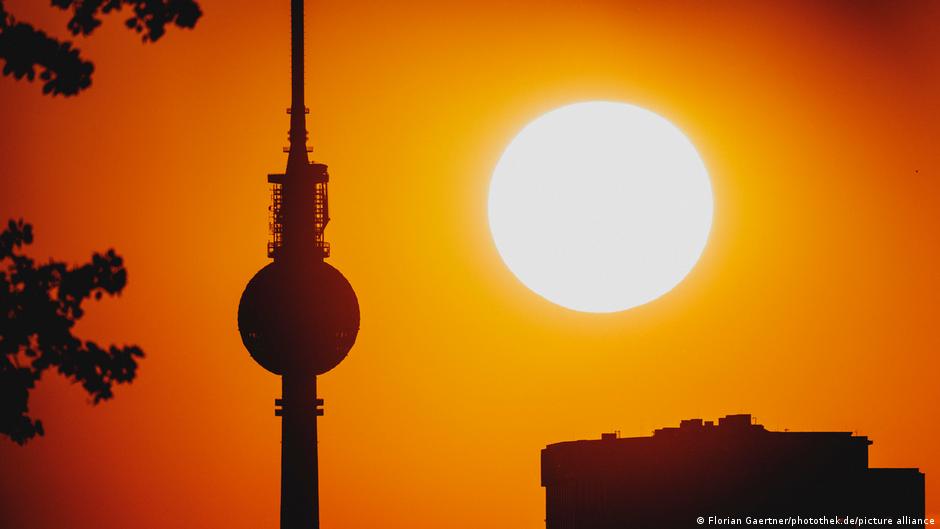
A desk near the window, a building that faces south – during Germany’s cold and dark weather, sunlight and warmth are a clear advantage. However, in summer, such workspaces can become unbearably hot without shading and air conditioning. As a result of climate change, heat waves of up to 40 °C are now occurring more frequently in Germany – and lasting longer.
Effective cooling is still relatively uncommon in Germany. While air conditioning is considered virtually standard in the United States, in Germany it is present in only 6% of private homes. In contrast, 50% of office and administrative buildings are now equipped with cooling systems.
“In northern countries, buildings are designed to retain heat because of the cold winters,” said Catharina Utermohl, an economist who works in economic policy research at insurance group Allianz. She is the co-author of a study the effects of heat On the German economy. The study warns of huge costs due to lost productivity and increased energy expenditure. Extreme heat is no longer just a short-term weather phenomenon, but a structural economic shock.
Temperatures above 30 degrees Celsius place a significant strain on the human body – especially when it is not accustomed to it. Concentration decreases, sweating increases and the entire cardiovascular system is affected.
According to Utermohl, who spoke to DW, this will have measurable consequences on the world of work. “Above 30 degrees, productivity drops 3% per degree, while energy costs increase 1.2% per degree.” People work more slowly, mistakes are more frequent, and machines run hotter. If cooling is used, more power is required – and that is expensive.
Above 30 degrees: less productivity, more illness
Heat places the greatest burden on those who work outside – for example in construction, agriculture, or delivery services. High temperatures pose a serious threat to their health. According to the German Federal Ministry of Labor, when the temperature exceeds 30 °C, overall sick leave increases by about 3.5%, and by 6% during prolonged heat. This also leads to decline in productivity.
According to the Allianz study, Germany’s total economic loss between 2026 and 2030 could amount to about $131 billion (€120 billion). A loss of up to 3% in GDP – i.e. total economic output – is also considered possible. Declining returns may reduce companies’ willingness to invest. This, in turn, could further weaken future productivity and competitiveness, the study said.
The hottest June since records began
Nevertheless, Germany is still in the middle range when it comes to the potential economic losses from climate change. France, Italy and Spain are already more severely affected, while northern European countries are benefiting as mild winters reduce the need for heating.
The current heatwave in Germany is the longest ever recorded in June since weather records began.
“Europe is warming faster than any other continent – and we are paying the price with human lives,” Hans Henry Kluge, the World Health Organization’s (WHO) regional director for Europe, said in Berlin. More than 200,000 people have died due to heat in Europe over the past four years.
How hot can workplaces get?
Germany has a “Workplace Ordinance”. It stipulates that employers should assess measures to deal with heat stress when room temperatures reach 26 degrees. From 30 degrees onwards, protective measures are required such as providing drinks or adjusting working hours. At temperatures above 35 degrees, the workplace is generally considered unsuitable.
This is not enough for the opposition Left party. It is calling for stricter heat protection measures to be enshrined in law. There are calls for indoor spaces to be provided with beverages, sun protection and fans, as well as additional breaks. People who work outside should be eligible for the “Climate Short-Term Work Allowance”.
Heat protection as part of risk management
Utermohl calls above all for long-term thinking and preventive action: “Germany must stop treating heat as a summer problem” – this is “the permanent task of economic policy.” The key concept is risk management; Dealing with heat must be integrated into all aspects of corporate planning – from analyzing supply chains and managing personnel to making real estate decisions.
Here too, the economist sees the government as having a responsibility to treat heat prevention as a central aspect of economic policy. “For example, tax incentives could be introduced for buildings designed to cope with rising temperatures and heatwaves.” Light-colored facades would help, as would shading measures or the greening of buildings. Urban planning as a whole will need to be reconsidered.
Heat also affects the infrastructure. “At 38 degrees Celsius, some parts of our infrastructure no longer function properly,” Utermohl said. “The government should invest more in this sector and ensure that the infrastructure is properly prepared.” Another big task for Germany, whose financial situation is already under great pressure.
This article was translated from German.