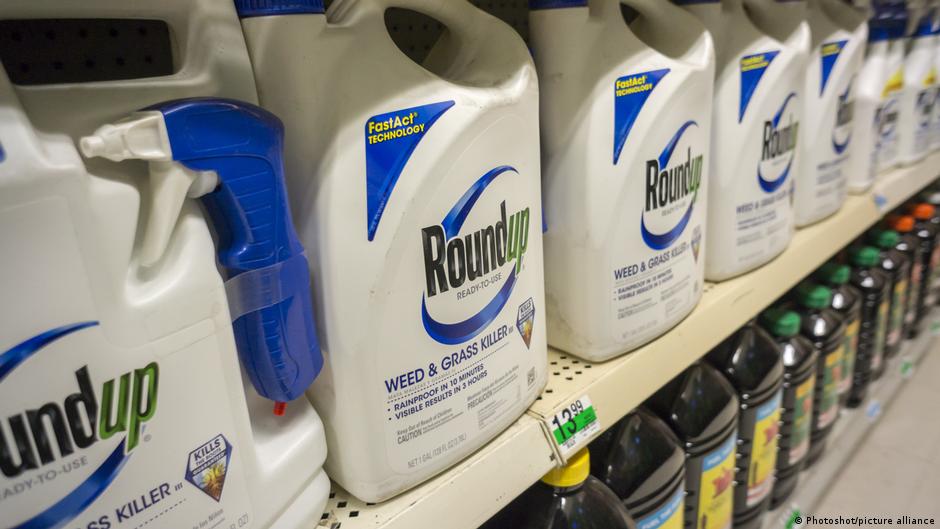
Bayer is still battling thousands of lawsuits over its glyphosate-based weedkiller Roundup, which plaintiffs claim causes cancer, primarily non-Hodgkin lymphoma.
The German agrochemicals giant inherited a legal mess in 2018 after it acquired Monsanto, the company that produces Roundup.
Farmers, landowners and gardeners – mostly living in the United States – argue that Monsanto knew, or should have known, about the risks, but failed to place adequate warnings on product labels.
According to the Litigation Information Center, Bayer has so far paid about $11 billion (€9.65 billion) to settle nearly 100,000 cases. About 61,000 to 65,000 claims remain active.
The company cites decades of scientific studies and regulatory research showing that glyphosate is safe and does not cause cancer.
Bayer, one of the top companies listed on the Frankfurt Stock Exchange, has won several legal cases, but it has also suffered several high-profile losses.
What decision did the US Supreme Court give?
On Thursday, the top US court gave a major victory to Bayer, ruling that claimants cannot sue the company in state courts over the lack of cancer warnings on the herbicide.
The justices decided 7-2 that, since U.S. federal regulators do not require warnings on products containing glyphosate, individual states cannot force companies to add a warning.
The case centered on John Darnell, a gardener from St. Louis, Missouri, who won $1.25 million in compensation after blaming Roundup for his cancer.
The Missouri Court of Appeals ruled that Bayer must follow state law.
However, the Supreme Court ruled Thursday that federal law regulating pesticides takes precedence.
Darnell’s lawsuit became a key test case for thousands of other claims in state courts, even after the U.S. Environmental Protection Agency (EPA) had signed off on Roundup’s labels.
In 2019, the EPA wrote a letter to glyphosate producers stating that adding a cancer warning would be “false and misleading.”
This effectively prevented Bayer from adding warnings even when required by state regulators.
The company, which is headquartered in Leverkusen, western Germany, argued that it should not be penalized for complying with federal rules.
In a statement after the Supreme Court’s decision, Bayer said that glyphosate remains “the most studied crop protection tool in the world,” adding that the decision “affirms that EPA’s safety determination is the law of the land.”
Will this decision end the lawsuits against Bayer?
No, this latest decision removes only one major type of claim against Bayer, specifically failing to follow state laws and adding cancer warnings to Roundup labels.
Although the remaining “failure to warn” claims are now barred from proceeding, most of the remaining lawsuits make other allegations.
These include negligence, misleading marketing about the safety of Roundup, and selling defective products.
Bayer is expected to argue that the Supreme Court’s decision should also weaken or dismiss these remaining claims.
The company has proposed a $7.25 billion settlement to resolve thousands of existing and future cases.
What does this decision mean for Bayer?
The decision is a significant victory for Bayer, bringing it closer to ending a long and costly chapter in the company’s history.
This will likely make it much easier to dismiss or settle many of the remaining lawsuits, reducing the legal uncertainty that has damaged Bayer’s reputation for years.
Bayer CEO Bill Anderson acknowledged in a company statement that: “This litigation has incurred enormous costs for the company and has affected public trust.”
Although the legal problems have not hurt sales of its weed killer, the massive cash payments have hurt profitability and research and development.
Bayer has also taken additional debt to settle the claims.
In its statement, the pharmaceutical-crop science giant said the billions spent fighting the lawsuits could have funded “next-generation sustainable crop protection tools, breakthrough treatments, or other advancements that farmers, consumers, and patients urgently need.”
Thursday’s decision is expected to save Bayer billions in potential future compensation payments, as well as reduce the cost of settling the many remaining cases.
Bayer’s share price rose sharply following the decision – at one point by more than 18% – reflecting investors’ relief.
Who has criticized this decision?
In their dissent, Supreme Court Justices Ketanji Brown Jackson and Neil Gorsuch warned that the majority broke with the “nearly unanimous approach” of state and federal courts that had previously rejected Bayer’s pre-emption argument.
He further said that there was no remedy for the “significant harm” caused to Darnell as a result of the outcome.
Lawyers for many of the plaintiffs said the ruling was a blow to victims, adding that it closes an important path to justice and compensation.
Public health advocates also expressed their anger, including the “Make America Healthy Again” movement, which wants to rein in pesticide use.
The movement’s Kelly Ryerson, also known as the Glyphosate Girl, wrote on
The Trump administration had filed a brief in the Supreme Court citing Bayer.
In February, Trump also issued an executive order to protect US production of glyphosate-based herbicides, such as Roundup, on national security grounds.