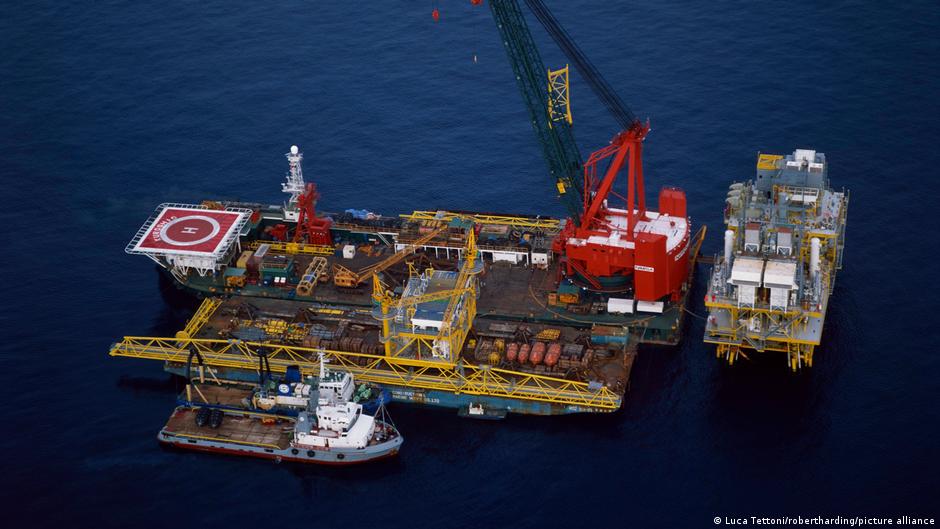
Cambodia and Thailand are attempting to use an obscure UN instrument to settle a decades-old maritime territorial dispute that could unearth oil and gas reserves worth hundreds of billions of dollars.
Earlier this month, Phnom Penh filed a notice for “compulsory consultation” under the UN Convention on the Law of the Sea, to which both Cambodia and Thailand are parties.
In fact, it invited Thailand to join Cambodia in UN-backed reconciliation talks over its 26,000 square kilometers (10,000 sq mi) overlapping claims in the Gulf of Thailand.
The filing comes after Thailand in May pulled out of a 2001 agreement with Cambodia that committed it to settle competing claims and jointly develop oil and gas fields.
Thailand withdrew the MoU amid tensions between the neighbors after a land border dispute turned deadly last year.
“The mandatory conciliation process could be useful in helping Cambodia and Thailand achieve an agreement on overlapping maritime claims,” said Matthew Wheeler, senior Southeast Asia analyst at the International Crisis Group.
Under the process of the UN Convention’s Conciliation Clause, Cambodia and Thailand have selected two independent experts as “conciliators” for the ad-hoc “Conciliation Commission”.
The Commission will examine the facts and legal position of each state to deliver a set of non-binding recommendations, which will also be sent in a report to the UN Secretary-General.
Tapping protects mutual interest
According to estimates cited by both the Thai and Cambodian governments, the overlapping claim areas in the Gulf of Thailand may contain, by some rough estimates, $300 billion (€263 billion) worth of untapped oil and gas reserves, including 11 trillion cubic feet of natural gas alone.
“Both countries will benefit greatly. Thailand’s oil fields… have been in decline for some years, leading to [liquefied natural gas] Imports.” said William Jones, an assistant professor at Mahidol University in Thailand.
Meanwhile, Cambodia is completely dependent on imports for its oil and gas. And without a refinery of its own, Jones said, it will have to send any oil and gas extracted from the Gulf to Thailand for processing, at least until it develops its own capacity.
“Given high energy prices, levels of dependency and now additional uncertainty from the Middle East, the Gulf of Thailand will provide a good buffer for consumption and healthy profits for those involved,” Jones told DW.
But the obstacles to reaching an agreement may be just as great, especially in the shadow of last year’s border fight. Dozens of soldiers and civilians were killed in multiple armed clashes over competing land border claims.
While Cambodia and Thailand have not exchanged fire in months, the two armies remain tense and mutual distrust runs deep.
And because the Reconciliation Commission’s recommendations would be non-binding, Cambodia and Thailand would have to accept them as they chose.
How does the UN-backed process work?
Independent experts selected by Cambodia and Thailand have until the end of July to choose a chairperson to complete the commission, after which they have 12 months to issue a report with non-binding recommendations.
Bangkok was initially hesitant to engage. Thailand would not want to involve international bodies in its border disputes, having lost several cases in UN courts in the past over competing country claims over Cambodia.
“But once Cambodia officially started the process, Thailand basically had two options – just don’t participate and look bad and [UN] “Let the Secretary-General choose all this for his resolvers and you, or simply join in… keep your eyes open,” Jones said.
The fact that Thailand ultimately decided to participate is “already a good sign,” said Phattaraphong Saengkrai, a lecturer in international law at Thailand’s Thammasat University.
Sengkrai said that since the four conciliators are from Denmark, France, Germany and South Africa, their outside input also comes with the potential for fresh thinking.
“We need a breakthrough, and the breakthrough can come from the parties themselves. But with these five highly qualified and experienced international lawyers and diplomats, they can come up with some ideas that both sides can agree on,” he told DW.
International Crisis Group analyst Wheeler said the involvement of foreign lawyers and diplomats could also give Cambodia the “political space” it would need to step back from some of its “excessive” claims in the Gulf of Thailand, “which would likely lead to a just resolution.”
Since the United Nations Convention on the Law of the Sea (UNCLOS) came into force in 1994, its conciliation clause has been invoked only once before – by East Timor against Australia in 2016. Within two years, an agreement was reached between them.
Sengkrai said the settlement of East Timor and Australia began under arguably even more desperate circumstances than that between Cambodia and Thailand.
Australia and East Timor began their reconciliation talks following revelations that Australia had been spying on East Timor to try to gain leverage in earlier bilateral talks.
Despite these obstacles, the two countries were able to reach an agreement “partly due to extensive confidence-building measures initiated by conciliators,” Sengkrai said.
Cambodia and Thailand have selected two conciliators who helped East Timor and Australia resolve their dispute, he said, adding, “We can expect some diplomatic wisdom from them again.”
overcome bad blood
However, with bilateral relations at their lowest level in decades, Thailand and Cambodia’s UNCLOS case mediators have their work cut out for them.
Jones said, “The political climate is not really favourable. There are a lot of hurt feelings and hatred on the Thai side, and I imagine on the Cambodian side as well.”
“Relations have become toxic from top to bottom over the past year,” he said.
Even if leaders want to compromise, the nationalist fervor generated by the fighting could prove challenging, Jones said.
“The biggest hurdle is going to be the politics and optics behind it,” Jones said.
“This also includes how governments prepare the population in terms of their communications, laying the groundwork months in advance and building the political will to actually implement these recommendations,” he said.
Wheeler and Sengkrai agreed that public sentiment, particularly in Thailand, could prove to be the biggest obstacle to a deal.
“The good news is that reconciliation will take at least 12 months, so public sentiment may improve. But it may be a little early right now,” Sengkrai said.
He said this process could be extended by mutual consent – UNCLOS does not specify for how long.
“We’re talking about 12 to 18 months, so hopefully that will give time for the bad things that happened last year to come through more clearly,” Jones said.
Edited by: Wesley Rahn