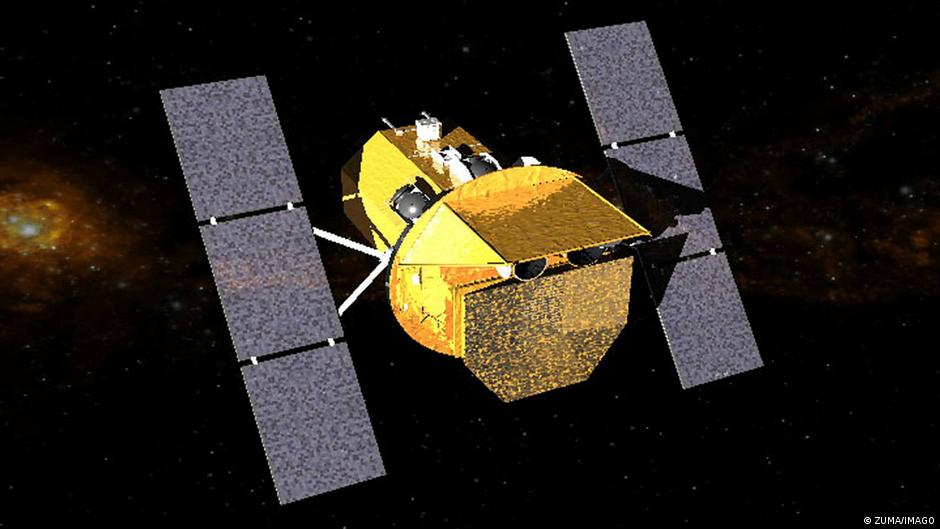
A recovery mission to save NASA’s Swift Observatory telescope was launched Friday, with the three-armed spacecraft successfully reentering orbit from the Marshall Islands in the Pacific Ocean.
The Swift telescope satellite weighs 1.6 tons (1.4 metric tons) and is orbiting 224 miles (360 kilometers) above Earth.
US defense contractor Northrop Grumman launched Catalyst Space Technologies’ three-armed Link spacecraft to reach and capture Swift in about a month.
“This is a high-risk, high-reward mission,” Catalyst Space CEO Ghonhee Lee said before liftoff.
“The biggest risk was always that we don’t launch anything and let Swift burn up in the atmosphere. So we were always trying to avoid that risk, and our team has done that,” Lee said.
Catalyst’s Link spacecraft was launched by a small rocket called Pegasus, which was launched from an airplane.
What happened to Swift?
The Swift telescope was launched in 2004 and since then, it has been tracking some of the largest explosions in the universe, including gamma-ray bursts and exploding stars.
But the older structure has been hit by recent solar storms and is sinking faster than ever as it moves toward Earth.
NASA has paid Catalyst $30 million (€26 million) in an effort to capture the telescope and boost its orbit.
If the Link spacecraft is successful, Swift could return to work by September.
To do this, the Link spacecraft will have to raise the telescope’s altitude to 150 miles by using its thrusters to gradually boost Swift, without heavy thrust.
a time-sensitive mission
NASA warned that the telescope would sink too far to be repaired by the autumn of this year, and predicted that if left unassisted it would sink and be destroyed in October.
Catalyst managed to organize the mission in just nine months, but the launch was delayed at the last minute due to bad weather and technical problems.
“This is the first time we’ve put a lot of things on top of each other,” Shawn Domagal-Goldman, director of NASA’s Astrophysics Division, told reporters a few days before the launch. “I’m so grateful we’re giving it a chance.”
Don’t let algorithms hide news. If you rely on our team for reliable reporting, please take a moment Choose us as your preferred source on Google by clicking here And press the “Star” or “Favorite” button, so you always see our verified news first.
Edited by: Shawn Sinico