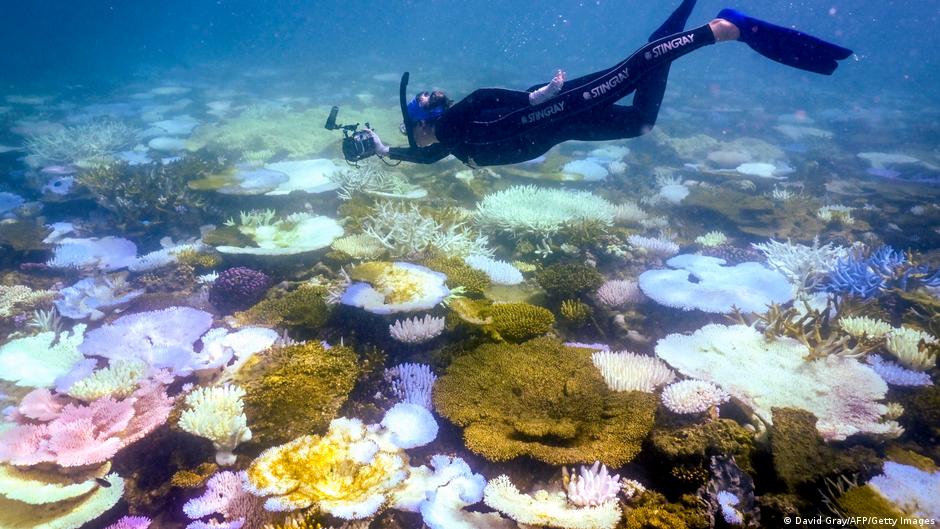
A draft UNESCO decision has removed Australia’s Great Barrier Reef – the world’s largest coral reef system – from the United Nations (UN) agency’s list of endangered sites, much to Canberra’s relief.
The United Nations had previously expressed “extreme concern” about the future of the Great Barrier Reef over widespread coral bleaching and the impact of climate change.
UN scientists have called for the reef to be included in the United Nations Educational, Scientific and Cultural Organization (UNESCO) list of world heritage sites that are in danger.
However, UNESCO’s World Heritage Committee said in its draft report – unveiled in Paris on Friday night – that Australia was working to address concerns about impacts on the reef, including climate change, water quality, sustainable fisheries management and land clearing.
Additionally, the draft decision also raised concerns over the reef’s declining hard coral cover following large-scale bleaching in 2024 and 2025.
“Although the reef’s resilience remains evident, its ability to tolerate and recover from such events is increasingly being compromised,” the committee wrote.
Australia welcomed UNESCO’s decision
Successive governments in Canberra have lobbied for years to keep this reef off the endangered list.
The reef – which extends for 2,300 kilometers (1,426 mi) along the coast of northeastern Queensland state – is a major tourist attraction, with more than 2 million visitors each year.
According to government estimates, the Reef contributes more than AUD 9.0 billion (€5.45 billion, $6.25 billion) to Australia’s economy each year and supports approximately 77,000 jobs.
“Australia welcomes UNESCO’s decision not to list the reef as endangered, and recognizes all the work being done to protect the reef,” the country’s assistant tourism minister Nita Green said in a televised statement on Saturday.
Australia will now be required to provide another progress report on the Great Barrier Reef to UNESCO in 2028.
“This is the first time in many years since we have been working to restore the Great Barrier Reef under this government that we have been given such a broad reporting period,” Green said.
Coral bleaching on the Great Barrier Reef
The Great Barrier Reef has been on the UNESCO World Heritage List since 1981.
It is home to 400 types of corals and 1,500 types of fish.
The iconic marine site has experienced six large-scale coral bleaching events since 2016.
Bleaching occurs when the colorful algae that live within corals and feed them begin to produce toxins as a result of warmer waters, causing their hosts to flush them out and turn white. This process makes corals extremely vulnerable to disease and starvation.
UNESCO first warned in 2021 that the reef was at risk of being taken off the endangered list. Since then it has been monitoring the reef annually.
Green said on Saturday that UNESCO’s latest decision “recognizes all the work Australia is doing to manage those risks, but also recognizes that climate change will continue to be a threat to the reef.”
Edited by: Sam Dusan Inayatullah
Don’t let algorithms hide news. If you rely on our team for reliable reporting, please take a moment Choose us as your favorite source on Google By clicking here and pressing the “Star” or “Favorite” button, you will always see our verified news first.