7 July 2026
Germany plans state gas reserve for emergencies
Germany has confirmed plans to create a state-owned natural gas reserve for crisis situations, with an estimated cost of €1.2 billion to €1.5 billion ($1.37 billion to $1.71 billion).
The reserve will not be funded directly from the federal budget, but through a levy on gas consumers.
The plan predicts reserves of about 24 terawatt-hours (TWh), equivalent to about 10% of Germany’s gas storage capacity. To avoid distorting the market, the gas will be purchased over two to three years, with the first filling planned for the summer of 2027.
Economics Minister Catharina Reich has previously described such reserves as an emergency tool for the Federal Network Agency, which regulates public utilities. The ministry said this could help prevent closure of individual industrial customers and buy time for repairs or alternative imports.
According to Reuters news agency, the reserve is designed to cover a 30-day outage at Dornum, the main landing point for Norwegian gas. This can bridge approximately 40 days of disrupted LNG imports or cover domestic and commercial supplies for 10 days during extreme winter.
https://p.dw.com/p/5GhDH
7 July 2026
Top German court reviews Bavarian police powers
Germany’s Federal Constitutional Court has begun a review of Bavaria’s controversial police law and whether officers can take action before a concrete threat exists.
Judges in Karlsruhe on Tuesday began a two-day hearing on the state’s 2017 and 2018 changes, which expanded police powers only in cases of “imminent danger.”
The law reduced the scope of action in cases involving threats to the security, life and health of the state. It allows police to use tools that include covert searches of phones and computers, undercover officers, drones and surveillance to determine whether a concrete threat may emerge.
In this respect, Bavarian law is “unique nationwide”, the reporting judge, Constitutional Court Judge Yvonne Ott, said at the beginning of the hearing.
Bavaria amended the law in response to the threat posed by terrorism and extremism, which was considered high at the time. The legislative record cites a 2016 racist attack on a Munich shopping mall and a 2016 Islamist attack on a Berlin Christmas market.
The case was brought by the Green Party, the Socialist Left Party and the business-focused Free Democrats (FDP), as well as civil society groups and the Society for Civil Rights (GFF). They argue that the law risks violating the basic rights of people who are not suspected of wrongdoing.
GFF lawyer David Weiderman said before the hearing that the law places citizens “under general suspicion” and allows police to interfere with basic rights with certain limits.
No decision is expected at the hearing and it will likely take several weeks or months.
https://p.dw.com/p/5GhLJ
7 July 2026
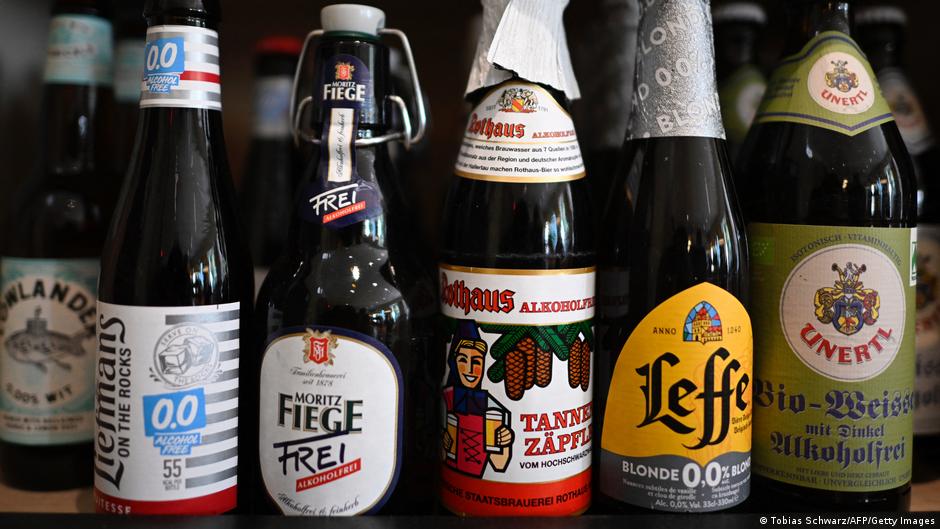
Non-alcoholic beer production increased in Germany
Germany is expected to produce more than 616 million liters (163 million gallons) of non-alcohol beer in 2025, as demand for low- and no-alcohol beverages continues to grow.
The federal statistics office said production was worth about €696 million ($796 million), up 6.5% from 579 million liters in 2024.
Alcoholic beer still dominates German brewing. Breweries are expected to produce about 6.8 billion liters in 2025, worth about €6.4 billion, but output fell 5.8% from about 7.2 billion liters a year earlier.
For every liter of non-alcoholic beer, German breweries produced approximately 11.1 liters of alcoholic beer. In 2024, this ratio was around 12.5 to one.
Production of beer based mixed drinks e.g. cyclistA popular beer-and-lemon-soda mix also declined, falling 5.7% from about 364 million liters to about 343 million liters in 2024.
The German Brewers Association says the country’s 1,500 breweries are offering a huge variety of alcohol-free brands, with small and craft breweries helping to pioneer the range.
https://p.dw.com/p/5Gh72
Welcome to our coverage
Good morning! From the DW newsroom in Bonn As the appetite for non-alcoholic beer continues to grow in Germany.
Brewers produced more than 616 million liters last year, even as traditional beer production declined, narrowing the gap between alcoholic and alcohol-free production.
In other news, Germany’s top court is looking at how far Bavarian police can go before a specific threat emerges. The case centers on whether authorities can intervene at an earlier stage based on a potential future threat.
Stay tuned here for these stories and more that Germany is talking about today.
https://p.dw.com/p/5GhMM