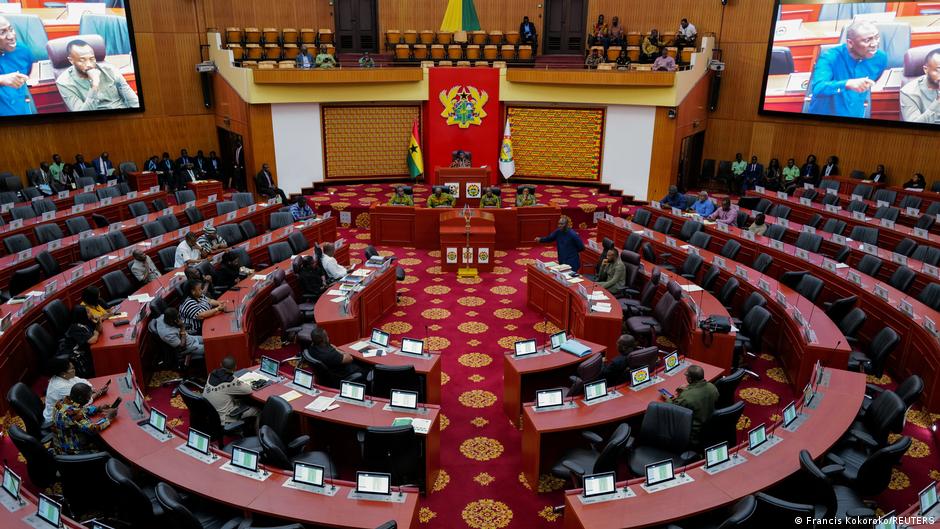
Ghana has launched its new National Ethics and Anti-Corruption Action Plan (NEACAP), with President John Dramani Mahama promising to strengthen accountability, ethical leadership and public participation in government institutions in the fight against corruption.
Unveiling the five-year strategy at the University of Ghana in Accra last week, Mahama described corruption in the country as a “national development challenge” that weakens institutions, discourages investment and erodes public trust.
The leader called for a collective effort involving government, civil society, the private sector and citizens, saying the fight against corruption requires the participation of all Ghanaians.
Strong democracy, weak corruption monitoring
Often considered one of West Africa’s most stable democracies, Ghana has enjoyed relatively peaceful elections and democratic transfers of power for decades.
Yet corruption continues to undermine public trust across the country, undermining public service delivery and discouraging investment.
The new action plan seeks to change this by improving coordination among anti-corruption institutions, strengthening oversight, promoting ethical leadership in the public sector, and increasing citizen participation in accountability efforts.
It will replace Ghana’s previous National Anti-Corruption Action Plan, which was widely criticized for falling short of its objectives due to inconsistent implementation despite a comprehensive legal and institutional framework.
The launch comes as Ghana makes only modest progress in international corruption rankings:
According to Transparency International’s 2025 Corruption Perceptions Index (CPI), Ghana scored 43 out of 100 and ranked 76th globally, while above the sub-Saharan African regional average.
The country is lagging behind African leaders like Seychelles, Cabo Verde and Botswana.
Transparency International Ghana says the country’s performance has stagnated due to weak enforcement of anti-corruption laws, political interference and inadequate institutional reforms.
Billions are lost every year due to corruption
Analysts such as Marie Avellana Adda, executive director of Transparency International Ghana, agree that the country’s problems are not based on a lack of anti-corruption institutions, but on ensuring that these mechanisms are able to function independently and effectively.
“The problem of corruption in Ghana is huge. It is very costly to the state. It is endemic and systemic in nature,” Adah told DW.
He pointed out that the financial irregularities identified in the Auditor-General’s 2024 report alone resulted in losses of about 15 billion euros due to corruption.
The scope of the issue directly affects citizens, resulting in shortages of medicines, weak public infrastructure and diversion of resources intended for national development.
According to Addah, the new framework places greater emphasis on ethics, measurable targets, independent monitoring and public reporting.
However, he also warned that its success would largely depend on whether political leaders could demonstrate the will to consistently enforce the law.
“We have laws. We have institutions. But enforcement remains inconsistent. Sanctions are too weak, and powerful actors in our system are always spared the consequences of corruption,” he told DW.
Trust in media also at stake
Journalists are also questioning whether Ghana can translate its commitment to fighting corruption into meaningful accountability.
Speaking at a civil society anti-corruption forum in Accra in March, Sulaimana Brimah, executive director of the Media Foundation for West Africa, said Ghana’s latest CPI scores showed that progress was “slow and uneven”.
“The gap between investigative reporting and actual sanctions remains a serious challenge,” Brimah said, warning that failure to hold public officials accountable risks undermining trust in both public institutions and the media if they fail to uncover cases of fraud and corruption.
According to Brimah, the new system will have to work to ensure the traditional role Media outlets as government watchdogs.
DW’s Eric Mavuena Egbeta, meanwhile, is somewhat optimistic about the new action plan, saying “lessons are being learned from the previous plan, which … did not yield good results.”
“Individuals within civil society [involved in] “The fight against corruption has played some role in implementing the plan this time.”
‘We want to prosecute corrupt officials’
Governance analysts say the launch of another national strategy reflects growing recognition that corruption is undermining public finances, economic growth and trust in state institutions.
Whether Ghana’s latest anti-corruption strategy succeeds will largely depend on whether it results in mechanisms to investigate and prosecute corrupt government officials to ensure that public institutions operate independently.
Egbeta stressed that the plan “does not engender too much confidence” among wide sections of civil society, although he highlighted that the fact that it is a five-year plan and not a ten-year plan also means that it will be ready for evaluation sooner.
Adah echoes similar sentiments, saying confidence will only increase when Ghanaians can finally see change for themselves: “We want to see the prosecution going.”
His appeal to the government is to ensure that the mechanisms implementing and monitoring anti-corruption initiatives are completely independent and free from government oversight.
Egbeta agrees that the plan needs to be implemented without government interference, particularly emphasizing the fact that changing political positions should not interfere with the fight against corruption:
“When [politicians] They are in the opposition, they will see everything wrong including corruption and they will use this whip against the party in government. But when they take over the reins of power, the story changes.”
Edited by: Serton Sanderson