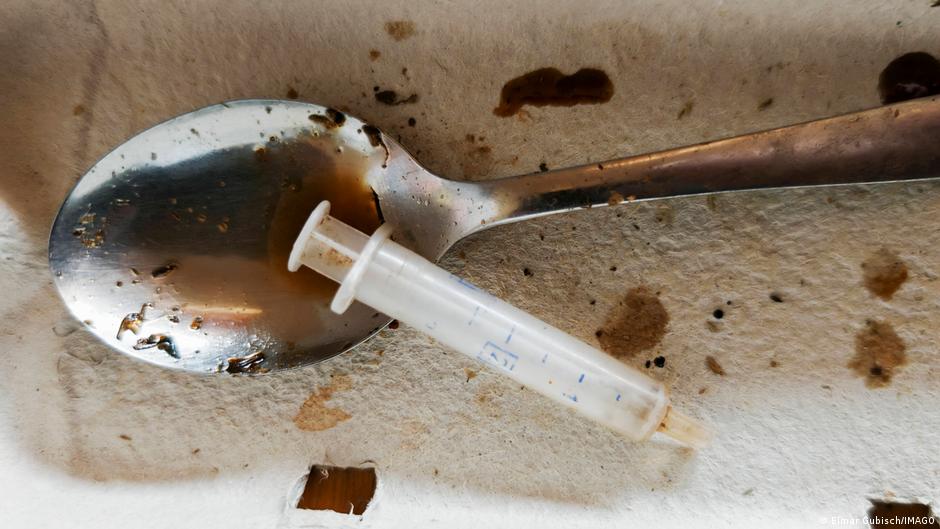
speaking in patrida Opioid Addiction Clinic in Berlin, Federal Drug Commissioner Hendrik Streeck Latest figures announced on the number of drug-related deaths in Germany.
Streak said he was sad to announce the figures, saying it has become an annual ritual. He also spoke of his shock at the increasing number of young victims.
In 2025, 2,150 people are expected to die as a result of taking drugs, up from 2,137 in 2024 and down from the all-time high of 2,227 recorded deaths in 2023. Roughly one in four were under 30 (528), up 53% from 2021, and 106 were under 20, almost double the number in 2021. The victims were on average 40.6 years old.
“Many of these young people are still not able to fully understand the risks,” he said. Streeck, a physician and member of the Bundestag for the center-right Christian Democrats, cited psychological stress and distress as possible factors in drug use by young people, but also curiosity and carelessness.
According to the latest data, 81.5% of deaths were linked to a mixture of substances. The number of crack and cocaine-related deaths has also increased by 110.7% since 2021.
Free medicine samples left in mailbox
Berlin’s police force yesterday issued a warning about packages containing free drug samples left by dealers in people’s mailboxes. The colorful plastic packages contain drugs including cocaine, ecstasy, ketamine and cannabis and have a contact number printed on them.
Stickers with QR codes associated with drug dealers can be found across the city, especially around streets lined with clubs and bars. Business cards with offers on dealers’ WhatsApp and Telegram channels have also been distributed in bars and clubs.
Another important aspect of the new statistics compiled by the Federal Criminal Police Office is the number of young people who died from prescription drugs. Although they are not usually the sole cause of death, benzodiazepines, opioid-containing painkillers, and other psychoactive drugs often play a role.
The number of deaths linked to the use of these substances has more than doubled within four years: from 365 cases in 2021 to 769 cases in 2025. At the same time, synthetic opioids continue to proliferate. For example, 118 deaths involving fentanyl were recorded, a 20% increase from the previous year.
Fentanyl deaths increase by more than a third
Streak has previously warned that the drug market is becoming increasingly opaque and the substances are becoming more dangerous. Lab-produced opioids are reportedly replacing drugs that were previously extracted from poppy fields in Afghanistan following an opium ban imposed by the Taliban.
Streak announced measures, including a comprehensive monitoring and alert system to quickly identify substances circulating in the market and to best prepare medical and social workers. Prevention and support services for young people will also be increased.
Recently drug use has been increasing around the world, especially cocaine and synthetic drugs.
“These days, prescription drugs, counterfeit drugs and high-risk combinations are often just a few clicks away,” Streeck said. The “dealer on the street corner” is far from the only problem, he said.
Drug treatment system ‘seriously inadequate’
Streeck also warned that cities and municipalities were being left alone to deal with the consequences of drug use.
“The system is under pressure,” he said. “Help is hard to come by in many places, very slow and very underfunded.”
Robert, a 62-year-old patient at Patrida, started crying when asked where he would be without the treatment provided by the clinic. “It’s sad. I’ll die.”
He described heroin use as a form of self-medication. “Why do you take it? Why do you want it? One person can drink beer and find peace, another can smoke a bag [of drugs],” He said.
“We are the last survivors,” said fellow patient Patrida Lorente, who lost several friends to heroin addiction. At the age of 19, he was sentenced to three years in a Bavarian prison for possession of cannabis and graffiti.
He said, “I went in a pot smoker and came out a junkie.”
Now 46, he described his drug use as a way to cope with depression and suicidal tendencies.
Patrida, northwest of the capital, gives long-term addicts access to diamorphine, the opioid painkiller better known by its street name heroin.
Currently around 180 patients are being treated here, out of which around 120 come twice a day to take diamorphine injections. The clinic offers psychotherapy, and there are social workers here to help with the bureaucracy of daily life.
There are two other such diamorphine clinics in Berlin. Clinic director Thomas Peschel says demand is so high they’re forced to turn people away.
“There aren’t enough doctors,” Peschel said. “The 1990s brought about a generation of doctors who were committed to ideals and really wanted to help. Infectious disease specialists [who lived through the HIV/AIDS crisis]They’re all slowly retiring.”
The world’s first drug consumption chamber was opened in 1986 in the Swiss city of Bern. According to Streeck, the German government is currently working on a joint research project with France to develop replacement treatments for cocaine and crack addiction.
Edited by Reena Goldenberg