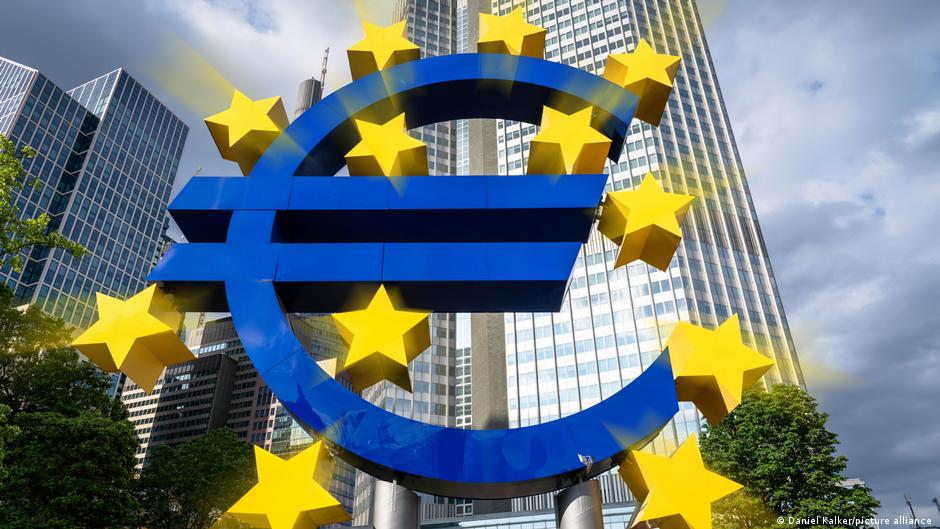
The European Parliament on Thursday signaled its support for renewed talks to create a digital version of the bloc’s currency, the euro.
About 416 delegates voted in favour, 169 against and 22 abstained. Now lawmakers are scheduled to meet with member states later this month to discuss the concept.
The EU Parliament and member states are expected to reach an agreement by the end of 2026. If they reach this, the European Central Bank (ECB) could make a digital euro available in 2029.
The digital euro is being seen as a way for the group to break its dependence on US payment systems like Visa and MasterCard, as well as Apple Pay and Google Pay.
According to the ECB, about two-thirds of card payments in the eurozone are controlled by non-European companies, mainly Visa and Mastercard.
Furthermore, around 13 of the 21 Eurozone countries have no national card scheme for everyday payments in shops or online stores.
How does the digital euro work?
A digital euro would have the same value as cash and banknotes.
To use them, a person must create an account at a public institution such as a bank or post office and then transfer or deposit money into the account.
The digital euro can be used to make payments in stores, online and between individuals using a variety of methods including cards, apps or phones.
EU officials have said that the digital euro will protect people’s privacy by protecting the identity of those who use it.
The digital euro will also have an offline mode that will be as confidential as using cash.
EU lawmaker Fernando Navarrete Rojas dismissed rumors that the digital euro could be used “as a tool of control”, insisting it would use the “highest privacy standards”.
However, experts say the main challenge is to ensure that the digital euro does not behave like a full cash bank account. If this happens, European banks could be drained of deposits – especially during a crisis like a bank run – as consumers shift their savings to the digital euro.
An option, not a requirement
Alessandro Giovannini, adviser to the digital euro director at the ECB, said the digital euro would give more choice and allow consumers to “preserve their freedom to choose how to pay as daily life becomes more digital.”
“It won’t replace anything. Cash will still be available and people can use existing private payment methods,” Giovannini said.
EU MP Fernando Navarrete Rojas, one of the parliament’s lead negotiators, echoed the notion and said it “represents a choice, not a necessity.”
EU officials said the digital euro could help in difficult situations, such as when International Criminal Court Judge Nicolas Guillou lost access to payment methods after the US imposed sanctions.
The digital euro is “a chance to end the dependency we have lived with for too long,” Giovannini promised.
Edited by: Zack Crellin