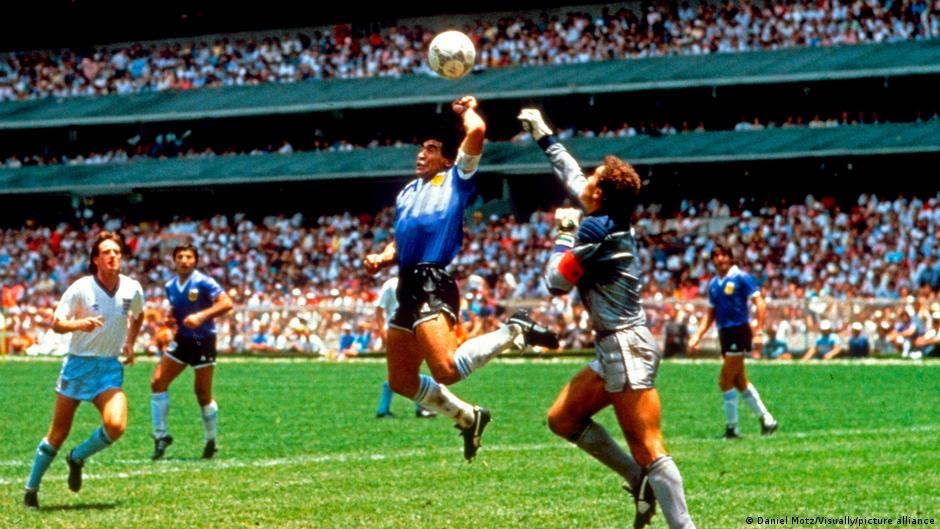
World Cup holders Argentina are to face England in the 2026 World Cup semi-finals in Atlanta – a match that will take place against the backdrop of a deep history between the two countries.
In April 1982, the unpopular General Leopoldo Galtieri, who then led Argentina under a military junta, ordered the invasion of the Falkland Islands, known to Argentines as “Las Malvinas”. Margaret Thatcher, then Prime Minister of the United Kingdom, sent a “task force” of approximately 26,000 troops to retake the area. The conflict lasted 74 days and ended with Argentina’s surrender on 14 June 1982.
Argentines trace the roots of that conflict to 1833, when the United Kingdom took military control from Argentine authorities over the islands, located about 500 kilometers (300 mi) off Argentina’s east coast. In 2016, Argentina sought negotiations with the United Kingdom over the Falklands. Although there was no change in sovereignty, there was cooperation on practical matters.
Argentina’s ‘revenge’
When asked about the importance of this history on the game, Argentina head coach Lionel Scaloni immediately dismissed that thought.
“No, no, no,” Scaloni insisted. “It’s just a football match. Let’s not look for other things. It’s a football game against a great team, with a great manager who I admire. But it’s a football match. It’s over.”
Nevertheless, Argentina’s Vice President Victoria Villarruel posted the following message on social media on the day of the game:
“Tomorrow we play against the usurping pirates. This is not just another match. I am not going to be politically correct or cold-hearted; against the English, it is always something else. It is the Malvinas, it is Diego, it is the last of Leo, and it is putting the brakes on the invaders. Go Argentina! Because until our last breath, we will claim what is ours!”
On the field, some of the most iconic and infamous moments in football history have occurred between the two countries, which is a large reason why the rivalry is so intense.
It probably starts with 1966, when England defeated Argentina in the quarter-finals. Argentina felt England’s goal scored by Geoff Hurst was offside and Argentina captain Antonio Rattín was controversially sent off, with England head coach Alf Ramsey calling Argentina’s players “animals”.
But just four years after the war on the Falklands, in the quarter-finals of the 1986 World Cup, one of the most iconic and infamous moments occurred. England faced Argentina at the historic Azteca Stadium in Mexico City and the match is remembered for the “Hand of God”, a goal that Diego Maradona scored with his own hand – but also for a brilliant second goal in which he broke through the helpless English defence.
Years later, Maradona wrote in his autobiography published in 2000: “It was our revenge, it was… to recover a part of the Malvinas. We had all said before that we should not mix the two things but that was a lie. A lie! We didn’t think anything of it other than that, it was going to be just another game like hell.”
In 1998, the two teams met again on the world stage and this time David Beckham was sent off as Argentina eventually won on penalties. Beckham faced extraordinary media criticism after this, but four years later, the England captain got his revenge as he scored a penalty to help England win and send Argentina home before the knockout.
one step away from history
This long history between the two makes the 2026 semi-finals even more interesting.
The current Argentina team, led by Lionel Messi, has the opportunity to become the first country to defend their World Cup title since Brazil in 1962. As for England, it has been six decades since they last reached a World Cup final, famously winning on home soil in 1966. Whoever wins, whoever emerges the winner be it Lionel Messi or Harry Kane, another chapter is sure to be written in one of football’s greatest rivalries.
Edited by: Jonathan Harding