From July 6 to 15, 1938, delegates from 32 countries and dozens of humanitarian organizations gathered for a conference in the expensive spa town of Evian on the French shore of Lake Geneva. Their goal: to find a way out for approximately half a million Jews from the Third Reich.
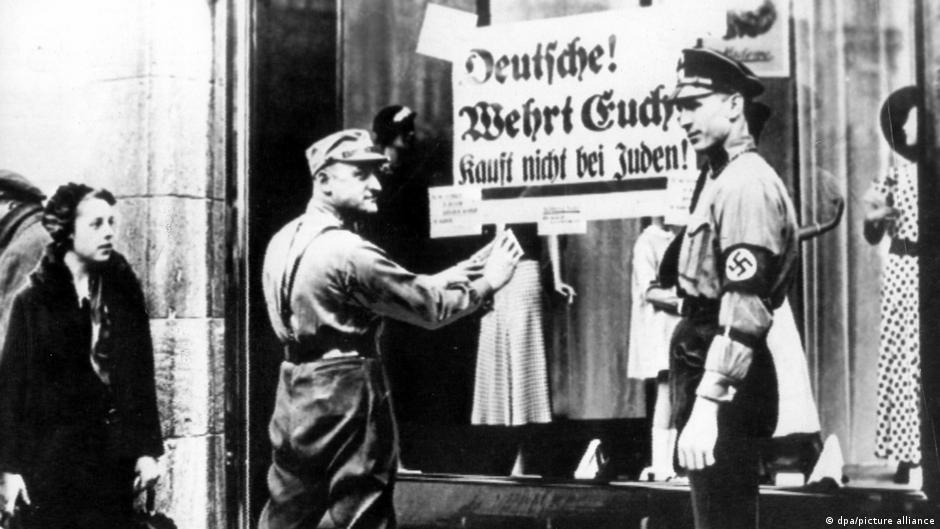
This was five and a half years after Adolf Hitler came to power in Germany and three and a half months after the occupation of Austria. The Nazi regime had not yet begun the systematic process of mass murder – but the situation of the Jews had been steadily deteriorating since 1935.
The racist Nuremberg Laws, which stripped Jews of their German citizenship, were internationally famous – as was the fact that Jews were excluded from schools, universities, and public life, as well as the fact that Jews who wanted to leave what was now “Greater Germany” had to leave their property behind.
In early 1933, soon after the Nazis seized power, the League of Nations – the precursor to the United Nations – appointed American James MacDonald as High Commissioner for Refugees from Germany. Frustrated by the reluctance of world governments to take the problem seriously, he resigned in 1935.
flee only after looting
In early 1933, soon after the Nazis seized power, the League of Nations – the precursor to the United Nations – appointed American James MacDonald as High Commissioner for Refugees from Germany. Frustrated by the reluctance of world governments to take the problem seriously, he resigned in 1935.
Initially, under Adolf Hitler, Berlin actively encouraged Jews to leave the country – at the time of the Evian Conference, approximately 200,000 had left Germany. However, the Nazis imposed increasingly stringent financial and administrative restrictions: almost all property, real estate and savings of Jewish people were confiscated before they could leave the country – and they had to present a visa or travel ticket to leave.
The Nazis’ goal was clear: the Jews should leave Germany completely destitute. This was not only because the regime profited from the looting of Jewish property, but also because poor migrants would be a huge burden to the receiving country, which was intended to further increase resentment towards the refugees.
Roosevelt’s initiative
The Avian Initiative came from US President Franklin D. Roosevelt. Their goal was to connect refugees from Germany and Austria into a legal, controlled migration flow – and to encourage participating countries to accept refugees commensurate with the size of their populations. No country will be obliged to change its immigration quotas, and no government money will be spent on financing refugees.
But even before the delegates arrived at the luxurious hotel, Washington and London had already reached an agreement: the US promised not to mention the British Mandate of Palestine as a possible place of asylum. And in return, the United Kingdom promised not to address unused US immigration quotas.
sympathy and excuses
The meeting was not attended by heads of state, but rather by lower level diplomats. One by one, representatives from countries stood up to express their deepest sympathies – followed by excuses as to why they could not help. Western European democracies justified themselves by citing high unemployment and economic crisis and claiming that they had no need for professors, artists, doctors, or businessmen.
Canada announced that it was prepared to accept only experienced farmers with their own capital. The Australian representative, Thomas White, said: “Since we do not have a real breed problem, we are not prepared to import it.” France said it was already “saturated” with refugees. The Netherlands and Switzerland wanted to issue only transit visas. Some other countries, such as Romania and Poland, even asked Western countries to accept their Jewish populations.
Only a few Latin American countries, Mexico and Colombia, have committed to accepting several hundred thousand Jews annually over the next few years. The Dominican Republic offered to accept 100,000 Jews – but due to bureaucratic problems and the outbreak of World War II in September 1939, only a few hundred Jewish people reached the Caribbean nation.
‘a frightening experience’
The Evian Conference ended with the creation of a completely powerless body, the Intergovernmental Refugee Committee (IGC). Golda Meir, future Prime Minister of Israel, visited Evian as an observer in 1938.
In his memoirs in 1975, he wrote: “To sit in that magnificent hall and listen to representatives of 32 countries telling one by one how much they would have loved to take in large numbers of refugees and how unfortunate it was that they were not able to do so was a terrible experience […]”
While the media in the German Reich rejoiced, the press in democratic countries reported with a mixture of sympathy and shame. American magazine Time Noted: “All nations present showed sympathy for the refugees, but few offered to let them into their borders.”
Correspondent of July 10, 1938 new York Times Wrote: “It is heartbreaking to think of the queues of desperate human beings surrounding our consulates in Vienna and other cities, waiting in suspense for what happens at Evian. But the question they underline is not merely a humanitarian one. The question is not how many more unemployed this country can safely add to its millions of unemployed. It is a test of civilization.”
a nod to berlin
Historically, the avian fiasco sent a clear signal to the Nazi regime: No one in the world cared about the fate of the Jews, and the democratic world would not lift a finger to protect them.
Jochen Theiss, author of the 2017 book “Evian 1938: When the World Betrayed the Jews”, says: “The British, with their vast empire, would have had to make a much larger offer, let’s say 120,000 to 150,000 people out of 500,000 to be distributed. Then the Americans, then Roosevelt, had their public There would be an excuse to convince the U.S. that they would have to comply and, proportionately, let’s say 200,000, and then they could win over some of the South Americans.”
Just four months after the Evian Conference, the Nazi regime planned genocide in Germany and Austria in November. A year later, the Third Reich invaded Poland, starting World War II.
In the years that followed, the fate of Jews in Nazi-controlled areas depended largely on individuals willing to break the rules.
Ho Feng Shan, China’s Consul General in Vienna, began issuing thousands of visas for Shanghai – a port that had no passport controls at the time. Some other diplomats from Latin American countries also did the same. These visas saved Jews from Nazi terror – before the only way out led to one of the many concentration camps.
This article was originally published in Serbian.