The first symptoms Paul Gaylord noticed felt like the common flu. Two days earlier, his cat had begged him, looking sick. First, he was prescribed antibiotics to treat cat scratch fever – a bacterial infection that can spread from cats to humans through bites and scratches.
But the medicine did not help. Gaylord’s condition worsened, he was admitted to intensive care and eventually lapsed into a coma. Doctors determined that he was suffering not from flu or cat scratch fever, but from plague. This infectious disease is more commonly associated with the Black Death of the 14th century than in the modern-day US state of Oregon, where Gaylord lived.
The infection has lost none of its lethal potential, but its non-specific symptoms and rare occurrence in modern times make it difficult to recognize. Gaylord barely survived and in 2014 shared his experience with a British newspaper Guardian.
Three forms of plague: bubonic, pneumonic, septicemic.
Plague is caused by the bacterium Yersinia pestis, which can spread extremely quickly after entering the body through several possible ways. Once there, the bacteria can damage the organ’s tissues and cause bleeding. It is almost 100% fatal if left untreated.
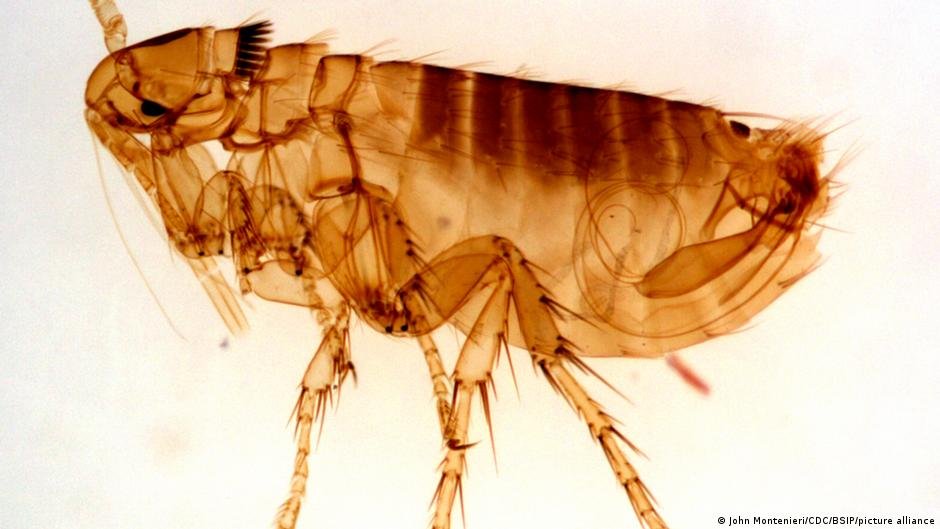
What is the most common type of plague caused by? yersinia pestis There is bubonic plague, which is spread mostly by fleas, which are the so-called “vectors” of this disease. They transport the bacteria by first biting a plague-infected rodent and then transmitting it to humans. yersinia pestis Spreads through lymph nodes, causing painful swelling.
If the pathogen reaches the bloodstream, for example, through the bite of an infected mammal, it can cause septicemic plague.
In the case of pneumonic plague, the pathogen enters the lungs through airborne droplets or aerosols from another person or animal infected with pneumonic plague. This is the only type of plague that is likely to be transmitted from one human to another.
Plague: an epidemic in the Middle Ages, rare today
According to the Robert Koch Institute (RKI), Germany’s government agency for disease control and prevention, about 3,000 cases of plague were reported worldwide between 2010 and 2015, resulting in more than 500 deaths. The most affected areas currently include the Democratic Republic of the Congo, Uganda and – above all – Madagascar, where the last major outbreak occurred in 2017, and several hundred thousand new infection cases are reported each year. Occasional cases have also been observed in the western United States.
In the Late Middle Ages, between 1346 and 1353, plague killed 25 to 50 million people. The second of three waves of plague pandemic, it wiped out half the population of Europe within a few years.
Why was there no plague left in Europe?
In Europe, the last cases of flea-borne plague were recorded in 1945 in France and Italy. Holger Scholz, molecular biologist and head of the advisory laboratory for Yersinia pestis at the RKI’s Center for Biological Threats and Special Pathogens, said this lower incidence is largely due to the fact that rodents infected with the pathogen are no longer coming and going into people’s homes.
On the other hand, in the Middle Ages, homes housed humans and rats together, which facilitated the carrying of fleas. yersinia pestis Ample opportunity for disease to spread.
“Rats, especially black rats, are generally not true reservoir animals,” Scholz said. Instead of becoming long-term hosts for the pathogens they carry, “they will get sick and die.” But research shows that rats living in endemic areas are able to develop a certain tolerance to plague through frequent exposure over years.
According to the US Centers for Disease Control and Prevention (CDC), reservoir animals also include some species of rats, such as the pack rat, as well as various rodents of the squirrel family, such as the tarbagan marmot. However, in Europe, remaining rodent populations do not appear to be suitable for spreading the pathogen.
A matter of life and death: quick diagnosis and treatment
Holger Scholz and his team at the RKI work closely with partners in areas where plague is still endemic, including Madagascar’s Ministry of Public Health and the Laboratoire d’Analyse Medicales Madagascar. He says one of his main goals is to build laboratory capacity in the country to help improve plague detection.
He says there is an urgent need for capacity-building, as diagnosis is one of the major barriers to effective treatment. To illustrate the issue, Scholz told DW about an incident involving a young man jogging in the US who went to a doctor with flu-like symptoms, but was sent home to recover. “He died,” says Scholz, “because no one thought to check for plague.”
But effective antibiotic treatments are available. Yet, each outbreak “begins with the death of the first patients because they are not properly diagnosed at first and therefore cannot be treated in time,” says Scholz.
In many places, prompt treatment poses another hurdle. For example, on Madagascar, Scholz explains that it sometimes takes days for antibiotics to reach where they are needed. Pneumonia patients don’t have that kind of time — without treatment, they usually only survive about 48 hours after the first symptoms appear.
Could we see another plague pandemic?
Although yersinia pestis continues to cause local outbreaks, Scholz is confident that a fourth plague pandemic is highly unlikely, as it does not spread as easily as airborne viruses like SARS or COVID-19.
Plus, Scholz points out, “We have completely new ways to fight disease compared to the Middle Ages.”
But it would be a completely different matter if the pathogen were genetically engineered and used as a biological weapon. Scholz’s Center for Biological Threats and Special Pathogens also addresses the issue of bioterrorism.
Genome analysis not only makes it possible to distinguish between countless strains yersinia pestisThis also makes it possible to allocate them to specific areas. “We can also determine whether it is a naturally occurring strain, or whether it has been manipulated,” explains Scholz.
Of course, plague pathogens could also be reintroduced to Europe and Germany by travelers returning from abroad, but researchers say this is extremely unlikely. “Although you can never rule it out with absolute certainty,” says Scholz.
Scholz says, “We need to be able to detect the plague pathogen in any type of material – whether it’s natural samples collected from patients and the environment, or other materials that, for example, might be installed in subway ventilation systems. To be able to do this, he says, diagnostic methods are constantly being developed and improved. And as they do so, the risk of another major outbreak steadily decreases.
This article was translated from German